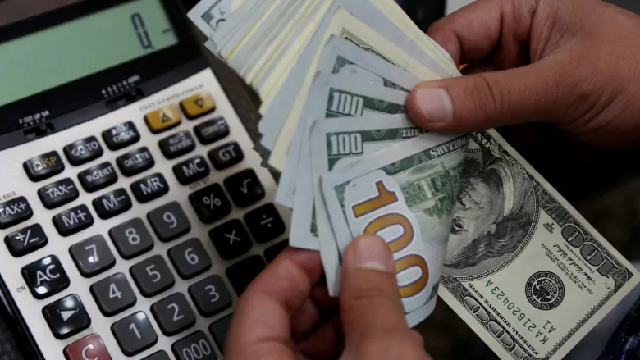








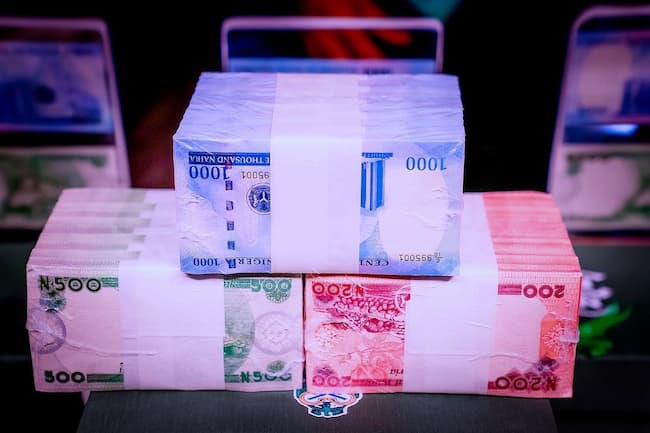
The Nigerian Naira weakened further against the US dollar on Tuesday, as the official exchange rate dropped to ₦1,583.73 per dollar. This decline followed a modest $50 million forex intervention by the Central Bank of Nigeria (CBN), which was insufficient to temper sustained demand pressures in the foreign exchange market.
This depreciation marks a reversal from last week’s gains, where the local currency had rallied continuously amid lower market activity. Analysts attribute the latest downturn to intensified dollar demand and constrained foreign currency supply.

According to a market update from AIICO Capital Limited, the USD/NGN pair fluctuated within a narrow band, trading between ₦1,581.92 and ₦1,591.00 during the day’s session. The CBN’s $50 million intervention failed to significantly influence market sentiment, resulting in a 27-basis point dip to close the day at ₦1,583.7388 per dollar.
Analysts noted that unless external conditions shift dramatically, the naira is expected to continue trading within this current range, given ongoing pressure on Nigeria’s foreign reserves.
Data from the apex bank revealed a decline in gross external reserves to $38.531 billion as of Monday. The dip is attributed to consistent foreign exchange interventions and growing uncertainty in global commodity markets.
Last week, the CBN injected $190 million into the financial system in a bid to boost liquidity and stabilize the currency. However, analysts caution that these short-term measures may have limited impact unless supported by stronger inflows or economic reforms.
On the international front, crude oil prices fell ahead of the anticipated OPEC+ meeting, where the cartel is expected to decide on output adjustments. Brent crude slipped by 65 cents (1%), closing at $64.09 per barrel, while the US benchmark, West Texas Intermediate (WTI), declined by 64 cents (1.04%) to settle at $60.89.
Meanwhile, gold prices retreated for a second consecutive session amid improved investor risk appetite. The decline followed former US President Donald Trump’s decision to delay the imposition of new tariffs on the European Union. Spot gold dropped 1.2%, settling at $3,302.10 an ounce, reversing a nearly 5% gain recorded the previous week.
Market watchers are closely monitoring the upcoming OPEC+ deliberations, with reports suggesting the group may approve a modest output hike of 411,000 barrels per day for July. This would continue the gradual strategy of easing supply cuts adopted earlier in the year.