










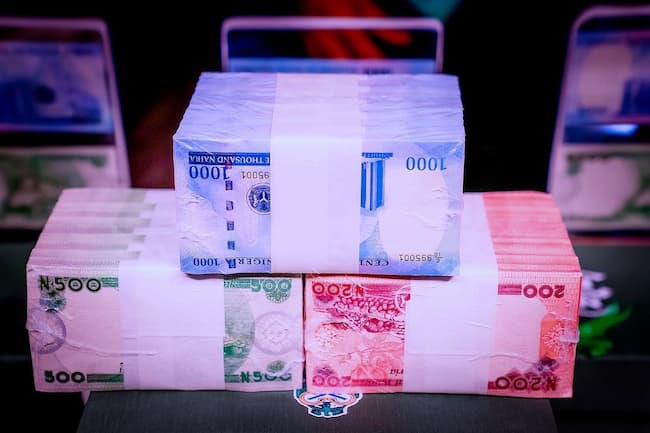
The Nigerian naira strengthened against the United States dollar at the official foreign exchange window on Tuesday, closing at ₦1,419.66 per dollar, according to data released by the Central Bank of Nigeria (CBN).
Trading records from the Nigeria Foreign Exchange Market indicated that the currency traded within a narrow range of ₦1,418 to ₦1,424 per dollar during the session, reflecting relatively stable liquidity conditions and reduced volatility.
Market operators attributed the improvement to recent foreign exchange interventions, including a $50 million supply injected into the market through authorised dealers late last week. Despite broader concerns over declining aggregate FX inflows, the intervention helped ease short-term pressure on the local currency.
At the parallel market, also known as the black market, the naira appreciated further to ₦1,480 per dollar, highlighting continued divergence between the regulated official segment and the informal market.
Meanwhile, Nigeria’s external reserves continued their upward trajectory, reaching $45.738 billion at the start of the week. The increase was supported by inflows from multiple sources, including oil receipts and non-oil foreign currency earnings.
The growth in reserves comes against a backdrop of uncertainty in global commodity markets, where fluctuating crude oil prices have influenced capital flows and foreign exchange availability for oil-producing economies such as Nigeria.
On Tuesday, Brent crude oil prices climbed above $64 per barrel amid heightened supply risks, while U.S. West Texas Intermediate (WTI) crude also edged higher to approximately $59 per barrel. Analysts note that sustained stability in oil prices remains critical to maintaining Nigeria’s external buffers and supporting currency resilience.


.)