Keypoints
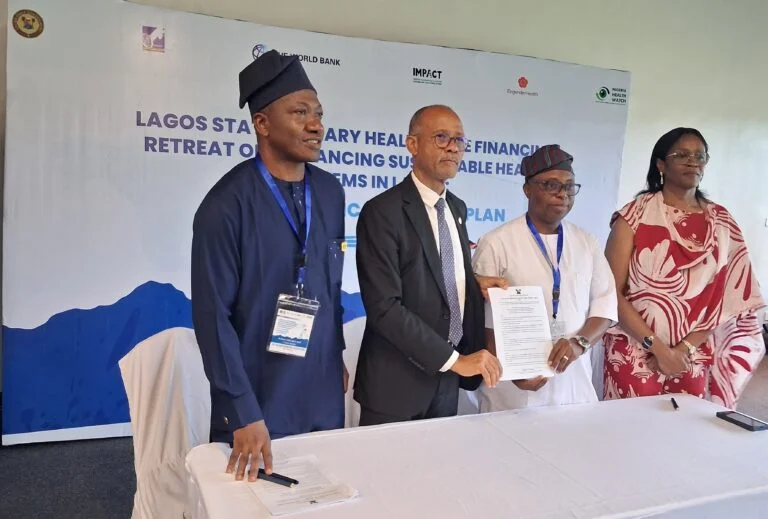
- The Lagos State Government and the 57 local government areas signed the Lagos Primary Health Care Compact 2026–2036 on Wednesday.
- The 10-year framework establishes a joint financing and governance structure to address chronic under-resourcing in the primary health sector.
- Local governments have committed to investing a minimum of 15% of their annual budgets into the healthcare system over the next decade.
- The initiative prioritises infrastructure expansion, human resource development, and digital health integration via the Smart Health Information Platform.
- Objectives include reducing maternal mortality by expanding health insurance and encouraging the use of formal health centres over traditional birth attendants.
Main Story
The Lagos State Government has formalised a decade-long partnership with all 57 local governments and local council development areas to overhaul the state’s primary healthcare system.
Signed on May 6, 2026, the Lagos Primary Health Care Compact 2026–2036 creates a unified financing and governance framework designed to end decades of fragmented investment.
The agreement acknowledges that the sector has been under-resourced since 1999 and requires a coordinated strategy to serve as the bedrock of the state’s medical infrastructure.
Under the new agreement, all tiers of government will pool resources to fund a common agenda rather than working in silos.
Key pillars of the compact include expanding health insurance coverage through the Lagos State social health insurance scheme and migrating healthcare activities to the Smart Health Information Platform under the 2025 Digital Health Policy.
Currently, Lagos operates 300 primary health centres, a figure officials aim to increase significantly to meet the needs of the population. The framework will be converted into measurable activities with specific key performance indicators (KPIs) before the end of the year.
The Issues
- Chronic under-funding since 1999 has left the primary healthcare sector with significant infrastructure and human resource gaps.
- A major disparity exists in facility availability, with Lagos currently operating only 300 primary health centres compared to similar global populations requiring roughly 3,000.
- High maternal mortality rates persist due to a reliance on traditional birth attendants rather than formal primary health centres.
What’s Being Said
- “The primary health care platform is the basis of healthcare delivery in any community. It’s like building a house. If the foundation is weak, the house will not stand the test of time,” said Prof. Akin Abayomi, Commissioner for Health.
- “The minimum that this retreat is recommending is 15 per cent of the annual budget to be invested in health,” stated Mr Sesan Olowa, Chairman of Conference 57.
What’s Next
- A unified committee will convert the compact’s objectives into real, measurable activities and KPIs by the end of 2026.
- Local governments will begin implementing the 15% budgetary allocation for health in their next annual cycles.
- The state will accelerate the migration of health records and provider activities onto the digital Smart Health Information Platform.
Bottom Line
The 10-year Lagos Primary Health Care Compact binds state and local governments to a unified funding strategy, mandating a 15% minimum budget allocation to fix structural gaps in the healthcare foundation.