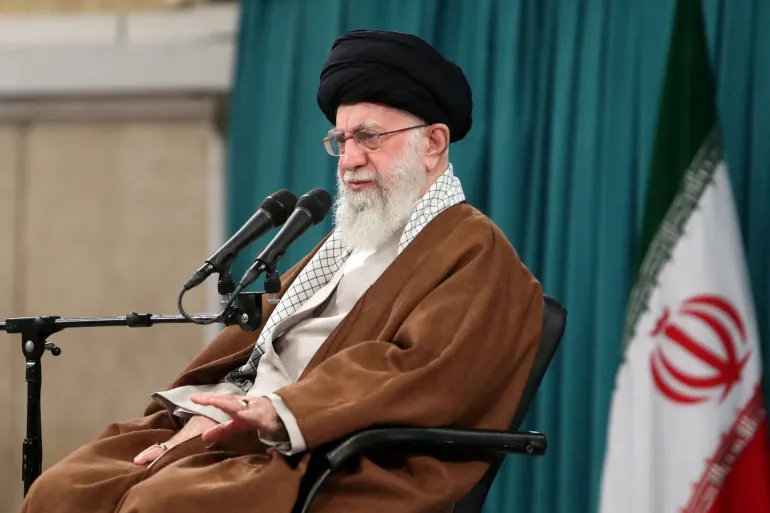
Iran will establish an interim leadership council to temporarily assume the responsibilities of the country’s highest office following the death of Supreme Leader Ali Khamenei, a senior security official announced on Sunday.
Secretary of Iran’s Supreme National Security Council Ali Larijani disclosed the move during an interview with state-run IRIB television, hours after Iranian authorities confirmed that Khamenei was killed in coordinated strikes carried out by the United States and Israel in Tehran on Saturday.
Constitutional Provision Activated
Larijani cited Article 111 of Iran’s Constitution, which provides that in the absence of a Supreme Leader, a temporary council comprising the president, the head of the judiciary, and a jurist from the Constitutional Council will collectively discharge leadership duties until a permanent successor is selected.
He stated that the interim council would be formed “as soon as possible” to ensure continuity of governance. Ayatollah Alireza Arafi has been named as the jurist member of the interim body, joining the president and judiciary chief at the helm of the Islamic Republic pending the selection of a new Supreme Leader.
Nationwide Mourning and Vow of Retaliation
Larijani said the country had entered a period of mourning and anger, warning that Iran would respond decisively to what he described as aggression by Israel and the United States.
He accused Israel of attempting to destabilise and fragment Iran to consolidate dominance across West Asia, and claimed that Washington had aligned itself with Israeli strategic objectives.
According to Larijani, despite the “America First” slogan of Donald Trump, Israel had effectively become Washington’s top priority.
Strikes on Tehran and Major Cities
Earlier on Saturday, Israeli and US forces launched joint strikes on Tehran and several other cities, including Tabriz, Qom, Isfahan, Kermanshah and Karaj. Iranian authorities confirmed that Khamenei was killed in the attacks.
Iran responded with missile and drone strikes targeting Israel and US bases across the region.
State media reported that several senior Iranian officials were also killed in the strikes, including Armed Forces Chief of Staff Abdolrahim Mousavi, Defence Minister Aziz Nasirzadeh, Revolutionary Guards chief Mohammad Pakpour, and senior adviser Ali Shamkhani. Iranian media further reported the deaths of Khamenei’s daughter, son-in-law and granddaughter.
Casualties Reported in Israel and Gulf States
Iran’s latest wave of retaliatory strikes killed at least five people in central Israel, according to police. Emergency services had earlier warned of casualties in Beit Shemesh, including a young girl.
Iran’s Revolutionary Guards announced a fresh round of “large-scale” attacks against what they described as the “enemy.” In the United Arab Emirates, authorities reported three deaths and 58 injuries since the outbreak of hostilities.
Regional Tensions Escalate
Iran’s security leadership denied targeting neighbouring countries, insisting that retaliatory operations were directed at US military installations.
However, Saudi Arabia’s foreign ministry said it had summoned the Iranian ambassador in response to what it termed attacks targeting the Kingdom and other Gulf states. Gulf countries are expected to convene virtually to discuss a unified response amid widespread airport closures.
The UK Foreign Office advised British citizens in Bahrain, Kuwait, Qatar and the UAE to shelter in place and avoid non-essential travel. Britain’s Defence Secretary John Healey said Iran’s retaliatory actions included ballistic missiles fired in the direction of Cyprus.
Oil Tanker Incident in Strait of Hormuz
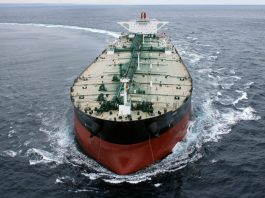
Iranian state television reported that an oil tanker was sinking after being struck while allegedly attempting to pass illegally through the Strait of Hormuz — a strategic chokepoint through which roughly a quarter of global seaborne oil and a fifth of liquefied natural gas shipments transit.
The potential disruption raised concerns over global crude supply. Shortly after the report, eight OPEC+ member states announced a combined production increase of 206,000 barrels per day, citing stable economic fundamentals and healthy market conditions.
Israel Continues Operations
The Israeli military said on Sunday it was launching additional “large-scale” strikes targeting the “heart of Tehran.” Israel’s Defence Minister, Israel Katz, described Khamenei’s killing as a “turning point in the war,” accusing him of leading campaigns aimed at Israel’s destruction.
Air raid sirens were reported in Jerusalem as missiles were detected inbound from Iran. Explosions were also heard in Dubai, east of Riyadh, across Manama in Bahrain and near Doha in Qatar. A senior Emirati official warned Tehran that retaliation against Gulf states constituted a strategic miscalculation.
US Intercepts Drones, Issues Alerts
US defence systems intercepted at least two drones over Erbil in northern Iraq on Sunday, according to an AFP journalist. Sirens were heard at the American consulate. US authorities advised citizens in Bahrain to avoid hotels in Manama and directed embassy staff in Jordan to limit movement due to potential security threats.
Protests and International Fallout
Large crowds gathered in southern Iran and other cities, including Tehran and Yazd, calling for retaliation following confirmation of Khamenei’s death. In Iraq, where three days of national mourning were declared, hundreds of protesters attempted to breach Baghdad’s fortified Green Zone housing the US embassy.
In Pakistan, local rescue services reported nine fatalities after demonstrators attempted to storm the US consulate in Karachi. Demonstrations were also reported in Indian-administered Kashmir. Thailand announced plans to evacuate its citizens from the Middle East using military or charter flights if necessary.
UN Nuclear Agency to Convene
The Vienna-based International Atomic Energy Agency will hold an extraordinary meeting on Monday at the request of Russia, a key ally of Tehran, to discuss developments surrounding Iran.
As hostilities continue and leadership transition mechanisms are activated in Tehran, regional governments remain on heightened alert amid fears of further escalation across the Middle East.