BizWatch Analysis | February 2026
War risk premiums have crossed $1 million per voyage, major tankers are uninsurable, and Brent could hit $130. Nigeria is not a bystander – it is squarely in the path of both the opportunity and the storm.
Key Points
- War risk insurance premiums have surged past $1 million per voyage at peak escalation, rendering tankers linked to U.S. or Israeli interests effectively uninsurable and paralyzing key oil traffic through the strait.
- Major shipping lines including Hapag-Lloyd have suspended Hormuz transits; tankers bound for China and India – including the KHK Empress and Eagle Veracruz have diverted or anchored, halting millions of barrels of supply.
- The strait carries approximately 20 million barrels of oil and LNG per day through a 21-mile chokepoint, nearly one-fifth of global daily supply. There is no viable alternative for most of this volume.
- Analysts now project Brent crude at $110–$130 per barrel if disruption persists; a full Iranian closure of the strait could push prices beyond that range.
- Nigeria does not export through the Strait of Hormuz, but is directly exposed through oil price upside, shipping cost pass-throughs, import inflation, and global financial contagion if the crisis drags into months.
- The question for Abuja is not whether Nigeria will be affected, but whether the government is positioned to capture the windfall and cushion the shocks simultaneously.
Setting the scene: What is actually happening at the Strait
The Strait of Hormuz a narrow 21-mile-wide corridor between Iran and Oman, is the single most consequential chokepoint in global energy markets. Every day, approximately 20 million barrels of crude oil, condensate, and liquefied natural gas pass through it, destined primarily for China, India, Japan, South Korea, and the European Union. There is no pipeline network, no alternative sea route, and no spare infrastructure that can absorb even a fraction of that volume if the strait closes or becomes too dangerous to navigate.
That is now the live scenario. Following the collapse of U.S.–Iran nuclear talks in Geneva and the subsequent U.S. Embassy evacuation from Israel, the threat of direct military engagement has moved from theoretical to operational. Iran’s parliament has already passed a motion authorising the closure of the strait. Military exercises in the corridor this month involved live-fire drills. And the commercial shipping industry which prices risk in real time, is already behaving as if the crisis is here.
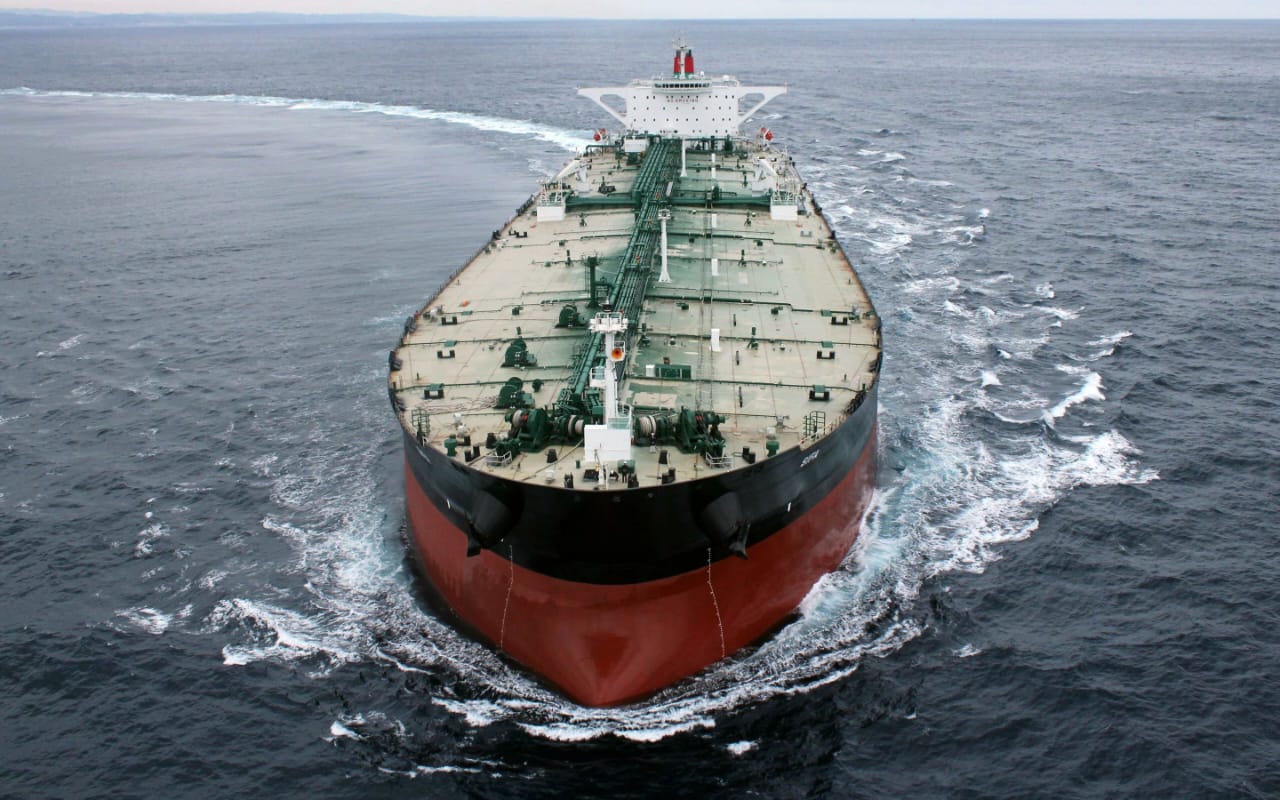
War risk insurance premiums have exceeded $1 million per voyage at peak escalation periods, up from negligible levels just weeks ago. Vessels with ownership or operational links to American or Israeli entities have become effectively uninsurable at any price. Hapag-Lloyd, one of the world’s largest container shipping lines, has suspended transits. The KHK Empress and Eagle Veracruz tankers carrying crude bound for China and India respectively, have diverted mid-route or anchored in holding patterns. This is not precautionary. It is the market pricing in a genuine supply crisis.
The geopolitical chess: Who controls the Strait and how
Understanding the Hormuz crisis requires understanding that the strait is not simply a shipping lane – it is a weapon. Iran has understood this for decades and has deliberately structured its military doctrine around the ability to threaten, degrade, or close it as a last-resort response to American or Israeli military action. The Islamic Revolutionary Guard Corps Navy (IRGCN) maintains a fleet of fast attack craft, anti-ship missile batteries, naval mines, and submarine assets specifically calibrated for asymmetric strait warfare.
Iran’s Strategy: Deterrence through disruption
Tehran’s calculus is not necessarily to close the strait outright, that would be an act of war against every nation whose oil transits it, including China and India, whose diplomatic support Iran badly needs. Instead, Iran’s strategy appears to be calibrated disruption: making transit expensive, dangerous, and uncertain enough to drive up the economic cost of any military campaign against it, without triggering a unified international military response.
The live-fire exercises, the parliamentary closure motion, and the selective targeting of vessels linked to adversarial states are all components of this strategy. Iran is signalling that it retains escalation options, while stopping short of actions that would bring China or India into open opposition.
The U.S. response: Carrier groups and convoy doctrine
The United States has responded by massing the largest concentration of naval firepower in the region since the 2003 Iraq invasion – two carrier strike groups, each anchored by a nuclear-powered aircraft carrier with accompanying destroyers, cruisers, and submarine support. The carrier groups serve multiple strategic functions: they deter Iran from escalating to full closure, they provide air cover for potential strikes on Iranian nuclear facilities, and they enable the U.S. Navy to escort commercial vessels if Washington opts to invoke convoy protection, as it did during the 1987–1988 Tanker War.
That last option is increasingly discussed in military circles. A formal U.S. naval escort programme for tankers would partially restore transit confidence, but it would also mean America formally assuming liability for any Iranian retaliation against those vessels, a significant escalation in itself.
The China and India factor
The wildcard in the strait standoff is neither the U.S. nor Iran, it is China and India, who between them receive the majority of oil that transits Hormuz. Both nations have enormous economic incentives to keep the strait open. China has quietly signalled to Tehran that a full closure would be viewed as a hostile act against Chinese energy security. India, which imports approximately 85% of its oil needs and sources a significant share from Gulf producers, faces severe economic consequences from a prolonged closure.
This gives Washington a coercive diplomatic tool: pressure Beijing and New Delhi to restrain Tehran, in exchange for American guarantees of strait access. Whether that triangular diplomacy is actively being pursued is unclear, but it represents the most plausible non-military path to de-escalation.
Will Nigeria be affected? Establishing the exposure
The direct answer is yes and significantly so, across multiple channels. Nigeria does not export oil through the Strait of Hormuz; its crude leaves through Atlantic terminals at Bonny, Forcados, Brass, and the Escravos system, none of which are geographically connected to the Persian Gulf. In that narrow sense, Nigeria’s own exports are physically insulated from the crisis.
But global oil markets do not operate by geography alone. They operate by price, and the Hormuz disruption is already reshaping the global price floor in ways that affect every producer, exporter, and importer on earth, Nigeria included. The exposure runs in both directions: upward pressure on export revenue, and upward pressure on import costs, debt dynamics, and currency stability.
Channel 1: Oil price upside
Nigeria’s 2026 Federal Budget was benchmarked at $75 per barrel. Brent is already trading above $70 on tension alone, and analysts now model a range of $110–$130 per barrel if the Hormuz disruption persists. Every $1 increase above the benchmark, sustained across Nigeria’s production volumes, translates directly into additional federation revenue. At $110 per barrel and 1.5 million barrels per day of production, Nigeria would generate roughly $52.5 billion in annual crude revenue, compared to approximately $33 billion at the $75 benchmark. The fiscal upside is real and material.
The crucial caveat is production. Nigeria’s output has chronically fallen short of its targets due to pipeline vandalism, crude theft, and NNPCL operational inefficiencies. If prices spike but output remains at 1.2–1.3 million barrels per day rather than the 1.8 million targeted, the windfall is significantly diluted. The producers who will capture the true prize of a Hormuz-driven price surge are those with spare, deployable capacity – Saudi Arabia, the UAE, and U.S. shale operators who can bring additional barrels to market quickly.
Channel 2: Shipping cost pass-through and import inflation
This is where Nigeria’s exposure turns negative. War risk insurance premiums exceeding $1 million per voyage do not only affect tankers in the Persian Gulf, they reprice the entire global shipping risk environment. Carriers operating in the Atlantic, including those servicing West African ports, will face higher insurance costs, which are passed through as freight surcharges. Vessels calling at Apapa, Tin Can Island, and other Nigerian ports will cost more to operate, and those costs will land on Nigerian importers.
Nigeria imports refined petroleum products, industrial machinery, pharmaceuticals, food commodities, and a wide range of consumer goods, all of which move by sea. A sustained 15–25% rise in global freight costs would translate into meaningful import price inflation within weeks, arriving in a country where headline inflation is already elevated and the naira remains under structural pressure.
Channel 3: Global risk sentiment and the naira
A Middle East military conflict of this scale would immediately trigger a global risk-off environment. Emerging market currencies historically weaken sharply when geopolitical risk spikes, as investors rotate into U.S. dollar assets, U.S. Treasuries, and gold. The naira, which has stabilised only partially following recent CBN reforms, would face renewed depreciation pressure even if Nigeria’s oil revenues are rising in dollar terms.
The paradox is significant: Nigeria could simultaneously be earning more dollars from higher oil prices and watching its import-dependent economy become more expensive as the naira weakens. Debt servicing costs denominated in foreign currency would also rise in naira terms, squeezing the fiscal space that higher oil revenues appear to be opening up.
Channel 4: Fuel subsidy reintroduction risk
This is the scenario that should concern Nigeria’s economic managers most. At $110–$130 per barrel, pump prices for refined petroleum, if fully passed through – would reach levels that are politically untenable in Nigeria’s current environment. The temptation to reintroduce fuel subsidies, even partially or informally through NNPCL pricing decisions, would be significant. Nigeria has been here before. A return to subsidised pricing at elevated global oil costs would rapidly consume any windfall from higher export prices, replicating the fiscal trap of the pre-2023 subsidy era.
Expected economic impact: A Timeline
Immediate (Days 1–14): Price Shock and Market Volatility
- Brent crude surges toward $90–$100/bbl as Hormuz disruption headlines dominate global markets.
- Nigerian Federation Account receipts for March begin to reflect higher crude valuations in forward pricing.
- Naira faces depreciation pressure as global risk-off sentiment strengthens the dollar.
- Fuel pump prices at risk if NNPCL is unable to absorb differential between import cost and retail price.
- Shipping surcharges begin appearing on import freight invoices at Nigerian ports.
Short-Term (Weeks 2–6): Revenue uplift vs. cost pass-through
- If disruption holds, Brent could stabilise in the $100–$115 range, depending on OPEC+ response and U.S. shale ramp-up.
- Nigeria’s FAAC disbursements to states and federal agencies begin to reflect above-benchmark oil prices.
- Import inflation accelerates across food, energy, and industrial inputs, CPI could uptick 2–4 percentage points if sustained.
- CBN likely intervenes in FX market to defend naira, depleting foreign reserves.
- Political pressure mounts on government to cushion fuel and food price increases for consumers.
Medium-Term (Months 2–4): Structural stress testing
- If conflict becomes protracted and oil holds above $110, Nigeria’s budget surplus potential is significant, but only if production targets are met.
- A prolonged shipping insurance crisis raises the cost of doing business across the Nigerian economy, dampening non-oil sector activity.
- Global recession risk from sustained $120+ oil begins to weigh on demand; oil prices may peak and correct sharply.
- Demand destruction from high prices in Asia and Europe would reduce the very import demand that is driving prices up, a self-correcting mechanism that caps Nigeria’s revenue window.
- Nigeria’s external debt obligations become more expensive to service in naira terms if the dollar strengthens further.
Long-Term (Months 4+): Structural reckoning
- If the Hormuz crisis resolves diplomatically, oil prices could correct sharply below $70, below Nigeria’s budget benchmark, leaving Abuja exposed if windfall revenues were spent rather than saved.
- If conflict becomes entrenched, the global energy transition accelerates as importers seek to reduce Persian Gulf dependency – long-term bearish for oil demand.
- Nigeria’s window to build the Excess Crude Account as a buffer would have passed if fiscal discipline was not imposed during the price spike.
What’s being said
Analysts at ING Bank on the binary oil market logic:
“If talks fail, supply disruption fears push oil higher; if a deal is struck, prices fall on reduced risk premium.”
Energy consultancy FGE NexantECA on the price ceiling:
“Oil prices of $90 to $100 per barrel are within reach if conflict erupts.”
BloombergNEF on Iranian supply removal:
“The complete removal of Iranian crude from markets could push Brent to $91 per barrel by late 2026, even with OPEC+ increasing output.”
Analysts at CSIS and Al Jazeera on a full Hormuz closure:
“Prices could spike well over $100 per barrel in any major disruption scenario — with some models exceeding $130 in a sustained closure.”
The bottom line
Nigeria will be affected by the Strait of Hormuz crisis. That question is settled. The real question is whether the country will be affected well or badly and that depends almost entirely on decisions made in Abuja in the next 30 to 60 days. The upside is real: above-benchmark oil prices, material windfall revenues, and a temporary easing of the fiscal deficit. The downside is equally real: import inflation, naira depreciation, shipping cost pass-through, and the ever-present temptation to spend the windfall before it is secured. Nigeria has been in this position before and consistently chosen short-term relief over long-term resilience.