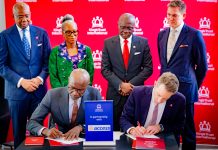









The Federal Government of Nigeria has announced its intention to revoke the licenses of several oil blocks due to prolonged delays in their development by title holders. This move was confirmed by the Minister of State for Petroleum Resources, Heineken Lokpobiri, during the Licensing Round Pre-bid Conference held in Lagos on Wednesday, January 14, 2026.
The Minister issued a stern warning that licenses are no longer to be treated as status symbols but as active state assets that must be developed within specified timeframes.
The crackdown targets operators who have held exploration and production rights for as long as 20 years without making significant technical or financial investments. Under the drill or drop provisions of the Petroleum Industry Act 2021, the government will reclaim these fallow fields to reallocate them to investors with the capacity to increase national crude production.
Lokpobiri explicitly stated that no refunds for bidding fees or signature bonuses would be issued upon revocation because the risks of non development rest entirely with the licensee.
Oritsemeyiwa Eyesan, Chief Executive of the Nigerian Upstream Petroleum Regulatory Commission, noted that many of the fifty blocks currently on offer in the 2025/2026 licensing round were recovered through these very enforcement measures.
The current portfolio includes sixteen onshore, eighteen shallow water, and one deep offshore block in the Niger Delta. Furthermore, the frontier basins offer four onshore blocks each in the Anambra, Benue, and Chad basins, along with one in the Benin basin.
The commission is urging potential bidders to collaborate with Nigerian financial institutions to ensure project viability. This regulatory tightening is part of a broader strategy to raise Nigeria’s oil production to two million barrels per day by 2027 and three million by 2030, reversing years of decline caused by asset hoarding and underinvestment.