






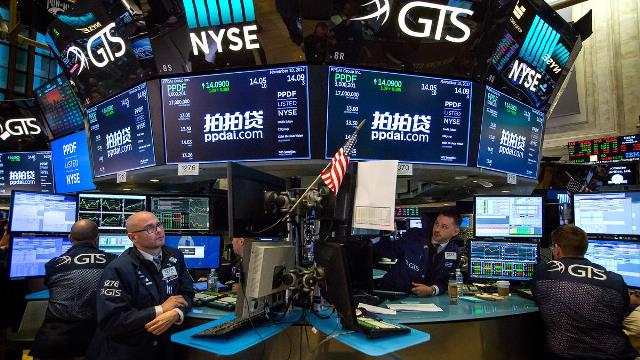
U.S. equity markets experienced a sharp decline on Monday following President Donald Trump’s unexpected announcement of a sweeping round of tariffs targeting key trade partners, including Japan, South Korea, and South Africa.
The Dow Jones Industrial Average dropped by 422 points, reflecting a 0.94% slide. The S&P 500 slipped 0.79%, while the Nasdaq Composite lost 0.92%. All three indices suffered their steepest single-day losses in nearly a month.
Investor confidence was rattled midday after President Trump confirmed the imposition of a 25% tariff on imports from Japan and South Korea, effective August 1. As the session progressed, further announcements revealed escalating tariff rates ranging from 25% to 40% on additional nations such as Malaysia, Myanmar, Laos, Kazakhstan, and South Africa.
The new trade measures were unveiled via posts on Trump’s social media platform, Truth Social. The documents clarified that the announced tariffs were distinct from existing sector-specific levies and may be adjusted upward or downward as necessary.
Markets had already opened lower on Monday, as Wall Street braced for updates from the Trump administration concerning trade policy. On Sunday, the former president foreshadowed the announcement of “tariff letters” to be issued to affected countries, revealing revised tariff schedules set for implementation in early August.
White House Press Secretary Karoline Leavitt confirmed that Trump would sign an executive directive moving the initial July 9 deadline for trade agreement negotiations to August 1 — thereby establishing a clear window for continued talks.
Corporate and ETF Losses Pile Up
The reaction in international equity listings was swift and severe. U.S.-listed shares of major Japanese automotive companies posted significant losses: Toyota fell by 4%, Nissan plunged 7.16%, and Honda dropped 3.86%.
South Korean technology giants also bore the brunt of the new policy. LG Display’s U.S. shares tumbled 8.3%, while SK Telecom lost 7.76%.
BlackRock-managed exchange-traded funds (ETFs) tracking stocks from Japan, South Korea, South Africa, and Malaysia recorded notable declines of 2.4%, 3.56%, 1.73%, and 1.97%, respectively. The Japan, Korea, and Malaysia ETFs marked their most pronounced losses since early April.
Ross Mayfield, investment strategist at Baird, told CNN that the size of the tariffs exceeded market expectations, triggering a broad-based selloff.
Bond Yields and Currency Markets React
Bond markets also reflected the mounting uncertainty. Yields on U.S. government securities rose in response to the risk-off sentiment. The 10-year Treasury yield climbed to 4.39%, while the 30-year benchmark reached 4.92%.
Currency markets saw the U.S. dollar strengthen, with the dollar index advancing 0.3% against a basket of six major currencies. Meanwhile, the Japanese yen, South Korean won, and South African rand weakened against the greenback.
Volatility surged, as measured by the CBOE Volatility Index (VIX), which spiked 8.4%. Gold, typically a safe haven during market turbulence, initially dipped but ended the day with a modest 0.1% gain.
Tariff Tensions Challenge Market Resilience
Until Monday’s sharp reversal, U.S. stocks had been climbing amid optimism that trade uncertainties were fading. Investors had responded positively to a string of favorable economic data, pushing the S&P 500 to four record closes since June 27.
With the July 9 tariff deadline looming, Wall Street had remained cautiously upbeat, anticipating a series of trade deal announcements. However, Mohit Kumar, chief strategist at Jefferies Europe, downplayed the significance of the date, predicting short-term volatility but ultimately viewing the letters as a strategic move to spur quicker negotiations.
Kumar noted that any market pullback could serve as a buying opportunity, suggesting confidence in a near-term resolution. This sentiment echoed remarks from BMO Capital Markets’ Brian Belski, who said recent inflation data supported the view that the economic impact of tariffs remains limited for now.
Belski added that upcoming trade deal announcements could bring clarity and sustain the current upward momentum in equity markets.
White House Signals More Trade Action
Treasury Secretary Scott Bessent told CNBC on Monday that several trade-related announcements could be expected within the next 48 hours. A day earlier, he warned that absent agreements, tariff rates would spike further on August 1.
Jim Baird, CIO at Plante Moran Financial Advisors, stressed that the trade landscape remains unpredictable and subject to rapid shifts.
Despite recent record highs for the S&P 500 and Nasdaq, the Dow remains around 608 points shy of its all-time peak.
Analysts Urge Caution Amid Growing Uncertainty
Not all market watchers share the optimism. Scott Wren, global strategist at Wells Fargo Investment Institute, cautioned in a note that many investors may be underestimating the risks posed by the new tariffs.
Wren warned that escalating tariffs could weaken the economy and dampen consumer spending. His team is reportedly cutting back on exposure to sectors perceived as overvalued, particularly U.S. small caps and consumer discretionary stocks.
In another surprise move, Trump announced on Sunday a separate 10% tariff on any country aligned with BRICS — the economic coalition formed by Brazil, Russia, India, China, and South Africa.
Market analysts say investors will be monitoring closely for any further signals from the Trump administration regarding trade penalties. Lukman Otunuga, senior market analyst at FXTM, suggested that if tariff hikes surpass market expectations and stoke fresh fears of a recession, equities may suffer sharp declines while traditional safe-haven assets attract renewed interest.