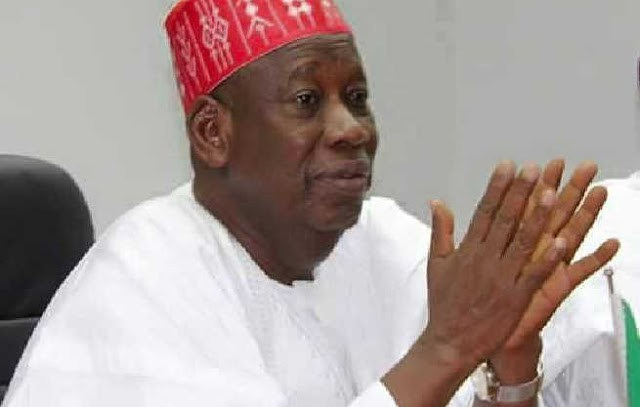
Kano State Governor, Abdullahi Ganduje has called for a law banning cattle movement from the north to the southern part of Nigeria.
He made the statement while speaking with journalists after he and All Progressives Congress (APC) governors met with President Muhammadu Buhari in Daura, Katsina state.
Ganduje noted that his government has commenced the construction of settlement for herders in a forest near Kano’s border with Katsina.
He disclosed that the settlement when completed will have facilities such as houses, a dam, an artificial insemination centre, and a veterinary clinic.
READ ALSO: Vehicular Movement To Resume On Third Mainland Bridge, As It Reopens
“We are building a Ruga settlement in Samsosua forest, our border with Katsina and we have succeeded in curtailing the effect of banditry in that area,” Ganduje said.
“So, we are building many houses, we are constructing a dam; we are establishing a cattle artificial insemination centre, we are establishing a veterinary clinic and already we have started building houses for herdsmen.
“My advocacy is that we should abolish the transportation or trekking of herdsmen from the northern part of Nigeria to the middle belt and to the southern part of Nigeria.
“There should be a law that will ban, otherwise we cannot control the conflicts between herdsmen and farmers and cannot control the cattle rustling which is affecting us greatly.”
Shehu Sani, former senator representing Kaduna central, had also called for the setting up of grazing reserves in the north to end farmer-herder crisis.