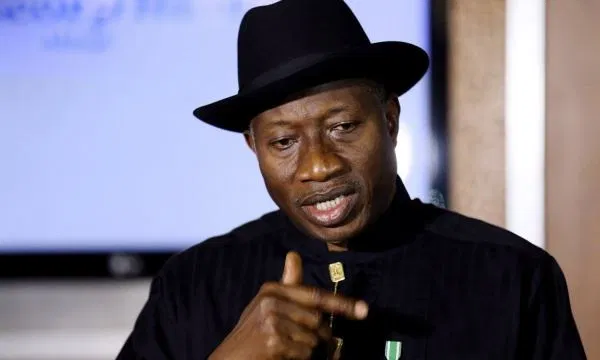
Keypoints
- Former President Goodluck Jonathan has asked the Federal High Court in Abuja to dismiss a suit seeking to bar him from the 2027 presidential election.
- The suit, filed by lawyer Johnmary Jideobi, aims to restrain Jonathan from presenting himself as a candidate and to prevent the Independent National Electoral Commission (INEC) from accepting his nomination.
- Jonathan’s legal team, led by Chief Chris Uche, SAN, argued that the matter of his eligibility has already been settled by the Federal High Court and the Court of Appeal.
- Justice Peter Lifu has adjourned the matter until May 11, 2026, for a hearing on the preliminary objection and the substantive suit.
- The court ordered that hearing notices be served on the Attorney-General of the Federation (AGF) and INEC.
Main Story
Former President Goodluck Jonathan has formally challenged a legal attempt to disqualify him from contesting the 2027 presidential election.
During a session at the Federal High Court in Abuja on Friday, May 8, 2026, Jonathan’s counsel, Chief Chris Uche, SAN, informed the court that a notice of preliminary objection and a counter-affidavit had been filed on May 5.
The defense argues that the lawsuit is an attempt to relitigate an issue already decided in previous court rulings, which affirmed Jonathan’s eligibility to run for office.
The plaintiff, lawyer Johnmary Jideobi, is seeking a perpetual injunction to prevent Jonathan from contesting, citing constitutional limits on executive tenure. Jideobi argues that Jonathan, having already been sworn in twice as president, is ineligible for another term.
However, Jonathan’s legal team maintains that his first term was the completion of the late President Umaru Musa Yar’Adua’s tenure and that he was only elected to the presidency once, in 2011.
Justice Peter Lifu has scheduled the next hearing for Monday, May 11, to address the former president’s objections and the merits of the case.
The Issues
- The core legal dispute centers on the interpretation of Section 137(3) of the 1999 Constitution (as amended), which restricts a person who succeeded a president from being elected to the office more than once.
- Jonathan’s team contends that since he completed a tenure before the amendment was enacted, the law cannot be applied retroactively to strip him of his existing rights.
- Proponents of the disqualification argue that a 2027 victory would result in Jonathan serving more than the constitutionally permitted cumulative eight years in office.
What’s Being Said
- “It is unfortunate that such a suit is filed by a lawyer who should know more that this same matter had been decided by the Federal High Court up to Court of Appeal,” stated Chief Chris Uche, SAN, counsel to Goodluck Jonathan.
- “The issues boiling down on the eligibility of the former president to contest in the next election are of significant national importance,” Uche added during the court briefing.
- The plaintiff, Johnmary Jideobi, urged the court to issue an order “restraining Jonathan from presenting himself to any political party in the country for the purpose of contesting in the poll.”
What’s Next
- The Federal High Court in Abuja will hear the preliminary objection and the substantive suit on May 11, 2026.
- INEC and the Attorney-General of the Federation are expected to file their responses or appear in court following the service of hearing notices.
- The outcome of this case will likely determine the legal framework for Jonathan’s potential entry into the 2027 presidential race.
Bottom Line
Former President Goodluck Jonathan is moving to quickly dismiss a new eligibility challenge, relying on prior judicial precedents to secure his legal standing ahead of the 2027 elections.