




KEY POINTS
- The Federal Government is targeting 24-hour electricity supply across three priority energy zones covering Abuja-Kaduna-Kano, Lagos-Ogun-Benin and Enugu-Port Harcourt.
- The government is conducting technical audits to identify infrastructure gaps and determine where electricity sector investments are needed.
- Kano requires about 1,000MW to meet industrial and commercial demand but currently receives around 300MW or less, according to the state government.
- The newly inaugurated Walambe substation is expected to improve transmission flexibility and provide alternative supply arrangements to parts of Kano.
- A dedicated 33kV feeder will connect Lee Group of Companies to the national grid after more than 30 years of off-grid operation.
MAIN STORY
The Federal Government is targeting 24-hour electricity supply across three priority energy zones as it seeks to strengthen power infrastructure, support industrial activity and stimulate economic growth.
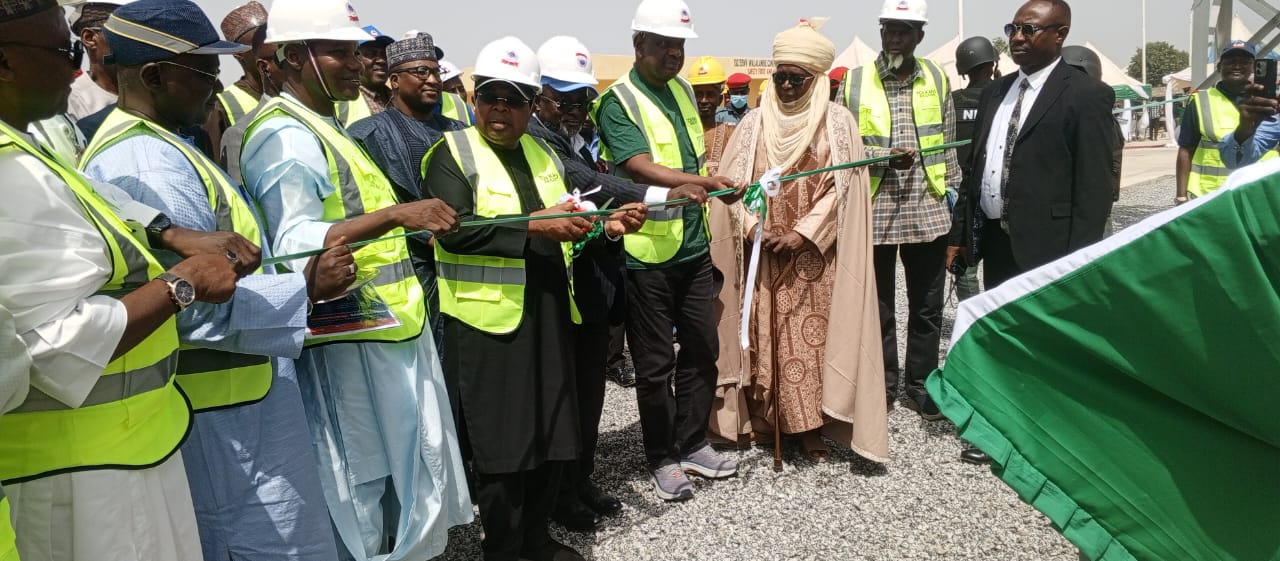
Minister of Power Joseph Olasunkanmi-Tegbe disclosed this on Thursday in Kano at the inauguration of the Walambe 2x40MVA, 132/33kV transmission substation, one of several electricity infrastructure projects commissioned in the state.
The three designated energy zones cover the Abuja-Kaduna-Kano, Lagos-Ogun-Benin and Enugu-Port Harcourt corridors. According to the minister, the government is conducting technical audits across the zones to identify infrastructure gaps, establish the causes of electricity supply challenges and determine the interventions required.
He said the audits were intended to ensure that public resources were directed towards necessary improvements rather than investments that fail to address the underlying problems.
Olasunkanmi-Tegbe described Kano as a strategic hub in the Northern Energy Zone because of its industrial and commercial importance. He said the Walambe substation would provide an additional supply point, ease pressure on existing facilities and improve flexibility across the transmission network.
The facility is expected to provide alternative supply arrangements for Mariri, Jogana, Farm Centre and Zaria Road. The minister also highlighted a dedicated 33kV feeder for Lee Group of Companies, which he said had operated off-grid for more than 30 years.
He said the connection demonstrated the role of transmission infrastructure in supporting industrial development by giving productive businesses more reliable access to electricity.
The minister urged host communities to protect power infrastructure against vandalism, warning that attacks on electricity facilities disrupt business operations, reduce productive hours and affect livelihoods.
He added that President Bola Tinubu had directed the ministry to prioritise the development of the three energy zones to promote a more balanced electricity supply across the country. The ministry would also work with the Kano State Government and other power sector stakeholders to coordinate projects and avoid duplication.
Olasunkanmi-Tegbe commended the Transmission Company of Nigeria (TCN), the Nigerian Independent System Operator (NISO), Kano Electricity Distribution Company (KEDCO), Atlantic Engineering and Construction Company Ltd. and the World Bank for their contributions to the project.
The Kano State Government said the state’s electricity supply remained well below its requirements. Governor Abba Kabir-Yusuf, represented by the Commissioner for Power and Renewable Energy, Gaddafi Shehu-Sani, said Kano needed about 1,000 megawatts (MW) to meet its growing industrial and commercial demand but currently received approximately 300MW or less.
The governor said more reliable electricity would strengthen Kano’s position as a commercial centre, improve the operating environment for businesses and support industrial expansion.
He listed state-level interventions that included the rehabilitation of a 10MW hydropower plant, completion of a 6MW hydropower plant at Chalawa and the distribution of transformers to communities. The state has also diversified its energy sources through renewable energy projects, including the 10MW Haske solar power plant, which the governor said was operational.
Kabir-Yusuf also disclosed that the state government had paid ₦2 billion in compensation and allocated land to 750 people affected by right-of-way issues along a transmission corridor, in an effort to resolve a longstanding dispute.
He expressed optimism that ongoing electricity infrastructure projects linking Kaduna and Kano would further improve supply when completed, adding that increased power availability would support industrialisation, economic activity and residents’ quality of life.
Alhaji Mahe Bashir, Walin Kano, who represented the Emir of Kano, Muhammadu Sanusi II, said the development would add value to Kano’s economy and help sustain economic activity.
Other projects inaugurated in the state included a 1x300MVA, 330/132kV power transformer and a 1x100MVA, 132/33kV transformer at Kumbotso, a 1x100MVA, 132/33kV transformer at Dakata, and a 1x100MVA, 132/33kV transformer at Dan’Agundi.
THE ISSUES
The proposed 24-hour electricity supply across the three energy zones is an ambitious target, but achieving it will require improvements across the power supply chain. Stronger transmission infrastructure can move more electricity and create alternative supply routes, but it cannot by itself guarantee uninterrupted power if generation is insufficient or distribution networks cannot deliver electricity reliably to end users.
Kano’s reported demand of 1,000MW, compared with supply of about 300MW or less, illustrates the scale of the challenge. The gap affects more than household convenience. Manufacturers and commercial operators facing unreliable supply often have to rely on generators or other alternatives, adding to operating costs and making production planning more difficult.
The Walambe substation and the other commissioned transformer projects could help address transmission constraints and improve network flexibility. The dedicated feeder for Lee Group of Companies also highlights how targeted connections can support businesses that have operated outside the national grid for decades. However, the actual economic benefit will depend on the consistency and volume of electricity delivered after commissioning.
The planned technical audits are therefore important because they could help the government distinguish between problems requiring transmission upgrades and those stemming from generation, distribution or other system constraints. Their value will depend on whether the findings lead to clearly prioritised, funded and coordinated interventions.
The compensation and land allocation reported by the Kano State Government also underline the importance of resolving right-of-way disputes that can delay infrastructure projects. Coordination between federal and state authorities will be necessary to prevent overlapping investments and ensure that new facilities connect effectively with the wider network.
WHAT’S BEING SAID
“To ensure that we do not spend money and resources on wrong things, we are currently conducting technical audits across these three zones,” he said. – Joseph Olasunkanmi-Tegbe, Minister of Power
“The Walalambe substation will provide an additional supply point, ease pressure on existing facilities and improve flexibility of the transmission network.
“The facility will provide alternative supply arrangements for Mariri, Jogana, Farm Centre and Zaria Road,” he said. – Joseph Olasunkanmi-Tegbe, Minister of Power
“Our electricity system must be able to serve productive businesses and give them the confidence to plan for the future.
“Therefore, we urge the host communities to protect electricity infrastructure against vandalism.
“Attacks on power facilities disrupt businesses, reduce productive hours and affect livelihoods,” Olasunkanmi-Tegbe stated. – Joseph Olasunkanmi-Tegbe, Minister of Power
“Kano requires 1,000 megawatts (MW) of electricity to meet its growing industrial and commercial demand.” – Abba Kabir-Yusuf, Kano State Governor
WHAT’S NEXT
The immediate priority is the outcome of the technical audits across the three energy zones. Their findings should help establish which infrastructure constraints must be addressed first and what additional investments are needed to improve supply reliability.
The performance of the newly commissioned Kano facilities will also be important to watch. Improvements in supply to the communities identified by the minister, as well as the connection of Lee Group of Companies to the national grid, would provide practical indicators of the project’s impact.
Completion of the ongoing electricity infrastructure projects linking Kaduna and Kano could further affect supply to the state. However, the extent of any improvement will depend on the projects’ completion and the capacity of the wider electricity system to deliver power consistently.
For businesses, the key measure will be whether these investments result in fewer supply interruptions, lower dependence on costly alternative power sources and more predictable operating conditions. The government’s 24-hour supply target will ultimately be judged by the reliability of electricity delivered to homes and businesses, not only by the number of facilities commissioned.
BOTTOM LINE
The Federal Government is prioritising three energy zones to improve electricity reliability and support industrial growth, with Kano emerging as a major focus because of the gap between its power demand and current supply. The new transmission facilities provide additional infrastructure, but sustained progress will depend on coordinated improvements across generation, transmission and distribution.
Source: News Agency of Nigeria (NAN)