











The Federal Government is projecting almost $1bn (about N1.49tn) in annual revenue from electricity exports to 15 West African countries by June 2026, as Nigeria accelerates plans to fully integrate into the regional power market under the West African Power Pool (WAPP).
Minister of Power, Chief Adebayo Adelabu, disclosed this on Wednesday at a press briefing in Abuja, where he confirmed that Nigeria successfully executed a landmark four-hour grid synchronisation test with the West African regional network on 8 November 2025.
The synchronisation exercise marked the first time Nigeria’s national grid operated seamlessly and at a unified frequency with the interconnected systems of Ghana, Côte d’Ivoire, Liberia, Sierra Leone, Burkina Faso, Guinea, Senegal, The Gambia, Guinea-Bissau, Mali and, via bilateral links, Niger, Benin and Togo.
Adelabu said the historic test demonstrated the technical readiness of the sub-region to function as a harmonised electricity market. He added that Nigeria is working towards achieving permanent synchronisation by June 2026, with discussions ongoing ahead of a planned 48-hour stability test.
Revenue Potential and Export Capacity
The Nigerian Independent System Operator (NISO) indicated that the country currently allocates 600 megawatts to bilateral electricity trade agreements each day. With the regional tariff averaging $0.19/kWh—significantly higher than Nigeria’s domestic tariff of $0.07/kWh—official estimates show that exporting the full capacity could yield approximately $114,000 per hour, $2.73m daily and close to $1bn annually.
Figures from the Nigerian Electricity Regulatory Commission show that Nigeria retains the lowest end-user tariff in West Africa, charging just over a third of the regional average. Officials argue that exporting surplus power at commercial tariffs would help ease sector liquidity challenges, provide fresh revenue for infrastructure upgrades and deepen regional energy integration.
Domestic Supply Will Not Suffer, FG Assures
Addressing concerns over possible supply shortages, Adelabu stressed that electricity exports would not affect domestic availability. He noted that the nation’s transmission wheeling capacity has expanded to 8,500MW, yet actual generation remains around 5,000MW due to inadequate offtake by distribution companies.
“We have the capacity to generate and transmit more than we currently do,” he said. “As long as the domestic grid remains underutilised, Nigeria can export to other countries without compromising local supply.”
Strengthening Grid Stability Through Modernisation
Speaking at the NISO Maiden Stakeholders’ Engagement in Abuja, officials highlighted significant progress in adopting free-governor control—an automated stabilisation mechanism critical for regional grid reliability.
NISO’s Executive Director for System Operations, Nafisatu Ali, revealed that compliance among generating companies has risen from 20 per cent to 60 per cent since the Nigerian Electricity Regulatory Commission mandated the practice. She said this advancement played a key role in maintaining grid stability during the synchronisation test, citing an incident in Côte d’Ivoire where Nigerian generators automatically compensated for a sudden drop in supply.
“The target is full compliance,” she said. “This system enhances resilience and boosts investor confidence as Nigeria prepares for expanded cross-border electricity trade.”
Adelabu added that ongoing and completed transmission projects—such as the North-Core line, the Ajegunle 330kV substation, the Kaduna–Kano upgrade and the Gwagwalada–Gurara connection—will provide the structural backbone for improved power delivery nationwide.


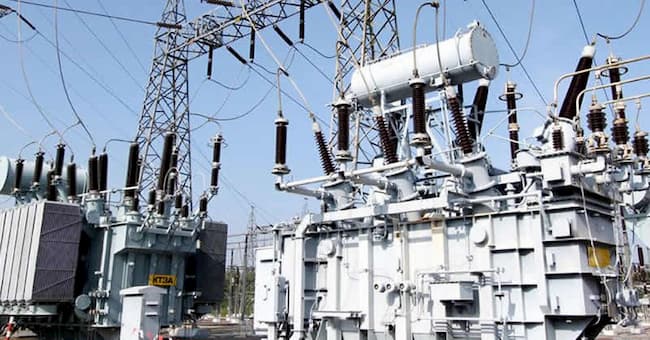

 in annual revenue from electricity exports to 15 West African countries ....)