

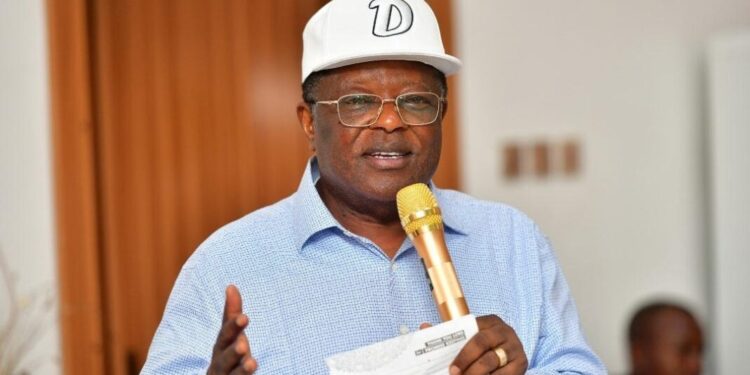
The Federal Government announces that activities along the Falomo-Third Mainland Bridge corridor, including its ramps, are now monitored remotely from Abuja through newly installed Closed-Circuit Television (CCTV) cameras.
The Minister of Works, Senator David Umahi, confirms this during a stakeholder meeting on the Lagos-Calabar Coastal Highway project. He explains that the CCTV system enhances surveillance and security, ensuring continuous monitoring of the area.
According to Umahi, CCTV cameras are installed on and underneath the Third Mainland Bridge and at Falomo, alongside the completion of the rehabilitation project extending from Third Mainland Bridge to Falomo. This section now features streetlights and additional security cameras to improve safety.
Real-Time Monitoring from Abuja
The surveillance system follows a similar model already in use on the Second Niger Bridge. Umahi emphasizes that all activities along this monitored stretch stream live to Abuja, allowing authorities to oversee the corridor remotely.
“We extend rehabilitation on this route, making it a beautiful sight from Third Mainland Bridge to Falomo. Streetlights are installed, and CCTV cameras are in place. Everything happening on this stretch, including the ramps, is visible in Abuja, just like on the Second Niger Bridge,” Umahi states.
The Minister of Works expresses concern over excessive speeding on the newly rehabilitated Third Mainland Bridge. He warns that if reckless driving persists, the government may introduce speed bumps, which could cause serious traffic congestion.
“The speed levels on this bridge are alarming. If we install speed bumps, it will result in heavy traffic gridlock,” Umahi cautions.
To address this, authorities enforce speed limits using CCTV footage captured on the bridge.
Speed Limit and Penalties
The Federal Government enforces a speed limit of 80 km/h on the Third Mainland Bridge following months of extensive repairs. This regulation reduces accidents caused by overspeeding and ensures safer driving conditions.
Speed limit signs are placed strategically along the bridge to alert motorists. Drivers who exceed the limit risk penalties when renewing their driving licenses in Lagos State.
Authorities continue to emphasize the importance of adhering to speed regulations to maintain safety and ensure smooth traffic flow on one of Nigeria’s busiest bridges.






%20cameras.)