







…NEC expands anti-crude theft committee to cover illegal mining operations
The Federal Government has announced a nationwide crackdown on illegal gold miners and mineral smugglers as part of efforts to protect Nigeria’s natural resources and boost government revenue.
The decision followed the National Economic Council’s (NEC) approval to expand the mandate of its Ad-hoc Committee on Crude Oil Theft Prevention and Control—chaired by Imo State Governor, Hope Uzodinma—to include the fight against illegal mining and mineral smuggling.
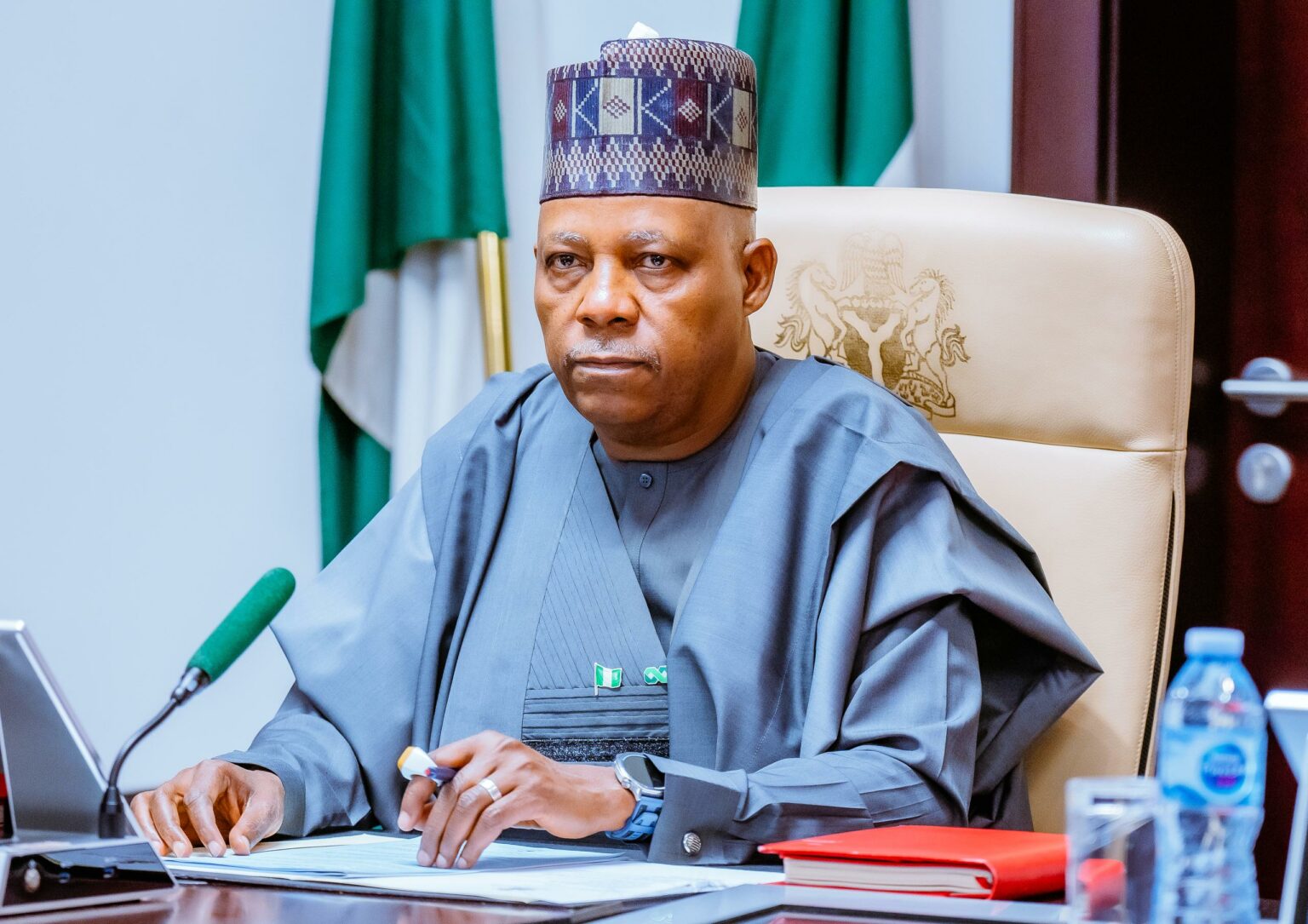
Briefing State House correspondents after the 153rd NEC meeting presided over by Vice President Kashim Shettima at the Presidential Villa, Abuja, Uzodinma said the expansion reflects the government’s determination to plug revenue leakages in the solid minerals sector.
“The National Economic Council Ad-hoc Committee on Crude Oil Theft Prevention and Control, which I chair, presented an interim report today to the Council. NEC received the report with satisfaction and expanded our Terms of Reference to now also take interest in solid minerals, because our solid minerals are being mined and stolen without adding to national revenue,” he said.
Uzodinma disclosed that the committee would collaborate with the Ministry of Solid Minerals Development, the Nigeria Extractive Industries Transparency Initiative (NEITI), and security agencies to curb gold smuggling, illegal quarrying, and unregulated mineral exports.
“Going forward, our committee, working with other government agencies, will ensure that revenue accruing from solid minerals such as gold and other resources is fully captured and protected from theft,” he added.
Originally established in August 2022 under former President Muhammadu Buhari to combat crude oil theft and pipeline vandalism, the ad-hoc committee was reconstituted by President Bola Tinubu in December 2023 amid declining oil production—then hovering between 700,000 and 800,000 barrels per day, far below Nigeria’s OPEC quota.
Nigeria’s illegal mining industry is a multibillion-naira underground economy, particularly in gold, lithium, and other precious minerals. According to NEITI, the country loses more than $9 billion annually to illicit extraction and smuggling.
Investigations show that over 80 per cent of mining operations in Nigeria are informal and unregulated, with many controlled by criminal syndicates and armed groups in the North-West and North-Central regions—turning mineral exploitation into a major source of funding for banditry and cross-border crimes.
To address the crisis, the Ministry of Solid Minerals in September 2024 revoked over 900 dormant mining licences and introduced a national gold reserve policy to strengthen traceability and promote value addition in the sector.
Uzodinma said the expanded committee will adopt a holistic approach, integrating the anti-mining drive into the existing national framework used to combat oil theft.
“Among other things, we recommended that NNPC, working with security agencies, should strengthen surveillance across creeks and offshore regions to prevent illegal entries and vessel movements. That same spirit will now guide our approach to the solid minerals sector,” he said.
The committee is expected to present its first progress report on the expanded mandate at the next NEC meeting in November.