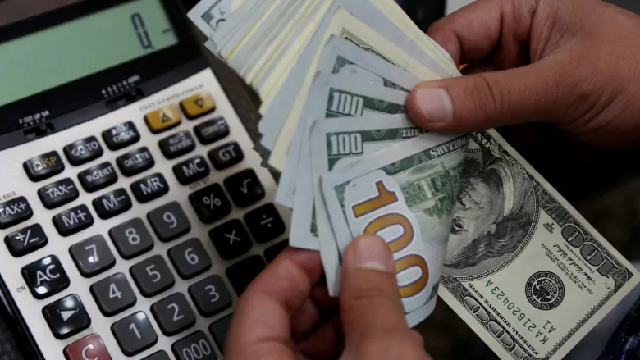


The Federal Government on Monday confirmed it has fully repaid the $3.4 billion emergency loan it received from the International Monetary Fund (IMF) during the COVID-19 pandemic.
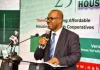
Speaking to journalists following the 27th session of the Federal Executive Council at the Aso Rock Villa in Abuja, Minister of Information and National Orientation, Mohammed Idris, disclosed that the repayment reaffirms Nigeria’s fiscal credibility.
Idris explained that President Bola Tinubu had authorized the settlement of the IMF facility, inherited from prior administrations, in line with his belief in governmental continuity.
“President Tinubu upholds the view that governance is a continuum. Acting on this principle, he instructed that Nigeria must settle its obligations under the IMF program. I am pleased to report that the entire $3.4 billion has been repaid,” he stated.
According to Idris, the full repayment is already reflecting positively on Nigeria’s international financial reputation. “This move sends a strong signal to global investors—Nigeria honors its debt obligations. It enhances our standing in the global financial system,” he said. Addressing lingering public doubts, Idris stressed that the repayment process had been completed and verified.
“Some scepticism has been voiced, but I can categorically confirm that the debt has been paid off in full,” he added.
Nigeria accessed the IMF’s Rapid Financing Instrument (RFI) in April 2020 to address a balance-of-payments deficit caused by the pandemic and a sharp decline in oil prices.
The RFI had a grace period of three-quarters of a year, followed by eight quarterly repayments over a five-year term. The principal repayment commenced in Q3 2023 and was scheduled to conclude in Q2 2025.
According to the Debt Management Office, Nigeria returned $1.22 billion to the IMF within the first nine months of 2023, reducing the outstanding balance from $3.26 billion in June 2023 to $1.16 billion by March 2024. By January 2025, the debt had further declined to $472 million due to front-loaded payments made possible by stronger oil revenues and enhanced fiscal discipline.
The IMF confirmed on April 30, 2025, that Nigeria had completely settled the loan, one quarter ahead of schedule—marking the first time the country had fully repaid a multilateral emergency loan.
While the principal has been cleared, Nigeria is still expected to remit approximately $30 million annually in Special Drawing Rights charges until 2029. The IMF remains a key creditor, accounting for $1.63 billion—about 35%—of Nigeria’s $4.66 billion foreign debt servicing costs for 2024.
Meanwhile, Idris also announced that the Tinubu administration is encouraging increased private sector engagement in road development and infrastructure projects, citing growing interest from non-state actors.
“There is substantial enthusiasm from private investors to participate in road and infrastructure development. The government has instructed relevant agencies to facilitate such participation, as part of a broader strategy to diversify funding and stimulate economic growth,” he said.
However, the Council expressed concern over the rising incidence of theft involving bridge components and manhole covers, which are often stolen and sold as scrap. “Criminals are dismantling essential infrastructure under the cover of night and selling parts to recyclers. This trend is deeply alarming,” Idris warned.
President Tinubu has directed the Attorney-General of the Federation to assess current legislation and propose more severe penalties to address the issue. “There are existing laws on the matter, but the President has asked for a review to ensure they are robust enough to deter such acts,” the minister added.
Idris also hinted at a shift toward more frequent Council meetings to accelerate decision-making processes. “The Council will reconvene in two days to resolve outstanding issues. This is part of the President’s broader plan to ensure prompt and effective governance,” he concluded.