Key Points
- Human rights campaigner Femi Falana (SAN) has called on the media to intensify advocacy for the reopening of abandoned murder cases.
- The call was made during a SERAP interactive session in Ikeja focused on promoting accountability and justice amidst growing insecurity.
- Falana identified several high-profile cases requiring immediate attention, including the deaths of Sylvester Oromoni and Kudirat Abiola.
- He criticized the media for underutilizing the Freedom of Information Act and sacrificing professionalism for commercial gains like newspaper wraparounds.
- The activist emphasized that the media has a constitutional duty to hold the government accountable and follow up on rights violations until they are resolved.
Main Story
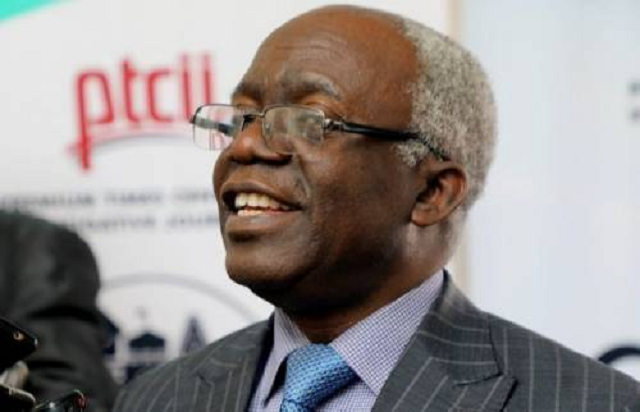
Senior Advocate of Nigeria, Femi Falana, has challenged the Nigerian media to reclaim its role as a public watchdog by demanding justice for victims of extrajudicial killings and unresolved murders.
Speaking at a press conference organized by the Socio-Economic Rights and Accountability Project (SERAP), Falana argued that the culture of impunity persists because high-profile cases are often abandoned by the authorities once public outcry subsides.
He urged journalists to resist the “forgetfulness” that allows these cases to stay closed without anyone being held accountable.
Beyond the call for justice, Falana expressed concern over the declining standards of professional journalism. He specifically pointed to the prevalence of “wraparound” advertisements where commercial content covers the front page as a practice that undermines public trust and truth.
He further noted that the media has failed to fully leverage the Freedom of Information Act to extract data that could promote good governance and expose human rights abuses.
Cases for Reopening
- Sylvester Oromoni: The student of Dowen College, Lagos, whose death sparked national outrage.
- Kudirat Abiola: The wife of Chief MKO Abiola, whose murder remains a significant point of historical grievance.
- Owode Onirin Traders: The alleged murder of six traders at a Lagos market in August 2025.
- Offa Bank Robbery: The 2018 Kwara incident that resulted in numerous fatalities and unresolved questions.
- Lagos Police Killings: Recent instances involving alleged extrajudicial actions by officers that have not been revisited.
The Issues
- Several high-profile murder and rights violation cases remain abandoned due to lack of sustained follow-up.
- The pressure to prioritize commercial revenue, such as wraparound ads, often compromises editorial objectivity.
- Media managers and journalists are not sufficiently invoking the Freedom of Information Act to seek justice.
- The Federal Government’s justice delivery institutions are failing to provide timely resolution for victims of rights violations.
What’s Being Said
“The media must not allow such cases to be forgotten… follow-up on rights violation cases until resolved.” — Femi Falana, SAN
“The media must not sacrifice truth and objectivity on the altar of commercial gains.” — Femi Falana, SAN
“The media has a constitutional duty to hold government accountable and defend the rights of citizens.” — Human Rights Activist
What’s Next
- Media organizations are encouraged to begin investigative follow-ups on the specific cases listed by Falana.
- Potential increase in the use of the Freedom of Information Act by journalists to demand state records on unresolved crimes.
- Collaboration between civil society organizations and media outlets to create a unified front for accountability.
- Pressure on the Federal Government to strengthen national justice institutions and ensure timely delivery for victims.
Bottom Line
Femi Falana’s call serves as a reminder that the media’s primary duty is to the public interest, requiring a shift away from commercial distractions and toward a sustained fight for justice.