


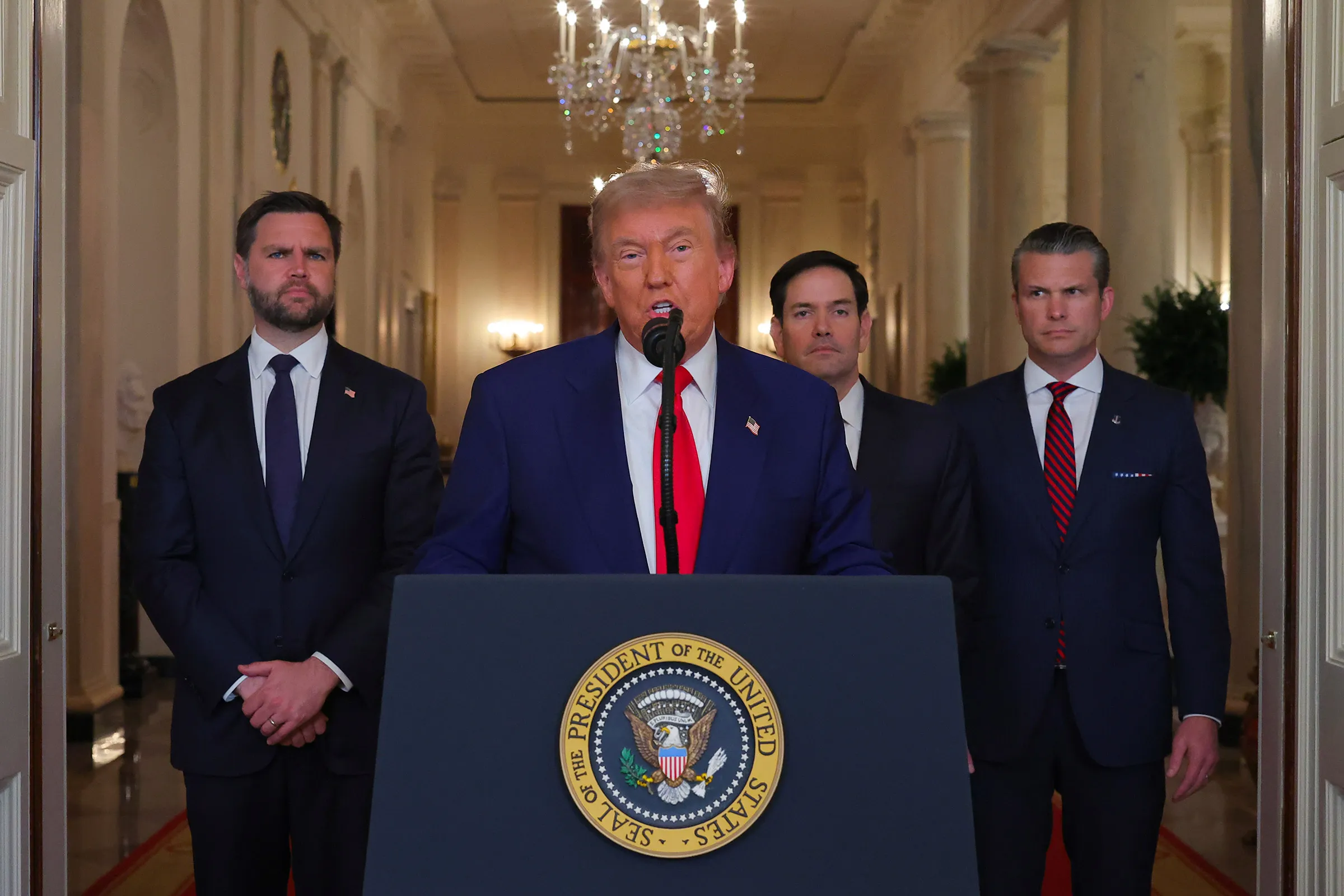
US President Donald Trump has unveiled a controversial new international initiative known as the “Board of Peace,” a body that his administration says is designed to resolve global conflicts but which has already triggered sharp diplomatic divisions and accusations of politicisation.
According to the board’s founding charter, reviewed by AFP, participating countries may be required to contribute up to $1 billion to secure a permanent seat. While the initiative was initially framed around the reconstruction of Gaza, the document suggests its mandate could extend far beyond the Palestinian territory.
What is the Board of Peace meant to do?
The charter describes the Board of Peace as an international organisation dedicated to promoting stability, restoring lawful governance, and securing long-term peace in regions affected or threatened by conflict.
It states that the board will carry out peace-building activities in accordance with international law, though it does not specify concrete mechanisms for enforcement or mediation. The body is expected to convene annually and make decisions through a majority vote.
Who leads the board?
Trump is named chairman of the Board of Peace and will simultaneously serve as the official representative of the United States. Under the charter, the chairman is granted sweeping authority, including the exclusive power to establish, amend, or dissolve subsidiary bodies deemed necessary to fulfil the organisation’s mission.
Trump will also appoint members of the executive board, described as individuals of “global stature,” who will serve two-year terms. These members may be removed at the chairman’s discretion.
The document stipulates that the chairman can only be replaced in cases of voluntary resignation or incapacity. A US official confirmed that Trump may retain the chairmanship even after leaving office, although a future US president would have the right to appoint a different US representative.
How does membership work?
Participation in the Board of Peace is by invitation only and must be extended directly by the US president. Member states are to be represented by their head of state or government and will generally serve a maximum term of three years.
However, the charter includes a notable exception: countries that contribute more than $1 billion in cash within the first year of the board’s establishment are exempt from the three-year term limit, effectively granting them permanent membership. US officials insist that participation does not impose mandatory funding obligations, stating that contributions are voluntary unless a country seeks permanent status.
Who sits on the executive board?
The executive board, chaired by Trump, comprises seven high-profile figures:
– US Secretary of State Marco Rubio
– Trump’s special negotiator Steve Witkoff
– Jared Kushner, Trump’s son-in-law
– Former UK Prime Minister Tony Blair
– US billionaire financier Marc Rowan
– World Bank President Ajay Banga
– Robert Gabriel, a senior Trump aide on the National Security Council
The inclusion of political allies, financiers, and international figures has raised questions about the board’s independence and governance structure.
Which countries have been invited?
Invitations have been extended to dozens of nations, including close US allies and geopolitical rivals alike. China confirmed receiving an invitation but said it remains committed to an international system centred on the United Nations.
Russian President Vladimir Putin and Ukrainian President Volodymyr Zelensky have both been invited, despite Russia’s ongoing invasion of Ukraine, a decision that has drawn strong criticism from several Western governments.
Some leaders have already agreed to participate. Hungarian Prime Minister Viktor Orban, Israeli Prime Minister Benjamin Netanyahu, Azerbaijani President Ilham Aliyev, and the United Arab Emirates have all confirmed their involvement. Canada has also agreed to take part but has ruled out paying the $1 billion fee for permanent membership.
Who is staying away?
France has signalled it will not join the initiative, a move that prompted Trump to threaten punitive tariffs on French wine. Ukrainian President Zelensky has said it would be extremely difficult for Kyiv to sit on the same council as Moscow, while UK officials expressed concern over Russia’s inclusion.
A spokesperson for the British government described Putin as the aggressor in an illegal war against Ukraine, questioning the sincerity of his commitment to peace. According to the charter, the Board of Peace will formally come into force once at least three states have expressed consent to be bound by its terms.