Key points
- Solid mineral experts expressed concern that China’s zero-tariff regime may drive massive exports of unprocessed minerals from Africa.
- The policy could directly undermine the implementation of the Federal Government’s domestic mineral value-addition policy.
- China expanded the zero-tariff treatment on May 1 to cover all 53 African countries with which it shares diplomatic ties.
- The preferential tariff rate applies to 20 African non-LDCs, including Nigeria, for a duration of two years.
- Economists noted that while the policy threatens local processing frameworks, it presents short-term opportunities to boost non-oil export revenues.
Main Story
Some experts have expressed concern that China’s zero-tariff regime on exports from Africa may drive unprocessed mineral exports.
The experts told the News Agency of Nigeria on Tuesday in Abuja that the policy could also affect the implementation of the Federal Government’s value addition policy for minerals.
The zero-tariff regime policy aims to create new opportunities for Africa to boost exports and industrialisation amid global headwinds of protectionism.
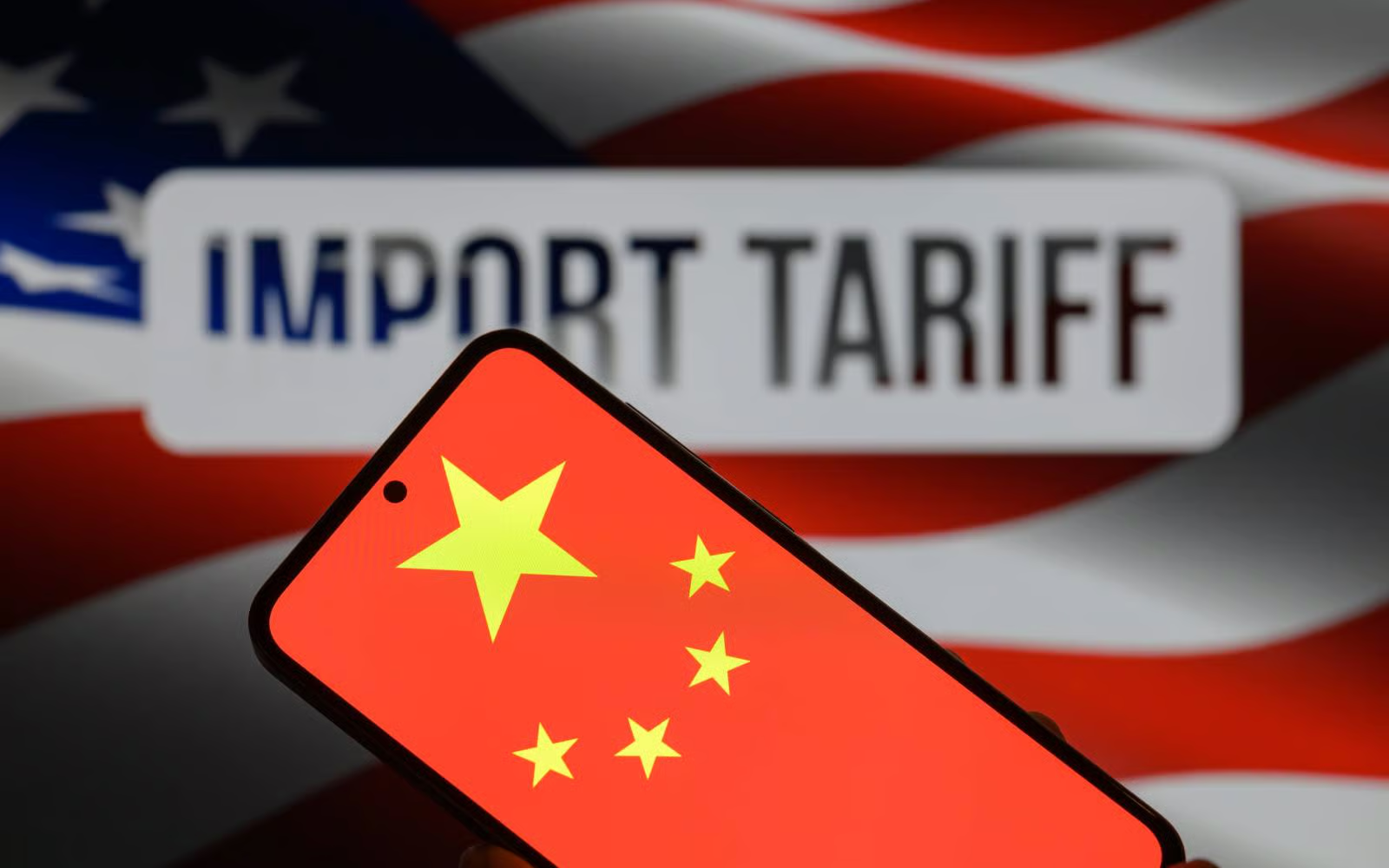
China, effective from May 1, expanded its zero-tariff treatment to cover all 53 African countries with which it has diplomatic ties, following a prior cancellation of tariffs for 33 Least Developed Countries on December 1, 2024.
The report indicated that under the new trade arrangement, the zero-tariff benefits apply to 20 African non-LDCs, including Nigeria, as a preferential tariff rate for two years.
Mining stakeholders warned that because China requires massive raw materials to feed its local industry, the scrapping of tariffs serves as a direct incentive for foreign mining firms operating in Nigeria to bypass domestic processing laws.
While financial analysts noted that the policy could make non-oil exports more competitive and generate short-term revenue, mining experts urged the federal government to approach the trade concession with strict regulatory caution.
The Issues
- Unrestricted raw material flight deprives the country of the tech transfer, industrialization, and job creation that accompany domestic mineral processing.
- The extensive presence of Chinese mining firms implies that tariff removal primarily protects external corporate investments rather than developing local mining capacity.
- The rapid, large-scale export of critical energy transition minerals like lithium and copper threatens Nigeria’s long-term economic diversification goals.
What’s Being Said
- “China is looking for raw materials either to stockpile or feed the growing need of their local industry and will prefer raw minerals to processed ones,” Prof. Akinade Olatunji, former President of the NMGS, stated.
- Olatunji added that “high tariff would have made their operations in the continent unprofitable,” suggesting the policy serves to protect existing Chinese investments.
- “It is our candid opinion that the Federal Government should embrace this bait with caution, especially as it affects the solid minerals,” the National President of the Miners Association of Nigeria, Dele Ayankele, warned.
- Ayankele stated that driving unprocessed exports would undermine “government policies on value addition, industrial revolution, and technology transfer.”
- “With zero tariffs, Nigerian exporters can save on costs, making their products more competitive in the Chinese market,” noted economics lecturer Dr Emmanuel Eche.
What’s Next
- The Ministry of Solid Minerals Development will face pressure to tighten compliance monitoring on its domestic mineral processing and value-addition mandates.
- Exporters of copper, iron ore, and tin will adjust their shipping logistics to capitalize on the two-year preferential tariff window in Chinese markets.
- Regulatory agencies are expected to evaluate trade frameworks to ensure that incoming infrastructure investments align with local skills and expertise development.
Bottom Line China’s newly expanded zero-tariff policy offers an immediate cost-saving advantage for Nigerian non-oil exports, but mining stakeholders warn it functions as a regulatory strain that could derail Nigeria’s industrialization drive by accelerating the flight of unprocessed energy transition minerals.