





KEY POINTS
- ECOWAS naval chiefs met in Accra to strengthen the Combined Maritime Task Force (CMTF).
- Talks focused on terrorism, drug trafficking, piracy, and illegal fishing in the Gulf of Guinea.
- Nigeria is set to host the formal launch of the joint maritime force in May.
MAIN STORY
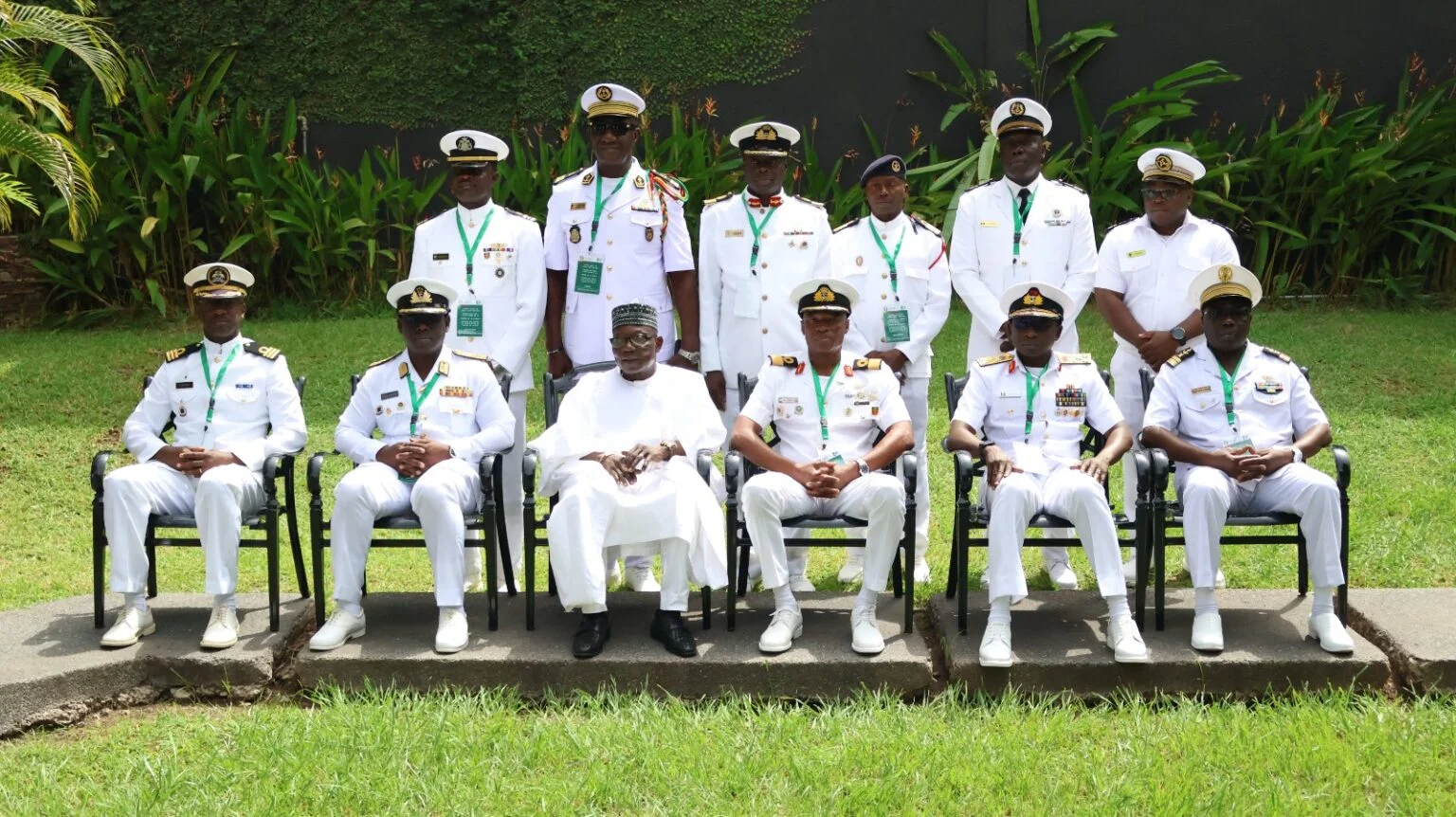
Chiefs of the Naval Staff of member states of the Economic Community of West African States (ECOWAS) have renewed their commitment to strengthening regional maritime security to address growing threats in the Gulf of Guinea.
This followed the fifth meeting of the ECOWAS Sub-Committee of Chiefs of the Naval Staff held in Accra, Ghana, from Feb. 16 to Feb. 20.
According to a statement issued on Monday in Abuja by the Acting Director of Information of the Nigerian Navy, Capt. Abiodun Folorunsho, the meeting focused on enhancing the operational readiness of the Combined Maritime Task Force (CMTF).
Folorunsho said discussions centred on rising maritime insecurity, including terrorism, drug trafficking, piracy, and Illegal, Unreported and Unregulated (IUU) fishing.
He noted that Nigeria’s Chief of Naval Staff, Idi Abbas, played a leading role in the deliberations, alongside the ECOWAS Commissioner for Political Affairs, Peace and Security, Amb. Abdel-Fatau Musah, heads of regional maritime security centres, and Multinational Maritime Coordination Centres (MMCC) in Zones E, F, and G.
Representatives from the United Nations Office on Drugs and Crime, the EU-African Chamber of Commerce, and the CMTF command also attended.
THE ISSUES
The Gulf of Guinea remains one of the world’s most volatile maritime corridors, plagued by piracy, smuggling networks, and illegal fishing activities that threaten regional economies and security stability.
WHAT’S BEING SAID
Musah commended progress under the ECOWAS Integrated Maritime Strategy, highlighting initiatives such as Operation SAFE DOMAIN in Zone E, Operation ANOUANZE in Zone F, and joint maritime patrols in Zone G.
He also called for stronger collaboration with landlocked countries, including Burkina Faso, Mali, and Niger, to counter terrorism and transnational organised crime.
Folorunsho added that the meeting recognised environmental-security concerns in the Lake Chad Basin and praised Nigeria’s Falcon Eye Surveillance System for improving maritime situational awareness.
WHAT’S NEXT
Member states agreed to accelerate plans to operationalise the CMTF through a coalition of willing nations. Côte d’Ivoire, Gambia, Ghana, Liberia, and Sierra Leone have formally expressed interest in joining Nigeria.
The task force is scheduled to be inaugurated in Lagos between May 31 and June 1, with Nigeria providing three naval ships, a helicopter, logistics vehicles, and operational support facilities.
BOTTOM LINE
The renewed push to operationalise the CMTF signals stronger regional resolve to confront evolving maritime threats, with Nigeria expected to play a leading role in sustaining joint security operations across the Gulf of Guinea.


%20have%20renewed%20their%20commitment%20to%20strengthening%20regional%20maritime%20security%20to%20address%20growing%20threats%20in%20the%20Gulf%20of%20Guinea.)