

Keypoints
- The Executive Secretary of the United Nations Economic Commission for Africa has called for urgent action to close the continent’s huge financing gap in water and sanitation investments.
- Speaking at a high-level side event during the 2026 Annual Meetings of the African Development Bank Group in Brazzaville, officials noted that current annual investment stands between 12 billion dollars and 15 billion dollars.
- Africa requires more than 50 billion dollars annually to achieve Sustainable Development Goal 6 on clean water and sanitation.
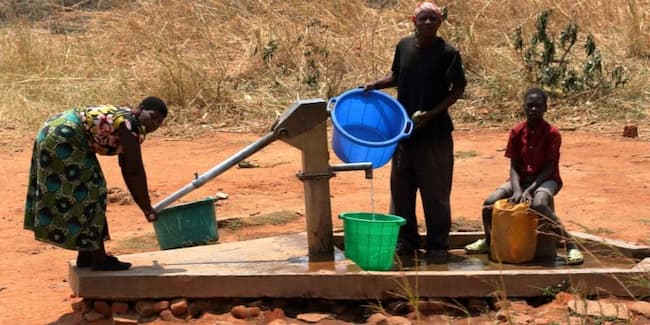
- Reports indicate that more than 400 million Africans still lack access to basic drinking water, while more than 700 million people remain without safely managed sanitation services.
- Despite climate change impacts being largely transmitted through water systems, water-related projects receive less than three per cent of global climate finance.
Main Story
The Executive Secretary of the United Nations Economic Commission for Africa (ECA), Mr Claver Gatete, has called for urgent action to close Africa’s huge financing gap in water and sanitation investments.
Gatete made the call at a high-level side event on Financing Africa’s Water Investments during the 2026 Annual Meetings of the African Development Bank Group in Brazzaville, Republic of Congo.
He said inadequate investment in the sector was slowing progress on sustainable development, climate resilience and economic transformation across the continent.
According to him, Africa requires more than 50 billion dollars annually to achieve Sustainable Development Goal 6 on clean water and sanitation. He, however, noted that current annual investment in the sector stood between 12 billion dollars and 15 billion dollars.
To evaluate intermediate structural dependencies, economic planners note that inadequate public funding in municipal utilities severely degrades the capacity of urban areas to manage industrial wastewater effluents effectively. Media reports indicate that the lack of access to basic sanitation services and clean drinking water places a massive economic constraint on public health systems.
Gatete urged African governments to integrate water into national development plans, fiscal policies and investment strategies. He also called for stronger project preparation systems to develop investment-ready water infrastructure projects across the continent.
Furthermore, international financial networks are pushing for structural changes in governance to build transparent asset management frameworks capable of reducing project risks.
The ECA boss further advocated expanded blended finance mechanisms and stronger governance systems to attract private capital and ensure accountability.
He described water as critical to agriculture, energy, industrialisation, public health and regional integration, stressing that underinvestment in the sector had become a major economic constraint. He reaffirmed ECA’s commitment to working with the African Development Bank, the African Union Commission and other partners to advance implementation of the Africa Water Vision 2063.
The Issues
- Securing over 50 billion dollars annually to achieve Sustainable Development Goal 6 amid severe underinvestment.
- Rectifying the massive global imbalance where water-related projects receive less than three per cent of global climate finance.
- Providing basic drinking water and safely managed sanitation services to over one billion combined affected citizens.
What’s Being Said
- Identifying the primary obstacle to progress as an operational and scaling problem rather than a failure of technical options, Mr Claver Gatete stated: “The challenge is not a lack of solutions; it is about how we prioritise, finance and implement them at scale,”
- Warning about the severe disparity between actual environmental vulnerabilities and the allocation of international capital resources, Gatete noted: “This imbalance has created a growing disconnect between the scale of the risk and the scale of investment,”
- Demanding an immediate shift from institutional policy dialogues toward the execution of verifiable, capital-backed infrastructure on the ground, he added: “The next phase must focus on turning the discussions into tangible results, including financed projects, stronger partnerships and improved access to water and sanitation for millions across Africa,”
What’s Next
- African governments will face ongoing calls to integrate water into national development plans and fiscal policies.
- Development partners will focus on building stronger project preparation systems to create investment-ready infrastructure.
- The ECA, African Development Bank, and African Union Commission will collaborate to advance the implementation of the Africa Water Vision 2063.
Bottom Line
Warning that underinvestment has become a major economic constraint, the ECA has demanded immediate action to bridge Africa’s water funding crisis, where current annual investments of 12 billion to 15 billion dollars fall dangerously short of the 50 billion dollars needed to provide clean water and sanitation to over a billion vulnerable people.




,%20Mr%20Claver%20Gatete,%20has%20called%20for...)