

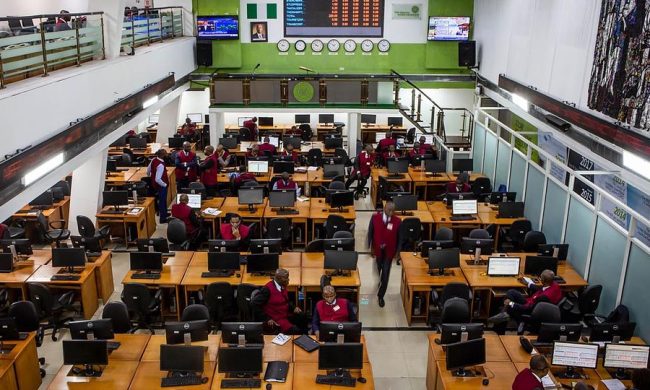







The Nigerian capital market has continued to demonstrate resilience, buoyed by strong local investor participation despite global headwinds. Recent data from the Nigerian Exchange (NGX) revealed that Foreign Portfolio Investment (FPI) transactions rose by 4.8% month-on-month in July 2025, reaching N145.95 billion (US$95.17 million), compared to N139.31 billion (US$91.07 million) in June.
Despite the increase, foreign inflows represented only 8.04% of total market turnover, which stood at N1.82 trillion. Analysts note that while foreign activity remains modest, its presence reinforces investor confidence and adds credibility to the Nigerian equities market.
The highlight of July’s trading activity, however, was the surge in domestic participation. Local transactions soared by 161.1% to N1.67 trillion from N639.34 billion in June, accounting for nearly 92% of total turnover. Institutional investors played a key role, executing block trades that strengthened market stability.
The breakdown of FPI activity showed inflows declined sharply to N50.48 billion from N72.82 billion in June, while outflows rose to N95.47 billion from N66.49 billion, signalling growing caution among offshore investors amid currency and macroeconomic concerns.
On the domestic side, institutional investors dominated with N1.15 trillion worth of trades compared to N364.71 billion in June. Retail activity also climbed to N516.50 billion from N274.63 billion, though net outflows outweighed inflows, reflecting cautious optimism.
Year-to-date figures showed a total NGX transaction value of N6.01 trillion as of July 2025, a 94.1% increase from N3.10 trillion recorded in the same period of 2024. Domestic investors accounted for 78.67% of this, while foreign participation improved slightly to 21.33% from 19.32% last year.
Market analysts attributed the positive trend to strong corporate earnings, stable exchange rates, moderating inflation, and supportive regulatory reforms. Declining domestic debt yields and corporate actions in sectors such as telecoms, financial services, and energy also boosted equities.
However, risks persist. Rising stock valuations have led to intermittent profit-taking, while elevated fixed-income yields remain a strong alternative for risk-averse institutional investors.
Although foreign participation remains modest, analysts believe its stabilizing role is critical. They maintain that continued macroeconomic reforms, currency stability, and investor confidence will be essential to sustaining market momentum.