






Nigeria’s foreign exchange market began the second week of January 2026 with cautious trading, as the naira recorded mixed movements across official and unofficial currency windows amid sustained monitoring of Central Bank of Nigeria (CBN) liquidity actions.
Market participants continued to assess the impact of recent foreign exchange injections by the apex bank, as well as evolving supply dynamics from autonomous inflows and export receipts.
Official FX Market Sees Mild Adjustments
At the Nigerian Foreign Exchange Market (NFEM), the naira opened Friday’s session on a relatively steady note. Data published by the FMDQ Securities Exchange showed that the local currency opened trading at approximately ₦1,424.84 per US dollar.
However, by mid-morning on January 9, 2026, the exchange rate softened slightly, adjusting to around ₦1,426.73 per dollar, reflecting modest demand pressure from importers and manufacturers.
The movement followed a week marked by moderate volatility, during which the official exchange rate oscillated between ₦1,415.00 at the strongest point and ₦1,433.00 at its weakest. Analysts say the recent pattern suggests a delicate equilibrium between foreign currency inflows from exporters and the CBN’s periodic market interventions aimed at stabilising the naira.
According to currency strategists, targeted dollar sales to priority sectors, particularly manufacturing and essential imports, have helped prevent sharp depreciation, even as global market uncertainty continues to influence emerging-market currencies.
Parallel Market Maintains Wider Spread
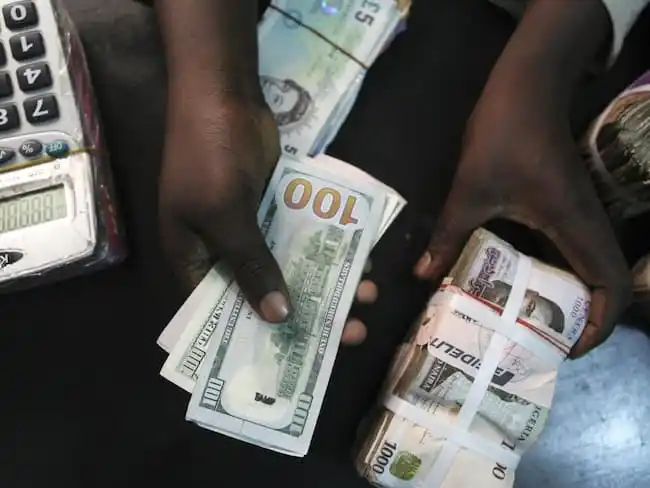
In the parallel or informal market, the naira continued to trade at a noticeable premium to the official rate. Checks with Bureau De Change (BDC) operators in Lagos and Abuja indicated that the dollar exchanged hands within the ₦1,480 to ₦1,505 range.
Despite the persistent gap between the two markets, traders noted a decline in speculative demand compared with the heightened volatility seen in the final quarter of 2025. Market watchers attribute the easing to improved dollar availability and clearer policy signals from monetary authorities.
The spread between the official and parallel market rates remains a key policy concern for the CBN, as authorities continue efforts to narrow the differential and promote convergence across FX windows.
Factors Influencing the Naira’s Direction
Several underlying fundamentals are shaping the naira’s performance at the start of 2026:
- Foreign Exchange Reserves: Nigeria’s external reserves have shown signs of stabilisation in recent weeks, giving the CBN increased capacity to manage short-term liquidity pressures.
- Oil Sector Output: Gradual improvements in crude oil production have supported higher foreign exchange inflows, strengthening supply conditions at the NFEM.
- Monetary Policy Outlook: Investors remain focused on signals from the Monetary Policy Committee (MPC), particularly regarding interest rates, inflation control, and exchange rate management strategies.
Market Outlook
Barring unexpected developments in global oil markets or sudden domestic policy shifts, analysts project that the naira will continue trading within the ₦1,420 to ₦1,440 range at the official window in the near term.
However, economists caution that sustained stability will depend on consistent FX supply, disciplined fiscal management, and continued confidence in Nigeria’s broader macroeconomic framework.










 liquidity actions.)