






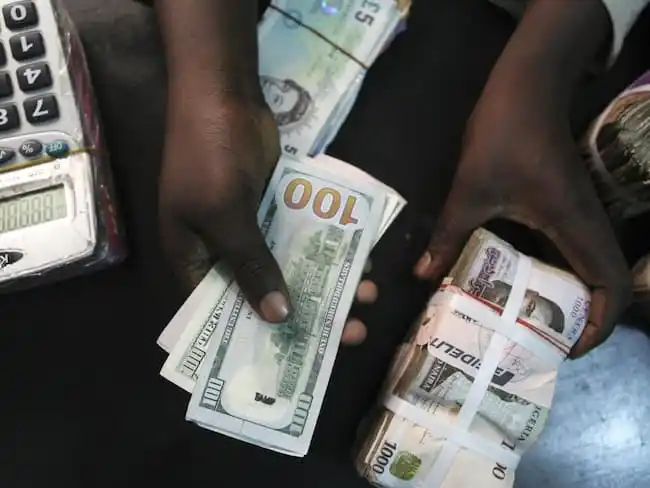
The Nigerian Naira commenced trading for the first full week of 2026 with mixed performance against the US Dollar, reflecting ongoing adjustments in the foreign exchange market as economic activity resumes nationwide. As of Monday morning, January 5, the local currency shows mild stabilization at the official window, even as demand pressures persist.
Official Dollar Rate at NFEM
At the Nigerian Foreign Exchange Market (NFEM), where transactions are supervised by the Central Bank of Nigeria, the Dollar is currently exchanging at an average rate of ₦1,441.85. This marks a cautious start to the year following volatile price movements recorded in early trading sessions.
During the morning hours, the exchange rate briefly dipped to ₦1,437.10 before finding support and settling around current levels. Analysts note that liquidity availability within the official window remains a crucial determinant of price stability, particularly as authorities continue efforts aimed at improving market transparency and exchange rate convergence.
Parallel Market Rates
Outside the official system, the Dollar continues to command a higher price in the parallel market. Bureau De Change operators and independent traders across Lagos, Abuja, and Kano are currently quoting the greenback between ₦1,455 and ₦1,465, with variations influenced by transaction volume and regional demand.
While the disparity between official and informal rates remains, recent trends suggest a gradual narrowing of the gap, supported by tighter monetary conditions and increased regulatory oversight.
Market Forces Shaping the Exchange Rate
The Dollar–Naira exchange rate at the start of 2026 is being influenced by several interrelated factors:
- Renewed import demand: Manufacturers and import-dependent businesses are re-entering the market to restock inventories for the first quarter, driving increased Dollar demand.
- Post-festive liquidity adjustment: The conclusion of the holiday season has brought renewed transactional activity, putting short-term pressure on foreign exchange supply.
- CBN policy expectations: Investors and market participants continue to monitor Nigeria’s external reserves position and any potential Central Bank intervention aimed at easing liquidity constraints.
As the week progresses, movements in both the official and parallel markets are expected to remain sensitive to policy signals and demand flows, particularly from the real sector.