





Nigeria’s foreign exchange market opened the week on a steady note as the Naira traded within a tight band against the United States Dollar on Tuesday, January 13, 2026, reflecting cautious optimism across currency markets.
Early trading activity indicates that the local currency has maintained relative calm across both the official Nigerian Foreign Exchange Market (NFEM) and the parallel market, following heightened volatility towards the end of 2025.
Official FX Market Snapshot
At the official market window, the Naira opened trading at approximately ₦1,424.24 to the dollar. Intraday data from the NFEM shows modest price movements, with the exchange rate touching a high of ₦1,425.56 and a low of ₦1,422.99 during the morning session.
This performance closely mirrors the previous trading week’s close, when the Central Bank of Nigeria (CBN) reported a weighted average exchange rate of ₦1,424.27 on January 9. Analysts say the marginal fluctuations suggest that the market is currently in a consolidation phase, as traders assess recent policy measures and liquidity injections by monetary authorities.
Market participants also point to improved transparency and more disciplined trading behaviour at the NFEM as factors contributing to the currency’s short-term stability.
Parallel Market Trends
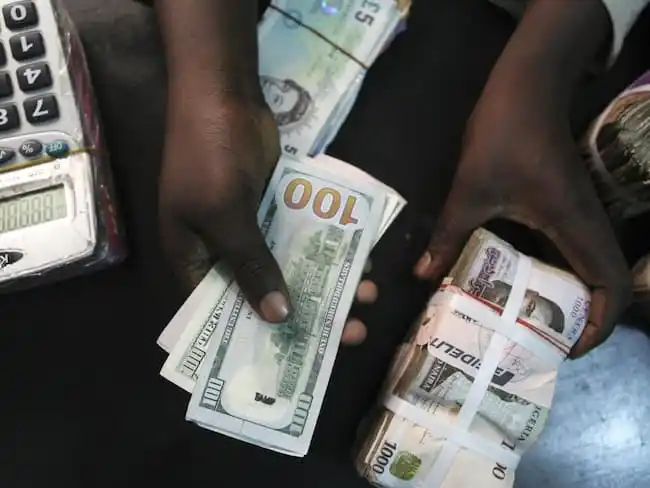
In the informal market, also known as the black market, the Naira continues to trade at a premium to the official rate. Currency dealers report that the dollar is currently exchanging between ₦1,450 and ₦1,465, depending on transaction size and location.
Bureau De Change operators in Lagos, Abuja, and other major commercial centres note that demand for foreign currency remains moderate. While speculative trading has eased compared to the intense pressure recorded in December 2025, demand linked to overseas travel, tuition payments, and business imports remains active.
Encouragingly, the spread between the official and parallel market rates has narrowed slightly, a development analysts attribute to improved dollar supply and tighter enforcement of FX regulations.
What to Expect Next
Looking ahead, economists believe the Naira’s trajectory will depend largely on the sustainability of dollar inflows into the official market and global crude oil price movements, given Nigeria’s heavy reliance on oil exports for foreign exchange earnings.
Attention is also focused on the CBN’s external reserves position, which remains a key indicator of the central bank’s capacity to support the local currency when needed.
Although the Naira has recovered modestly from the peaks recorded late last year, market watchers caution that the exchange rate remains vulnerable to shifts in inflation data, trade balances, and global financial conditions.