

KEY POINTS
- Minister Dele Alake has advocated for the establishment of regional energy hubs to accelerate cross-border mining industrialisation across Africa.
- Speaking at the 11th Powering Africa Summit in Washington, D.C., Alake proposed industrial corridors similar to the Lagos-Abidjan belt.
- Nigeria has attracted over $2.6 billion in Foreign Direct Investment (FDI) into the solid minerals sector over the last 30 months.
- Security reforms, including the Mining Marshals, have led to the arrest of 350 suspected illegal miners and over 150 active prosecutions within a year.
MAIN STORY
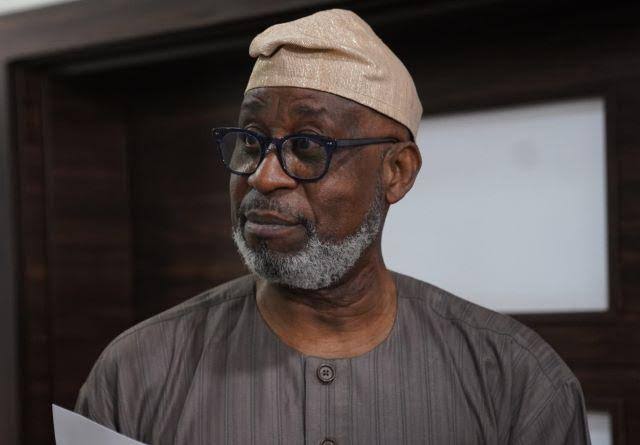
The Minister of Solid Minerals Development, Dele Alake, has proposed the creation of regional energy hubs as a strategic masterstroke to unlock Africa’s vast critical mineral potential. Addressing a panel at the 11th Powering Africa Summit (PAS) in Washington, D.C., Alake argued that sustainable partnerships between the U.S. and Africa are the fastest route to meeting the surging global demand for minerals essential to the green energy transition.
The Minister’s Special Assistant on Media, Segun Tomori, released a statement on Sunday in Abuja highlighting Alake’s vision for “Regional Industrial Corridors.” Alake pointed to successful models like the Lobito Corridor and suggested that replicating this through the Lagos-Abidjan corridor (spanning Nigeria, Benin, Togo, Ghana, and Côte d’Ivoire) would serve as an economic catalyst.
He noted that a single nuclear power plant in one West African nation could potentially power an entire industrial belt, naturally leading to local beneficiation and technology transfer.
On the domestic front, Alake reaffirmed that the reforms under President Bola Tinubu’s administration have “de-risked” the Nigerian mining environment. He cited the digitisation of licensing, internationally certified geological data, and the repatriation of profits as key incentives that have already drawn $2.6 billion in FDI.
Addressing the “elephant in the room”—insecurity—the Minister highlighted the success of the Mining Marshals, noting that the arrest of over 350 illegal miners signals that Nigeria is now a serious destination for high-value investment.
THE ISSUES
The primary hurdle for Alake’s vision is cross-border infrastructure synchronisation. While the “Lagos-Abidjan corridor” makes sense on paper, it requires unprecedented diplomatic and financial cooperation between five different governments to build the energy hubs needed.
Furthermore, while the Mining Marshals have made 350 arrests, the transition from “sanitising” the sector to achieving full-scale local beneficiation (processing minerals within Nigeria rather than exporting raw ore) remains a long-term goal that requires massive, steady power supply—the very thing these proposed regional hubs aim to solve.
WHAT’S BEING SAID
- “The development of nuclear power in one West African country… can service an entire corridor,” stated Dele Alake.
- “We have successfully de-risked and sanitised the mining environment… attracting over 2.6 billion dollars in FDI,” the Minister added.
- “Sustainable partnerships with Africa remain the fastest route to meeting rising global demand for critical minerals,” noted Segun Tomori in the official statement.
WHAT’S NEXT
- Following the Washington summit, Nigeria is expected to engage U.S. energy investors specifically for the development of “hub-scale” power projects.
- The Ministry of Solid Minerals may initiate a joint technical committee with neighbouring West African nations to map the mineral deposits along the Lagos-Abidjan route.
- Investors are awaiting the full rollout of the “internationally certified geological data” mentioned by the Minister, which is expected to trigger a new wave of exploration licences in late 2026.
BOTTOM LINE
The Bottom Line is that Nigeria is pitching “Corridors,” not just “Cores.” By shifting the conversation from individual mine sites to regional energy hubs, Dele Alake is positioning Nigeria as the energy anchor for a West African mining boom, aiming to move the continent from being a raw material source to a global industrial player.






%20in%20Washington,%20D.C.,%20Alake%20argued%20that%20sustainable%20partnerships%20between%20the%20U.S.%20and%20Africa%20are%20the%20fastest%20route%20to%20meeting%20the%20surging%20global%20demand%20for%20minerals%20essential%20to%20the%20green%20energy%20transition.)