




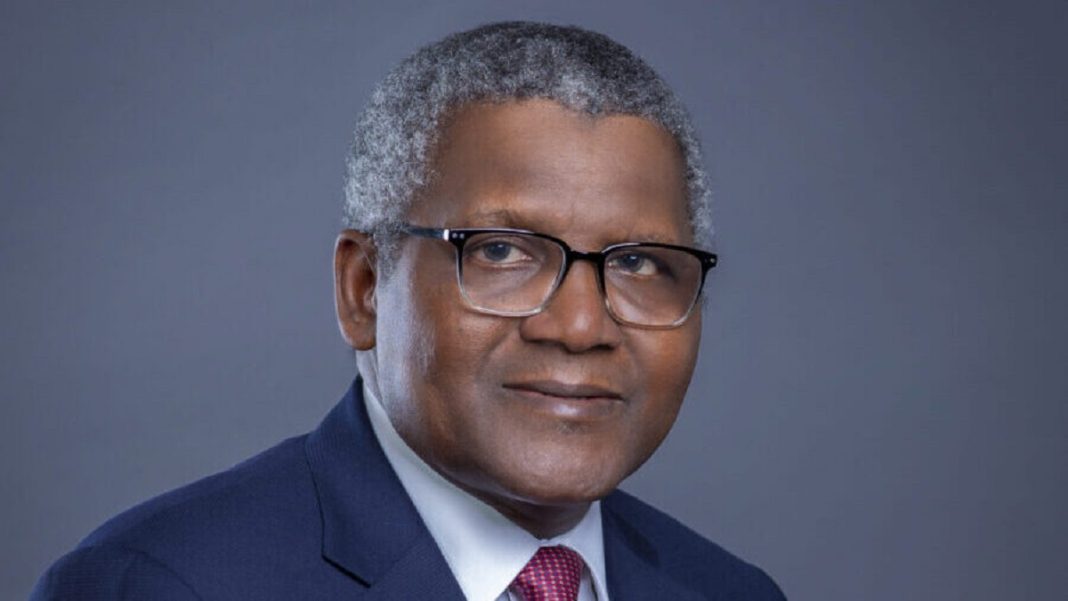
Aliko Dangote has expressed doubt over the possibility of Nigeria’s government-owned refineries ever returning to full operations, despite years of costly rehabilitation efforts. Speaking while hosting members of the Global CEO Africa from the Lagos Business School after a tour of the Dangote Petroleum Refinery in Lekki, Lagos, Dangote said the state-owned Port Harcourt, Warri, and Kaduna refineries, under the management of the Nigerian National Petroleum Company Limited (NNPC), have consumed up to $18 billion without results.
He recalled that in 2007, his consortium acquired the refineries shortly before the end of President Olusegun Obasanjo’s administration but had to return them after President Umar Yar’Adua’s government reversed the sale following pressure from NNPC management, who claimed the facilities were sold cheaply and would be revived.
“The refineries we bought before were doing about 22 per cent of PMS. We had to return them to the government because there was a change of government. The managing director at that time convinced President Yar’Adua that the refineries would work. They said they were given to us as a parting gift or so,” Dangote said.
“As of today, they have spent about $18 billion on those refineries, and they are still not working. I don’t think, and I doubt very much, if they will ever work,” he added.
Dangote likened the continuous turnaround maintenance efforts to attempting to modernise a 40-year-old car with new technology while its body remains unable to handle the upgrades.
His comments echo earlier concerns raised by former President Obasanjo, who noted that international oil companies, including Shell, once declined to operate the refineries when approached, acknowledging their unviable state. Obasanjo had warned that the refineries would end up as scrap due to decades of mismanagement and corruption within the system.
In recent months, calls for the privatisation of government-owned refineries have intensified, particularly after the shutdown of the old Port Harcourt refinery six months after it was declared operational, and the Warri refinery, which was shut down a month after reopening.
Industry groups, including the Manufacturers Association of Nigeria and modular crude refiners, have described the facilities as a financial drain on the economy, urging the government to sell them off and redirect resources toward supporting modular refinery projects to enhance local refining capacity.
Despite significant funds spent over the years on maintaining and rehabilitating the refineries, including $1.4 billion approved for the Port Harcourt refinery in 2021, and hundreds of millions earmarked for Warri and Kaduna refineries, the facilities remain unproductive.
The Dangote Refinery, with a 650,000 barrels-per-day capacity, has begun operations with over 50 per cent of its output dedicated to petrol production, a figure far higher than the government refineries, which only allocated 22 per cent of their capacity to petrol.
Industry analysts note that the operationalisation of the Dangote Refinery could significantly reduce Nigeria’s fuel import dependence, while the government-owned refineries continue to drain resources with little to show in terms of output.