









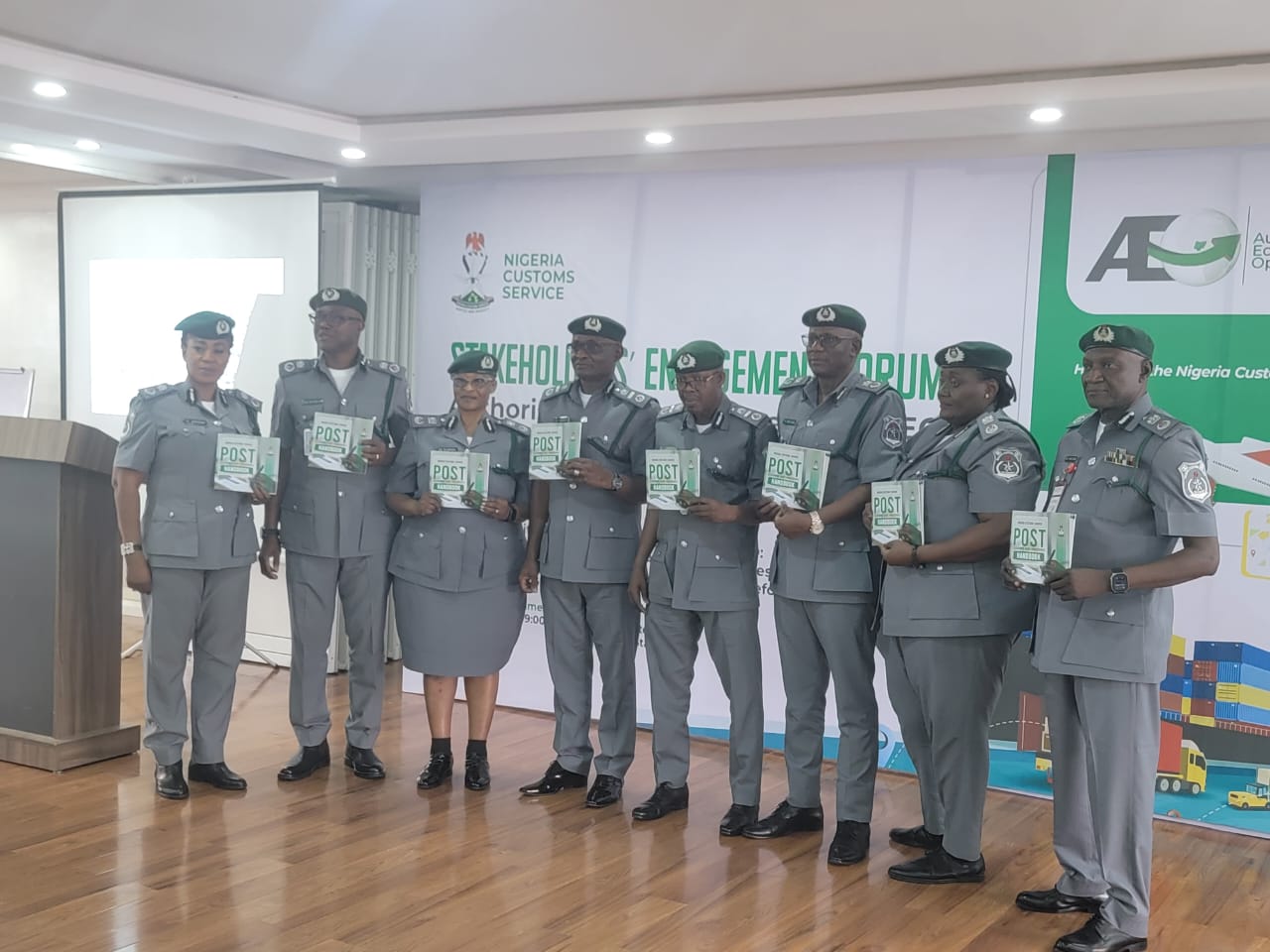
The Nigeria Customs Service (NCS) has called on importers, exporters, and other key players in the trade value chain to embrace the Authorized Economic Operator (AEO) Programme, a globally recognised system that promises faster clearance, fewer inspections, and a more secure and transparent supply chain.
At a stakeholders’ engagement forum held at BON Hotel, Ikeja, Lagos, the Comptroller-General of Customs, Bashir Adeniyi, MFR, through the Assistant Comptroller-General of Customs and Coordinator of Zone A, Charles Orbih, reiterated the Service’s commitment to transitioning from the current Fast Track Scheme to the AEO framework by the end of 2025.
He described the shift as a “paradigm change from gatekeeping to partnership” and a strategic reform that supports trade facilitation, enhances national competitiveness, and aligns Nigeria with global trade standards under the World Customs Organization (WCO) SAFE Framework.
“For over a decade, the Fast Track Scheme offered benefits to compliant importers, but lacked the legal and structural backing needed to respond to evolving trade dynamics, the AEO Programme is a more robust and risk-based system that rewards consistent compliance.” Orbih said.
The AEO initiative, which was piloted in April 2024 and officially launched in February 2025, targets businesses that demonstrate high levels of Customs and tax compliance. These businesses enjoy priority treatment, faster cargo release, and improved dispute resolution, among other benefits.
A recent Time Release Study by the NCS revealed that AEO-certified businesses now experience an average clearance time of just 43 hours, compared to significantly longer durations for non-certified operators.
“This is not just theory, this is impact. Less time at the port means reduced costs and improved efficiency for businesses, adding that the reform helps Nigeria meet its obligations under the World Trade Organization’s Trade Facilitation Agreement.”
To further strengthen the programme, the Service has introduced Post Clearance Audit (PCA) reforms. According to the Assistant Comptroller-General in charge of PCA, Zanna Chiroma, the PCA Unit now operates under the direct supervision of the Comptroller-General’s office. This move, he noted, is aimed at reinforcing audit-based controls that allow for smoother trade operations.
Chiroma said the PCA Unit has been fully restructured, with an appointed ACG and two Comptrollers in charge of administration and operations respectively. “We now conduct risk-based and comprehensive audits, including onsite verifications, empowered by the new NCS Act,” he noted.
He stressed that existing Fast Track beneficiaries must apply afresh via the AEO portal—aeo.nigeriatradehub.gov.ng—before the 31st December 2025 deadline when the current scheme will be phased out.
Speaking also, the Chief Superintendent of Customs, Jerry Attah, emphasised that the audit reforms are not meant to impede trade, but to reinforce trust and responsibility among validated traders. He noted that the PCA approach now focuses more on post-clearance verification at the trader’s location, allowing smooth cargo flow at the ports.
Attah said: “This is a move away from invasive inspections to strategic reviews based on data. Our aim is to build a trusted network of economic operators whose commitment to compliance is rewarded, not punished.”
Again, the forum, AEO Lead Officer, CSC Nnenna Awa, highlighted the importance of industry-wide adoption of the programme.
She described the AEO scheme as a win-win for both Customs and businesses, noting that the transition provides an opportunity to institutionalise accountability and transparency in Nigeria’s import-export processes.
“The AEO programme gives us an international identity. It helps Nigerian businesses gain global trust and unlocks benefits such as Mutual Recognition Agreements with other countries, now is the time for traders to step forward, get validated, and enjoy smoother, faster processes.” she said.
Awa added that the NCS is actively building digital infrastructure, expanding inter-agency cooperation, and deploying well-trained validation teams to ensure a seamless transition.
In a goodwill message, the Director-General of the Manufacturers Association of Nigeria (MAN), Segun Ajayi, represented by Sunday Okpe, applauded the Nigeria Customs Service for its consistent stakeholder engagement.
He affirmed that the transition is a welcome development for the manufacturing sector.
However, he urged the NCS to address operational overlaps with other security agencies that could undermine the programme’s objectives.
“One of the limitations we are faced with is the interference of the maritime police, this transition, there must be clear boundaries. Police should not do the work of Customs, just as Customs don’t get involved in police duties.” Okpe said.




 has called on importers, exporters, and other key players in the trade value chain to embrace the....)