

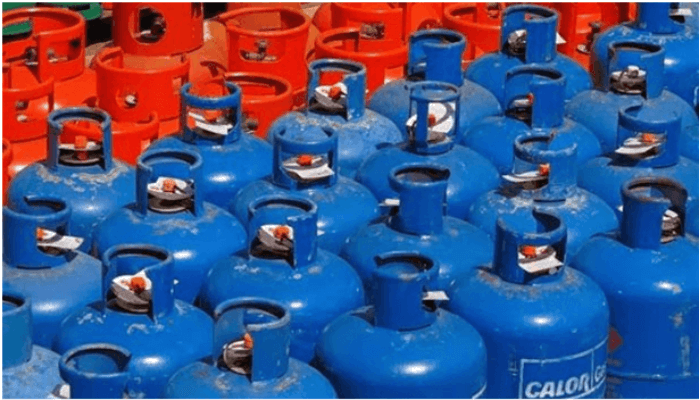
Key points
- The cost of cooking gas, also known as Liquefied Petroleum Gas, has drastically increased in Enugu State.
- Market investigations show that the price surge varies according to the specific point of purchase within the state capital.
- Retail prices per kilogram have climbed to between N1,400 and N1,550 across various neighborhoods compared to lower rates in April.
- Gas attendants and depot operators state that prices are completely unstable and depend heavily on suppliers and transport logistics.
- High costs have forced residents to abandon or ration gas, turning instead to charcoal stoves and firewood as cheaper alternatives.
Main Story
The cost of cooking gas, also known as Liquefied Petroleum Gas (LPG), has drastically increased in Enugu State, reporters note. Market investigation shows that in many areas of the state capital, the increase varies according to the point of buying the product.
In the Trans-Ekulu area of the state, several retail outlets sell a kilogram of gas at between N1,400 and N1,450 as against the former price of N1,100 and N1,200 sold in April. However, a mini gas depot in the same area sells the product at a rate of N1,350 per kilo.
To evaluate intermediate structural dependencies, local distribution logs show that geographical proximity to major supply hubs heavily dictates the retail margins set by neighborhood vendors.
Another gas depot at New Haven area, Best Top Gas Depot sells at N1,400 a kilogramme while at Independence Layout, Achara Layout and Uwani it is sold at between N1,450 and N1,500.
Media correspondents also visited another retail outlet at Nowas area still within the metropolis where a kilogram of gas goes for N1,500 while at Abakpa, a kilogramme also sells at N1,550.
Furthermore, household managers are restructuring their domestic kitchen operations by splitting energy usage based on the thermal requirements of specific foods.
Residents note that filling standard domestic cylinders has become far more expensive compared to rates recorded early in the year. With alternative petroleum products like kerosene also remaining highly priced, families are completely halting gas refills to shield their strict monthly budgets from escalating commercial energy rates.
The Issues
- Managing highly unstable and fluctuating wholesale prices dictated entirely by external suppliers.
- Absorbing high transport and logistics costs when moving products from distant depots to retail shops.
- Coping with the economic strain on large families who can no longer afford standard domestic utility refills.
What’s Being Said
- Explaining why the commercial rates of the item refuse to stabilize at a fixed baseline, an anonymous official at a Trans-Ekulu mini depot told reporters: “This price schedule can change any time. You may come here tomorrow and discover that the price has gone up or come down; it all depends on the suppliers,”
- Pointing out how locational factors and secondary operational expenses force retailers to alter their daily pricing, gas attendant Mr Livinus Uguru explained: “Even today, this price can change, again it depends on where you buy your product. If you buy from a depot that is far from your shop, you have to add transportation and every other cost, probably that is the reason for difference in prices,”
- Outlining her strategy of mixing fuel sources to cook heavy local meals, resident Mrs Chinelo Onyema said: “A resident, Mrs Chinelo Onyema said that she used firewood to cook foods like beans, okpa, meat and moimoi and used gas for rice and breakfast.”
- Detailing the precise financial jump experienced when trying to top up a standard family-sized domestic cylinder, Onyema noted: “According to her, I spend N18,000 to fill my 12kg cylinder as against N12,500 I spent early in the year.”
- Explaining why she completely dumped modern utility appliances for a more cost-effective regional alternative, Mrs Sylvia Chukwu stated: “Charcoal stove is cheaper and also clean. I have a big family and I cannot cope with the high cost of cooking gas,”
What’s Next
- Retail operators will continue adjusting daily prices based on shifting supplier rates and varying transportation costs.
- Consumers will increasingly rely on charcoal stoves and firewood to handle heavy household cooking needs.
- Metropolis residents will monitor depot rates across areas like New Haven and Abakpa to find the lowest available per-kilogram prices.
Bottom Line
A sharp spike in LPG prices has hit Enugu, pushing per-kilogram rates as high as N1,550 and driving the cost of filling a 12kg cylinder to N18,000, forcing residents to abandon unstable gas markets for cheaper charcoal stoves and firewood.



,%20has%20drastically%20increased%20in%20Enugu%20State,%20reporters%20note....)