Keypoints
- Conference 57, the association of Lagos State’s 57 LGAs and LCDAs, launched a two-day capacity-building workshop on Monday, April 27, 2026.
- The training focuses on “Fiscal Administrative Due Process and Enhanced Internal Revenue Generation” for top council officials.
- Participants include council chairmen, managers, internal auditors, and heads of procurement from across the state.
- The initiative aims to ensure local governments operate within the law, maintain transparency, and deliver “value for money.”
- Lagos House of Assembly officials praised the move as a vital step in upholding public trust at the third tier of government.
Main Story
Lagos State’s local government administrators are undergoing an intensive “productivity tune-up” to ensure grassroots development matches the state’s mega-city ambitions.
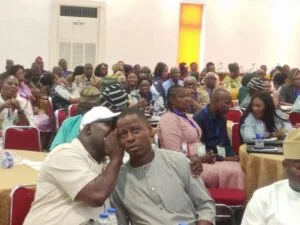
Conference 57, led by Chairman Sesan Olowa, convened a strategic workshop in Lagos to sharpen the skills of those managing public funds.
With a heavy focus on “due process,” the training is designed to standardize how the 20 Local Government Areas (LGAs) and 37 Local Council Development Areas (LCDAs) handle procurement and tax collection.
Mr. Olowa, who also heads the Ibeju-Lekki LCDA, emphasized that the recent national push for local government autonomy comes with a greater demand for accountability.
By bringing auditors and procurement officers into the same room as the chairmen, the workshop aims to create a unified system where every naira generated internally is tracked and spent on visible projects like hospitals and roads.
This session is the first in a planned series of leadership and management retreats intended to keep Lagos councils at the forefront of service delivery in Nigeria.
The Issues
The primary challenge is the revenue-leakage gap; while Lagos is known for high internal revenue, the transition to stricter “fiscal due process” at the grassroots level often faces resistance from old administrative habits. Authorities must solve the problem of procurement-friction, ensuring that “value for money” isn’t just a slogan but a measurable outcome of every contract signed.
Furthermore, there is a trust-deficit risk; as noted by Sanni Okanlawon, holding resources “in trust” requires a level of transparency that many citizens feel is currently lacking at the local level. To succeed, these workshops must move beyond theory and result in digitalized, auditable systems that the average resident can verify.
What’s Being Said
- “We are the third tier of government, and there is now greater emphasis on transparency and accountability,” stated Sesan Olowa.
- Sanni Okanlawon of the House Committee on Local Government described the training as “excellent” for promoting due process in governance.
What’s Next
- Council chairmen are expected to return to their respective LGAs/LCDAs to implement the new revenue generation strategies discussed during the sessions.
- Subsequent workshops are anticipated for junior and mid-level council staff to ensure the entire administrative chain understands the new fiscal rules.
- The Lagos State House of Assembly is likely to increase its oversight visits to verify that the “due process” taught in the workshop is being applied to ongoing road and clinic projects.
- A performance review may be conducted later in 2026 to see which councils have successfully increased their Internal Revenue Generation (IGR) following this training.
Bottom Line
Lagos State is treating its local governments like corporations, emphasizing “productivity” and “due process.” By training the gatekeepers of grassroots funds, Conference 57 is trying to prove that local government autonomy can lead to better roads and better services, rather than just more bureaucracy.