






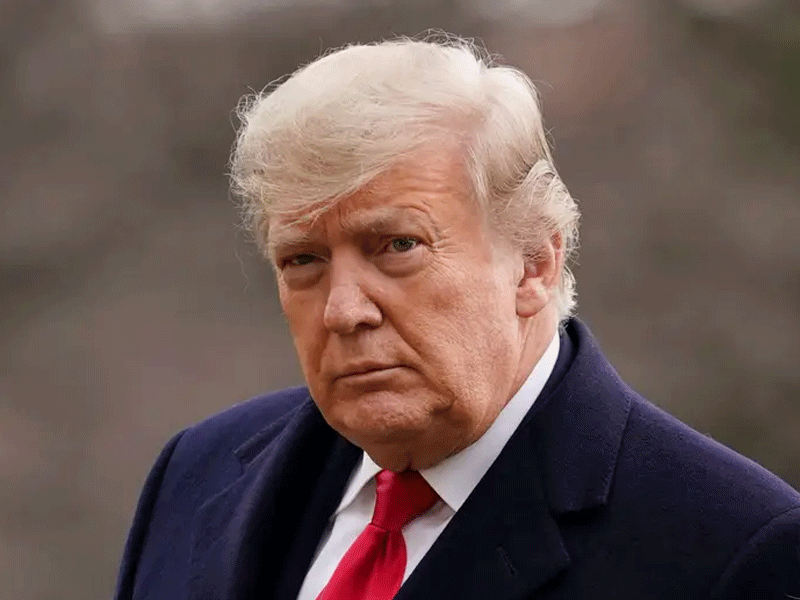
The United States has expanded travel restrictions to include Nigeria and 14 other countries, citing concerns over national security and insufficient vetting systems. The proclamation, signed by President Donald Trump on Tuesday, places partial entry limitations on nationals from Nigeria, Angola, Antigua and Barbuda, Benin, Côte d’Ivoire, Dominica, Gabon, The Gambia, Malawi, Mauritania, Senegal, Tanzania, Tonga, Zambia, and Zimbabwe.
Full entry restrictions now apply to nationals from five additional countries—Burkina Faso, Mali, Niger, South Sudan, and Syria—alongside the original list of 12 countries already under total bans, including Afghanistan, Iran, Libya, and Yemen.
The White House said the restrictions aim to prevent entry of individuals about whom the U.S. lacks adequate information to assess potential risks. Exceptions are provided for lawful permanent residents, existing visa holders, diplomats, athletes, and others serving U.S. interests. Case-by-case waivers remain available, though family-based immigrant visas identified as high-risk are limited.
The proclamation follows concerns over poor civil and criminal records, unreliable birth-registration systems, refusal to share passport and law enforcement data, visa overstays, and security threats in affected countries. President Trump stated that the measures are necessary to protect Americans and incentivize international cooperation on document integrity, data sharing, and law enforcement.
The action is part of the Trump administration’s broader agenda to strengthen border security and restore travel restrictions on countries deemed high-risk, following Nigeria’s designation as a “country of particular concern” in October over alleged religious persecution.