





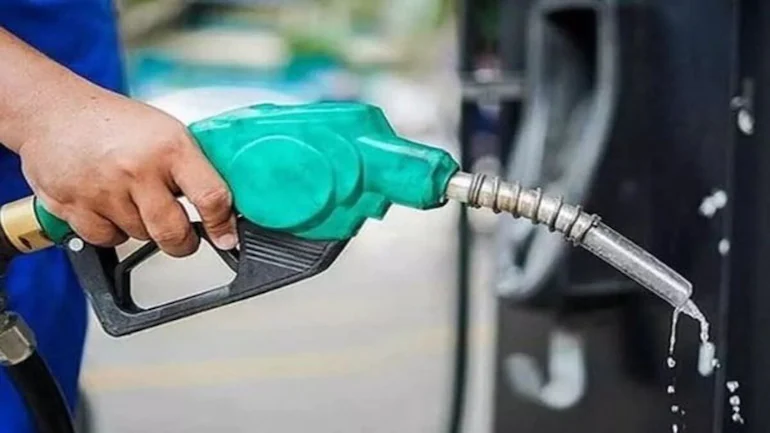
Fuel prices in Nigeria are projected to rise following President Bola Tinubu’s approval of a 15 per cent import tariff on Premium Motor Spirit (PMS) and Automotive Gas Oil (diesel), a policy expected to take immediate effect.
The directive, contained in an official document seen by THISDAY, was approved to strengthen Nigeria’s energy security, protect local refining capacity, and ensure price stability in the downstream petroleum sector.
According to the document, the new tariff could push fuel prices up by as much as ₦100 to ₦150 per litre, though the government insists the increase will remain within manageable limits.
The memo, addressed to key government officials including the Attorney General of the Federation, Lateef Fagbemi; the Executive Chairman of the Federal Inland Revenue Service (FIRS), Zacch Adedeji; and the Chief Executive of the Nigerian Midstream and Downstream Petroleum Regulatory Authority (NMDPRA), Farouk Ahmed, confirmed the President’s approval.
The proposal, tagged a “measured import tariff,” seeks to stabilise the market by discouraging duty-free imports that undermine local producers, while fostering competition and investment in refining and logistics infrastructure.
“The introduction of a 15 per cent ad-valorem import duty on PMS and diesel will align import costs with domestic realities, stabilise prices, and strengthen Nigeria’s refining ecosystem,” the document stated.
It added that, at current Cost, Insurance, and Freight (CIF) levels, the tariff represents an increment of approximately ₦99.72 per litre—raising the estimated Lagos pump price to around ₦964.72 per litre, still below regional averages such as Senegal ($1.76), Côte d’Ivoire ($1.52), and Ghana ($1.37).
The government maintained that the policy is not revenue-driven but corrective, intended to safeguard Nigeria’s “nascent refining sector” from price distortions and unfair competition.
Payments from the new tariff will be made into a designated Federal Government revenue account managed by the FIRS (now Nigeria Revenue Service), with verification by NMDPRA before discharge clearance.
Although the memo initially recommended a 30-day transition period to allow importers to adjust, President Tinubu ordered immediate implementation, minuting: “Approved as prayed for implementation immediately.”
The document cited Sections 71 and 72 of the Petroleum Industry Act (PIA) as the legal framework for the policy, granting NMDPRA the authority to impose levies that support national energy objectives.
To ensure transparency, tariff payments will undergo end-to-end digital verification linked to NMDPRA discharge clearance, preventing cargo releases without proof of payment. Customs and NMDPRA are expected to update import templates and issue a public compliance notice to curb speculation.
Government sources describe the policy as a critical step in achieving fuel self-sufficiency and ensuring a stable pricing regime that supports both consumers and investors.
“This reform will accelerate Nigeria’s path toward fuel self-sufficiency, protect domestic investors, and stabilise the downstream market,” the document added.
However, industry stakeholders have expressed concern over the policy, warning that Nigeria’s limited refining capacity—currently less than 40 per cent, mostly from the Dangote Refinery—could make the tariff burdensome for consumers.
With the country still importing over 60 per cent of its refined petroleum products, marketers fear the tariff could further strain the economy, deepen inflation, and worsen the cost-of-living crisis.