







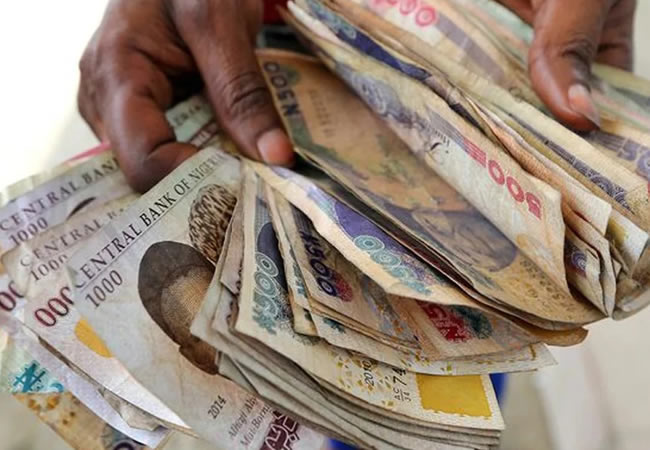
Nigeria’s money market rates reflected divergent movements on Wednesday, as liquidity conditions continued to fluctuate across the financial system.
Data showed the Open Repo Rate (OPR) slipped by 8 basis points to 26.42%, while the overnight lending rate inched up by 4 basis points to 26.96%. Analysts attribute the divergence to varying funding needs among banks, though the absence of significant liquidity pressure reduced borrowing from the Central Bank of Nigeria (CBN).

However, banks’ placements into the CBN’s Standing Deposit Facility dipped by 4% to ₦1.70 trillion, underscoring the impact of fluctuating liquidity conditions. Market watchers suggest that with no major outflows anticipated in the near term, system liquidity is likely to remain in surplus.
Cowry Asset Limited reported that the Nigerian Interbank Borrowing Rate (NIBOR) displayed a mixed pattern on Wednesday. The overnight rate declined slightly by 2 basis points to 26.79%, supported by improved liquidity from the maturity of ₦600 billion worth of Open Market Operation (OMO) bills earlier in the week.
The CBN refrained from intervening through OMO auctions or Treasury bill sales, leaving the system flush with liquidity.
Meanwhile, the Nigerian Interbank Treasury Bills (NITB) market experienced varied outcomes. Yields on the 1-month, 3-month, and 6-month maturities rose by 16, 16, and 12 basis points respectively, while the 12-month tenor eased by 14 basis points.
On average, Treasury bill yields in the secondary market ticked higher by 3 basis points to 18.79%, reflecting cautious investor sentiment amid weak demand. Analysts warn that without stronger buying interest, the market may continue to experience pressure in the short term.