










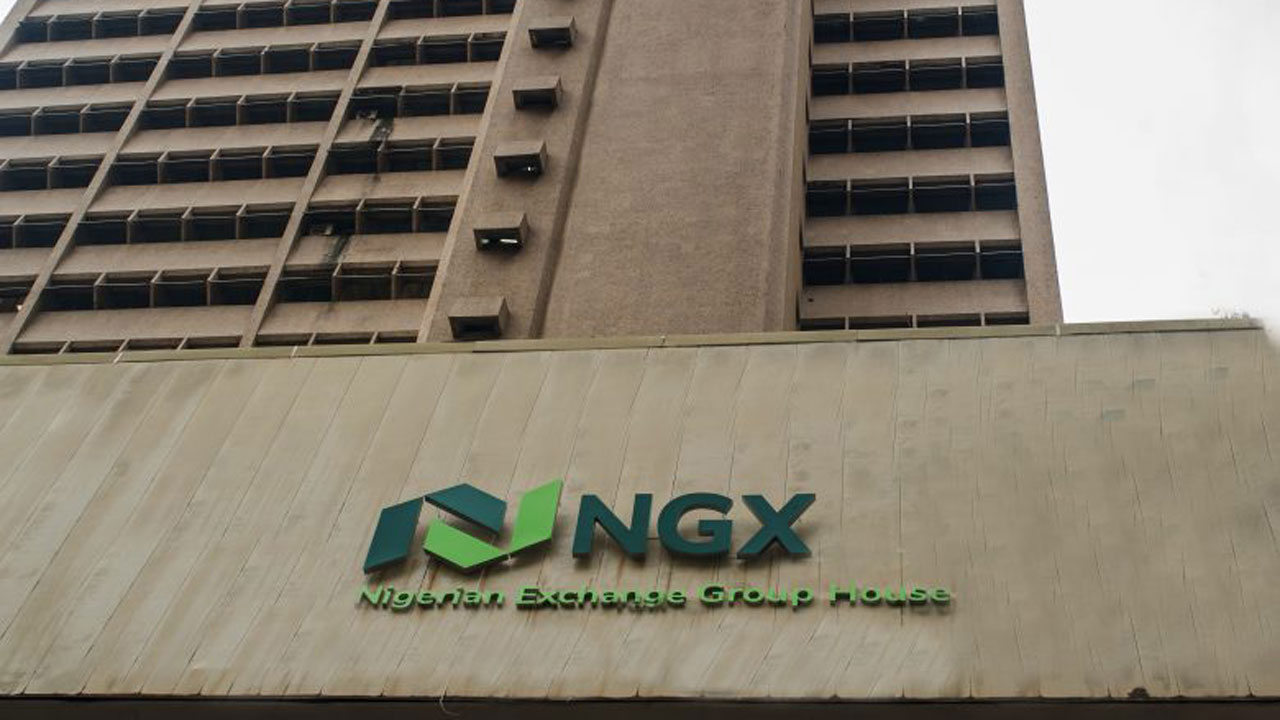
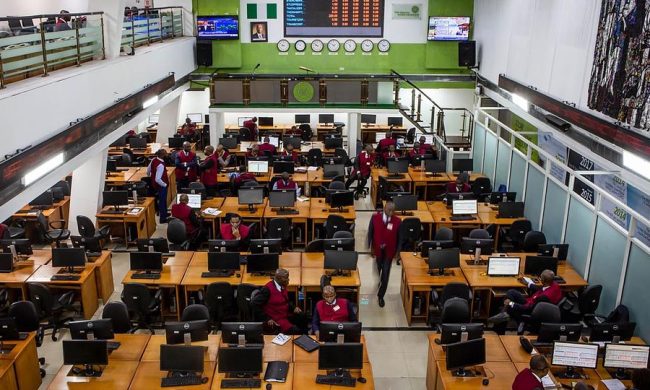
The Nigerian Exchange (NGX) All-Share Index (ASI) continued its downward trend, dropping 14 basis points during Wednesday’s intraday trading, driven by sustained sell-offs in banking stocks. The local bourse has been on a bearish run for three weeks, following earlier rallies that pushed equities to record highs. A lack of fresh market catalysts has dampened momentum, prompting risk-averse investors to shift capital toward fixed-income securities as yields rise, reversing prior trends.
According to Alpha Morgan Capital Limited, the NGX ASI reflected a 0.14% loss by midday, signaling weak investor sentiment. Stockbrokers noted that the decline was primarily fueled by sell-offs in mid- to high-capitalized stocks, particularly in the banking sector. Notable losers included INTBREW (-3.39%), OANDO (-3.09%), STANBIC (-2.00%), GTCO (-1.58%), UBA (-1.50%), AIICO (-1.17%), ACCESSCORP (-1.16%), FIDELITYBK (-0.71%), ZENITHBANK (-0.69%), and FIRSTHOLDCO (-0.31%).
The shift in investor preference toward fixed-income assets coincides with the Central Bank of Nigeria’s (CBN) tight liquidity measures, including a recent ₦600 billion Open Market Operation (OMO) auction that absorbed ₦620.65 billion, keeping interbank rates elevated at around 26.5%. This has pressured rate-sensitive banking stocks, contributing to the bearish market tone. Meanwhile, investors await half-year earnings reports from major banks like Zenith Bank, GTCO, UBA, and Access Holdings, which could influence future trading.
The broader investment landscape remains challenging, with global monetary policy tightening and domestic liquidity constraints shaping market dynamics. The upcoming Nigerian Treasury Bills auction worth ₦480 billion and the OPEC+ meeting on September 7 are expected to further impact investor decisions. Analysts anticipate continued volatility in the NGX unless positive earnings or macroeconomic developments spark renewed buying interest.







 All-Share Index (ASI) continued its downward trend, dropping 14 basis points during....)