




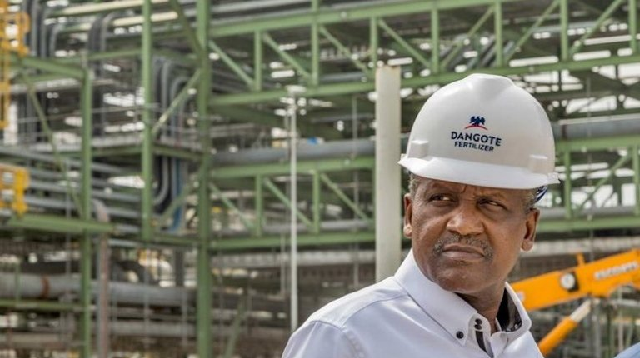
The President and Chief Executive of Dangote Group, Aliko Dangote, has initiated the process to develop what he describes as Nigeria’s largest and deepest seaport in Olokola, Ogun State, marking a major expansion of his multibillion-dollar industrial empire and a strategic entry into maritime logistics.
In an interview with Bloomberg on Monday, Dangote confirmed that paperwork for the proposed seaport was submitted in late June.
Located about 100 kilometres from his Lekki refinery and fertilizer complex, the planned Atlantic seaport is expected to facilitate the export of fertilizer, petrochemicals, and liquefied natural gas while improving access for imported equipment and raw materials.
“It’s not that we want to do everything by ourselves, but I think doing this will encourage other entrepreneurs to come into it,” Dangote said, expressing hope that the project would attract more private investment into Nigeria’s underdeveloped port infrastructure. Dangote currently exports urea and fertilizer through a jetty at the refinery, which also handles the delivery of heavy equipment for the complex.
If approved, the Olokola seaport will rival existing ports in Lagos, including the Chinese-funded Lekki Deep Sea Port, which began operations in 2023.
The move also signals Dangote’s return to the Olokola site after previously shelving plans to build his refinery there due to conflicts with local authorities. Those disputes appear to have been resolved under the current administration, with Dangote reaffirming readiness to return to the Olokola Free Trade Zone earlier this year.
Beyond the port project, Dangote Group plans to begin exporting liquefied natural gas from Lagos, a project that would involve constructing pipelines from Nigeria’s gas-rich Niger Delta.
“We want to do a major project to bring more gas than what NLNG is doing today,” Devakumar Edwin, vice president of the group, said, referring to Nigeria LNG Ltd, the country’s largest LNG exporter operated in partnership with Shell, Eni, and TotalEnergies.
“We know where there is a lot of gas, so [we will] run a pipeline all through and then bring it to the shore,” he added.
Dangote already sources gas from the Niger Delta to supply his fertilizer plant, using it as feedstock to produce hydrogen for ammonia, a critical input for fertilizer production.
The billionaire also plans to begin fuel distribution to Nigerian retailers in August using a fleet of 4,000 gas-powered trucks, a move that has drawn criticism from some groups accusing him of seeking to dominate the downstream oil sector—a claim Dangote has denied.
Valued at $27.8 billion according to the Bloomberg Billionaires Index, Dangote also controls cement and sugar manufacturing assets across Africa as he expands his industrial footprint into energy, logistics, and maritime infrastructure.