










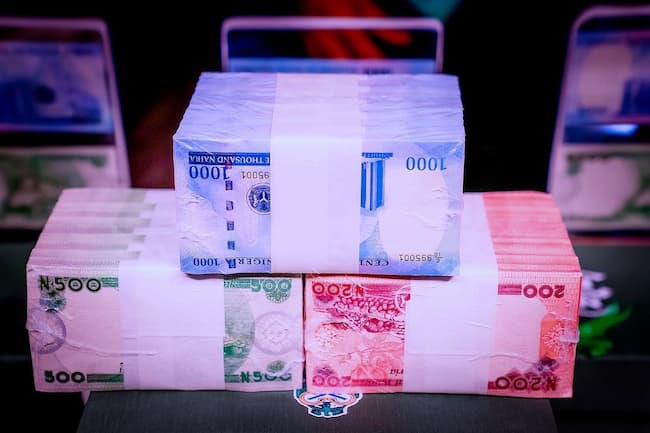
The naira retreated against the US dollar across the foreign exchange (FX) market due to tight supply, which triggered the Central Bank of Nigeria’s (CBN) intervention. The local currency lost N3.38 per dollar to close at N1599.32 at the Nigerian Foreign Exchange Market (NFEM), while the exchange rate worsened to N1620 at the parallel market.
On Thursday, foreign exchange supply in the interbank market remained limited amid a modest uptick in demand. However, the Central Bank intervened to boost liquidity.

The USD/NGN pair traded within a tight band of N1,597.10 to N1,604.00, while the naira weakened slightly, depreciating by 16 bps to close at N1,599.3294. The gross balance in Nigeria’s foreign reserves was boosted by 10th inflows to settle at $38.298 billion, data from the CBN showed.
The country’s foreign reserves began to climb after a series of outflows that plunged the gross balance to a six-month low. The steep reduction from year to date was caused by the CBN FX intervention and external debt service costs, according to analysts.
Meanwhile, oil prices dropped on Thursday amid expectations of a potential U.S.-Iran nuclear agreement, which could ease sanctions and boost global supply. Brent crude fell $1.47, or 2.22%, to $64.62 a barrel, while U.S. West Texas Intermediate (WTI) slid $1.43, or 2.26%, to $61.72.
Elsewhere, gold prices rebounded, rising over 1% due to a weaker dollar and disappointing U.S. economic data. Safe-haven demand also increased after Russian President Vladimir Putin skipped peace talks. Spot gold climbed 1.2% to $3,216.11 an ounce, recovering from an earlier dip to its lowest point in over a month.
Analysts highlighted that a nuclear deal’s immediate sanction waivers could release 800,000 bpd of Iranian crude into global markets—a clearly bearish catalyst for oil prices.











 market due to tight supply, which triggered the Central Bank of...)