



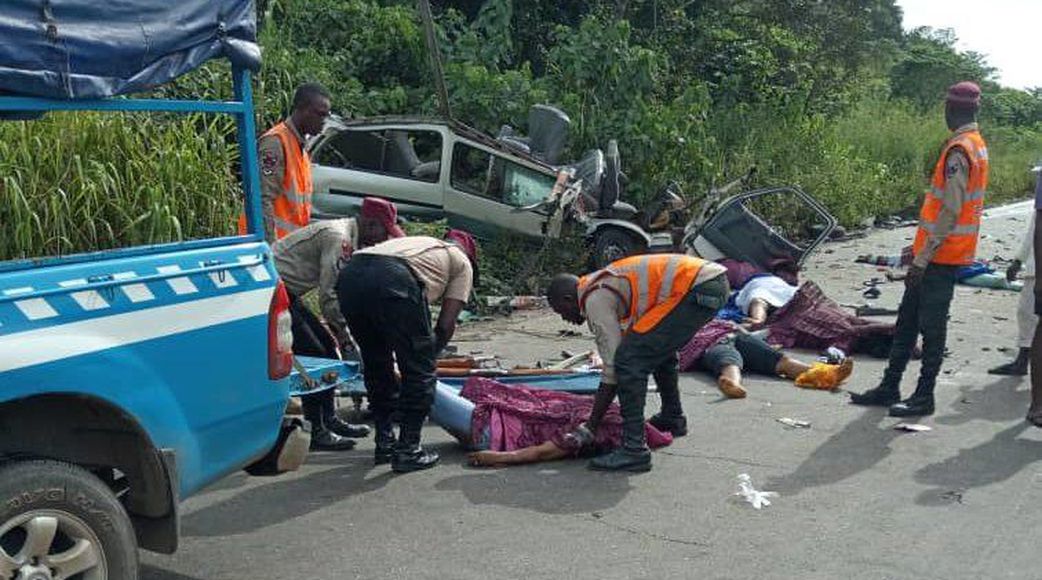
It happened again this morning. In the early hours at Gbagada, a vehicle, speeding through the dim light of dawn, struck and killed an individual suspected to be one of the street sweepers. Eyewitnesses, stunned and helpless, could only gather around the lifeless body, another soul lost to a system that prioritises speed over safety, and vehicles over human lives.
This is not an isolated incident. It is a familiar, deadly pattern repeated across Lagos daily. Despite being Nigeria’s most advanced and populous city, Lagos remains a deeply dangerous place for pedestrians. The absence of safe, well-marked pedestrian crossings on major roads has turned many thoroughfares into death traps. In a city of over 20 million people, the simple act of crossing the road often becomes a perilous gamble with life.
The data from the Lagos State Government and the Federal Road Safety Corps (FRSC) paint a grim picture. In a 2023 report by the FRSC, over 3,700 road traffic crashes were recorded in Lagos alone, with a significant percentage involving pedestrians. The Lagos State Emergency Management Agency (LASEMA) also reported that in 2022, more than 200 pedestrian-related fatalities occurred, many of which were attributed to the absence of safe crossing points or footbridges in high-traffic zones.
In contrast, firearm-related deaths in Lagos State remain relatively lower, thanks to strict gun control measures. According to Nigeria Watch, accidental or violent deaths caused by firearms in Lagos in 2023 were fewer than 100, mostly tied to armed robbery or police encounters. The comparison is stark: Lagos roads are killing more people than guns, and yet, little is being done to change that trajectory.
From Ojota to Mile 12, from Lekki-Epe Expressway to Oshodi, thousands of residents, many of whom cannot afford personal vehicles or rides are forced to cross wide, fast-moving highways daily. In many areas, pedestrian bridges are either non-existent, too far apart, or inaccessible to the elderly, disabled, or market traders with goods to carry. Where zebra crossings exist, they are often ignored by impatient drivers and barely enforced by traffic officers.
A study conducted by the Centre for Public Policy Alternatives (CPPA) in 2021 showed that 82% of pedestrian deaths in Lagos could have been prevented with better road design, including zebra crossings, pedestrian lights, and road-calming measures. But the infrastructure remains largely car-centric, designed for speed, not safety.
The lack of pedestrian infrastructure is not just a planning oversight, it is a human rights issue. Safe mobility is a core component of sustainable urban living. Lagos, aspiring to be a smart megacity, cannot ignore the safety of its most vulnerable road users: pedestrians.
Investment in pedestrian crossings, footbridges, pedestrian lights, and public awareness campaigns is not a luxury—it is a necessity. Cities like Nairobi, Kigali, and Accra have made significant progress in prioritising pedestrian safety. Why is Lagos lagging behind?
Beyond the human toll, the economic implications are enormous. Most victims of road accidents are of productive age—traders, civil servants, artisans, students. Their loss affects families, communities, and the broader economy. It also places a burden on emergency services and the healthcare system, which must respond to preventable tragedies.
This morning’s tragedy in Gbagada should not fade into the usual headlines of “hit and run” or “tragic accident.” It must spark a renewed call to action. Lagos must stop building roads solely for cars and start building a city that values human life, beginning with pedestrian crossings at every major road junction, school area, and market centre.
Until we do, Lagosians will continue to die not because of guns, but because they dared to walk.