






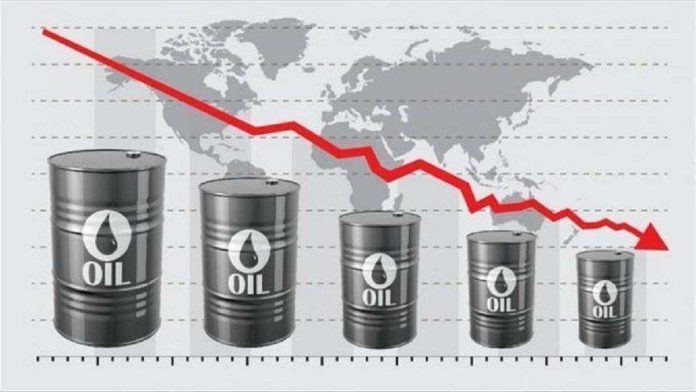
Crude oil prices slipped below the $60 mark on Monday, following the announcement by the Organisation of Petroleum Exporting Countries and its allies (OPEC+) of a planned increase in production. The move, aimed at gradually reversing previous voluntary supply cuts, has raised expectations of a significant rise in global oil supply.
Brent crude, the international benchmark, fell by 2.69% to $59.66 per barrel, while the U.S. benchmark, West Texas Intermediate (WTI), declined by 2.82% to $56.46 per barrel—down from its previous session close of $58.10.
The latest decision from OPEC+ came after a virtual meeting on Saturday, where eight member nations—Saudi Arabia, Russia, Iraq, the UAE, Kuwait, Kazakhstan, Algeria, and Oman—agreed to increase production by a combined 411,000 barrels per day (bpd) in June. This marks a further step in the bloc’s ongoing strategy to unwind output cuts introduced during earlier market downturns.
Analysts believe the decision reflects growing internal pressure within the group. Daniel Hynes, Senior Commodity Strategist at ANZ, noted that the production hike may serve as both a response to non-compliance by some members and a warning to habitual overproducers such as Kazakhstan and Iraq. “Saudi Arabia appears to be taking a harder line and is willing to push output even higher if discipline within the group is not restored,” Hynes said.
Barclays has adjusted its outlook for OPEC+, now forecasting that the group will phase out its voluntary cuts within six months—far sooner than its previous estimate of 18 months. This revision has reinforced expectations of increased supply in the near term, adding further pressure on oil prices.
Meanwhile, geopolitical tensions flared over the weekend as Israeli Prime Minister Benjamin Netanyahu threatened retaliatory action against Yemen and Iran after a missile launched by Yemen’s Houthi rebels landed near Ben Gurion Airport in Tel Aviv. The strike disrupted air traffic and prompted Netanyahu to convene an emergency security meeting.
Posting on X (formerly Twitter), Netanyahu blamed Iran for backing the Houthis and vowed that Israel would respond to the attack “at a time and place of our choosing.”
Despite the renewed tensions in the Middle East, the market’s focus remained firmly on supply-side developments. Analysts noted that OPEC+’s decision to raise output has helped allay fears of major supply disruptions, at least for now.