






Kano State is positioning itself to reclaim its status as the commercial hub of Northern Nigeria with plans for a ₦1 trillion metropolitan rail system, a move expected to significantly reduce the cost of doing business and boost productivity across the state.
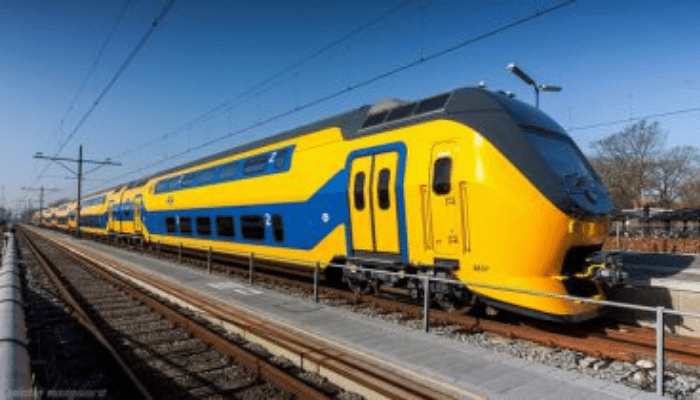
The proposed urban rail project is coming alongside the Federal Government’s accelerated delivery of the Kaduna–Kano standard gauge railway, with both initiatives projected to transform mobility, logistics and trade in the state.
Governor Abba Kabir Yusuf disclosed the metropolitan rail plan while addressing Kano’s delegation at the 2025 National Qur’anic Recitation Competition in Borno State, describing the project as a strategic investment aimed at unlocking economic efficiency, easing the movement of goods and labour, and restoring Kano’s competitive edge.
In a statement issued by his spokesperson, Sanusi Bature Dawakin-Tofa, the governor said the proposed Kano Metropolitan Rail Service would link major commercial and residential districts across the city, providing an affordable and efficient mass transit system that cuts travel time for workers, traders and service providers.
For a city where traffic congestion routinely disrupts supply chains, the rail service is expected to deliver immediate economic gains. Businesses in manufacturing clusters, wholesale markets and industrial layouts are projected to benefit from improved workforce mobility and predictable transit schedules, key drivers of productivity and cost efficiency.
Governor Yusuf said the project would “reposition Kano as a major transportation hub in Northern Nigeria,” noting that improved urban connectivity would translate into higher trade volumes and increased investor confidence.
He added that the state’s renewed collaboration with the Federal Government was driven by the need to attract large-scale infrastructure capable of catalysing sustained economic growth, pledging transparency and close coordination with relevant federal agencies to ensure timely delivery.
Industry analysts note that beyond intra-city movement, the Kaduna–Kano standard gauge railway is emerging as a critical logistics corridor for businesses linking northern markets with the rest of the country.
The Minister of Transportation, Mr Sa’idu Alkali, recently disclosed that the 203-kilometre rail project is now 53 per cent completed, up from 15 per cent at the start of the Tinubu administration, with full completion targeted for December 2026. The project is estimated to cost about $973 million, equivalent to between ₦480 billion and ₦500 billion.
Once operational, the line is expected to integrate Kano more efficiently into Nigeria’s Lagos–Abuja–Kano rail spine, offering manufacturers and traders a cheaper and safer alternative to road haulage while reducing exposure to fuel price volatility and highway insecurity.
Funding for the project is being provided through a combination of support from the China Development Bank and counterpart funding from the Federal Government, following the withdrawal of China Exim Bank in 2020.
Equally significant is the Kano–Maradi rail line, which the minister said has advanced from five per cent to about 60 per cent completion. The line is expected to reach Katsina by December 2025, with full completion projected for March 2027.
Describing the corridor as “more than a railway project,” Alkali said it would facilitate access for Nigerian goods to the Niger Republic and wider West African markets, reinforcing Kano’s historic role as a trans-Saharan trade hub.
For exporters of agricultural produce, textiles, leather goods and manufactured items, the expanding rail network promises lower logistics costs, faster turnaround times and broader market access.
Alkali noted that the Federal Government’s rail development agenda is focused on supporting commerce, agriculture and industry, while also driving job creation and skills development. He also welcomed the recent constitutional amendment placing rail development on the concurrent legislative list, enabling states and private investors to play a more active role.
As rail infrastructure reshapes mobility within Kano and strengthens its links beyond state and national borders, industry observers say the combined impact of the metropolitan rail system and inter-state connections could fundamentally change how business is conducted, turning efficient mobility into a competitive advantage and repositioning Kano as a modern logistics and investment destination.