








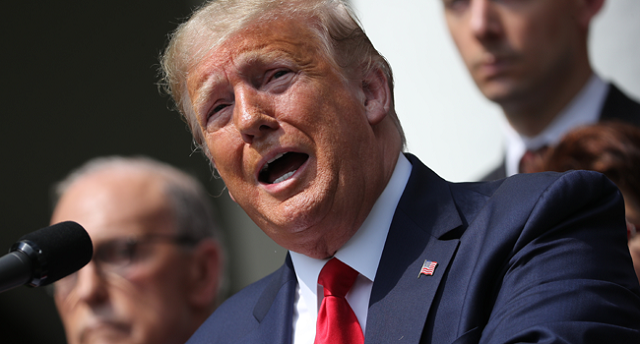
U.S. President Donald Trump has announced plans to impose an additional 10% tariff on Chinese imports, escalating trade tensions between the two economic giants.
Imports from China were already subject to at least a 10% tariff following an earlier Trump order. Now, the president has vowed to move forward with a 25% tariff on imports from Canada and Mexico, set to take effect on March 4.
Strained Trade Relations
Trump’s tariff plans come as officials from Mexico and Canada meet in Washington to negotiate potential exemptions. The administration initially set the 25% tariff deadline for February 4 but extended it by a month after Mexico and Canada agreed to increase border security and allocate more funds to combat drug trafficking.
However, on social media, Trump expressed dissatisfaction with their efforts, particularly regarding fentanyl trafficking. “Drugs are still pouring into our country from Mexico and Canada at very high and unacceptable levels,” he wrote, adding that “a large percentage” of these drugs originate in China.
International Reactions
Mexican President Claudia Sheinbaum responded to Trump’s comments by acknowledging his “unique communication style” but expressed hope for a resolution before the March 4 deadline. Meanwhile, Canadian Prime Minister Justin Trudeau warned that if the tariffs were implemented, Canada would issue an “immediate and extremely strong response.”
Experts warn that imposing tariffs on Mexico and Canada, the U.S.’s top trading partners, could have serious economic consequences. Together with China, these three countries account for over 40% of all U.S. imports. Increased tariffs could drive up prices on consumer goods, including electronics and food items like avocados.
Economic Implications
Tariffs are essentially taxes imposed on imported goods, increasing costs for businesses and consumers. Economists caution that these new tariffs could have widespread repercussions, particularly in China, where U.S. tariffs have already caused economic strain.
Christine McDaniel, a trade expert at the Mercatus Center at George Washington University, noted that “while tariffs do impact the U.S. economy, so far, China has borne the brunt of the cost.” However, the uncertainty surrounding trade policies may discourage investment and slow economic growth, even in the U.S.
China has already responded to previous U.S. tariffs with its own countermeasures, imposing taxes on American coal and agricultural machinery. The Chinese Embassy in Washington issued a statement condemning Trump’s latest tariff move, warning that “unilateral tariffs imposed by the U.S. will not solve its problems and may undermine future cooperation between the two nations.”
Ongoing Negotiations
As trade tensions escalate, Mexico and Canada continue to negotiate with U.S. officials to prevent the tariffs from taking effect. In a significant move, Mexico recently extradited two high-profile cartel leaders, Miguel Angel Treviño Morales and his brother Oscar, to the U.S. This step is seen as an effort to strengthen security cooperation and appease Washington.
Meanwhile, Trump’s call for increased tariffs on China appears more definitive, suggesting that additional trade restrictions could soon be enforced. Analysts believe that even the threat of these tariffs may cause market instability, affecting businesses and consumers worldwide.
Despite economic warnings, Trump remains steadfast in his tariff strategy, dismissing concerns about the potential negative impact on the American economy. The coming weeks will be crucial in determining whether diplomatic negotiations can de-escalate the trade dispute or if the tariffs will move forward as planned.