





President Bola Ahmed Tinubu has signed a Bilateral Air Service Agreement (BASA) with Brazil, in a move aimed at strengthening economic, diplomatic, and cultural ties between the two largest economies in Africa and South America.
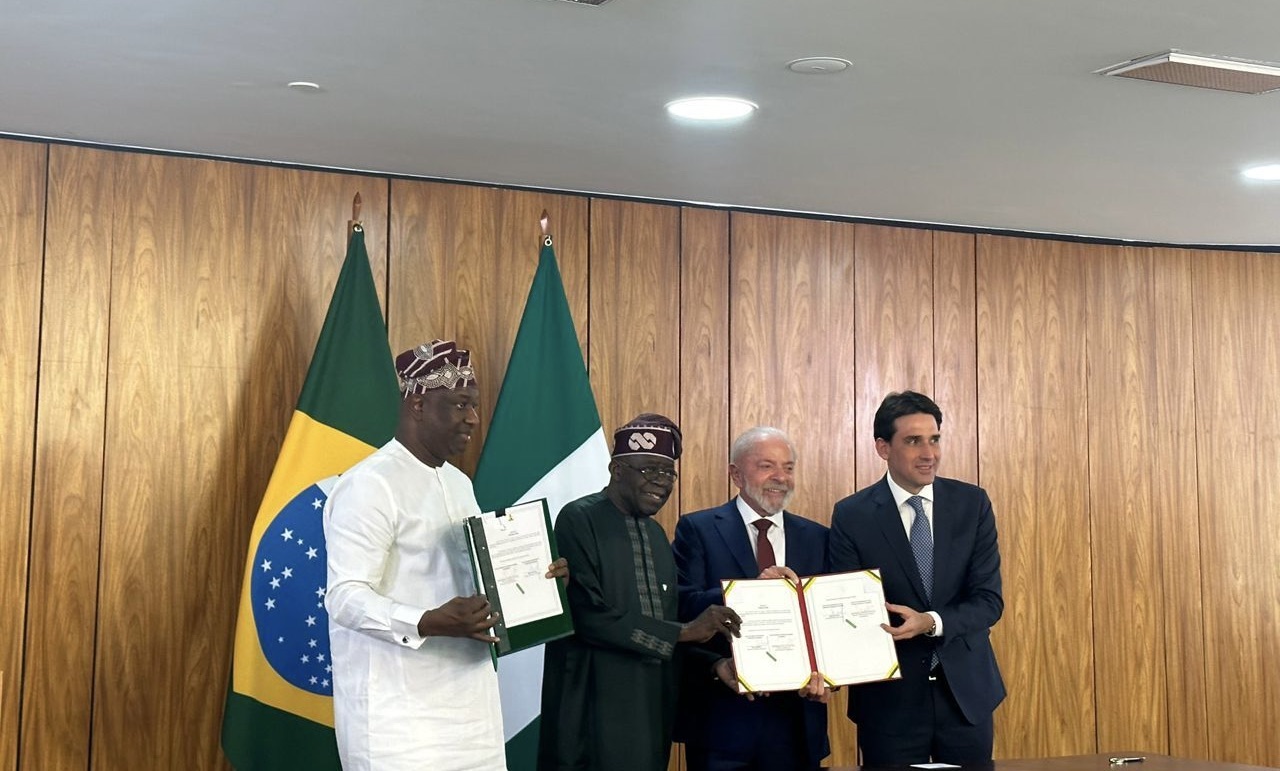
The agreement, signed yesterday in Brasília during Tinubu’s two-day working visit to Brazil, provides a framework for direct air connectivity between both nations. Officials say the pact will open new opportunities in trade, tourism, investment, and cultural exchange, while deepening cooperation in aviation and beyond.
Strengthening bilateral ties
The Memorandum of Understanding was signed by Nigeria’s Minister of Aviation and Aerospace Development, Festus Keyamo, and Brazil’s Minister of Transport, Silvio Costa Filho, in the presence of both Heads of State.
A statement issued by Keyamo’s media aide, Tunde Moshood, described the agreement as a “strategic milestone” that underscores Tinubu’s commitment to expanding Nigeria’s global partnerships and enabling cross-border commerce and mobility.
Brazilian President Luiz Inácio Lula da Silva welcomed the accord, expressing readiness to broaden cooperation with Nigeria not only in aviation, but also in agriculture and infrastructure development.
Tinubu was accompanied by senior cabinet members, including the Minister of Finance and Coordinating Minister of the Economy, Olawale Edun; Minister of State for Foreign Affairs, Ambassador Bianca Onoh Ojukwu; and Minister of Agriculture and Food Security, Abubakar Kyari, among others.
The President is also expected to hold talks with the President of the Brazilian Senate, the Speaker of the Chamber of Deputies, and the Chief Justice of the Supreme Federal Court.
Beyond aviation, the working visit is expected to focus on wider areas of economic integration, with high-level engagements between Nigerian and Brazilian delegations across multiple sectors.
For Nigeria, the BASA agreement signals a step towards greater global connectivity at a time when the government is seeking to attract foreign investment and diversify the economy. For Brazil, it represents an opportunity to consolidate its presence in Africa’s largest market.
Officials from both countries have framed the agreement as more than a transport deal, describing it as the beginning of a new era of strategic cooperation between Lagos and Brasília.



 with Brazil, in a move aimed at strengthening economic, ...)