The Federal Government generated a total of N2.92tn from taxes in the first nine months of 2015, statistics obtained from the Federal Inland Revenue Service have revealed.
The amount when compared with the N3.44tn, which the Federal Government had set for the FIRS as target for the nine-month period, represented a decrease of N520bn.
A breakdown of the tax revenue earned by the service within the period showed that the sum of N756.7bn was collected in the first quarter of 2015 as against the quarterly revenue target of N1.02tn.
The N756.7bn was raised from Petroleum Profit Tax, which contributed the sum of N368.59bn, and non-oil taxes on which the sum of N388.1bn was collected.
For the second quarter, a total sum of N1.18tn was collected by the FIRS made up of N306.14bn from PPT, while the balance of N881.9bn was generated from non-oil taxes.
In the third quarter, the FIRS statistics showed that the sum of N980.48bn was generated from taxes as against the quarterly target of N1.14tn. The PPT generated the sum of N325.86bn and non-oil taxes accounted for N654.6bn.
The National Association of Government-Approved Freight Forwarders, NAGAFF, has warned that high import tariffs placed on several goods by the federal government will see more importers closing shops in 2016 thereby, leading to higher unemployment and loss of government revenue.
The chairman of Murtala Muhammed Airport arm of NAGAFF, Segun Musa, who made the prediction, revealed that the unfavorable import policies drove many importers out of the country to set up in neighboring countries.
“This is a big way through which the government is losing money. They end up enriching the neighbouring countries through whose ports the importers now use to bring in goods into Nigeria.
“The revenue leakage is more than the revenue collected in Nigeria, the tariff on imports is so high and that has taken a lot of business out Nigeria,”he said.
“High import tariff by Customs is not favourable to importers and has led to poor relationship between importers and the Customs,” Musa added.
“We have criticized the Pre-arrival Arrival Report (PAAR) that government should not saddle the Customs with issuance of that certificate but the Customs came with all kinds of snow whiting discuss that there won’t be any query again when they start issuing the Certificate, but that has not been the case,” he noted.
He however, called on the federal government to engage the private sector in policy formulations in order to get things right stressing that importation was not responsible for the demise of some major industries in the country but as a result of bad roads, insecurity and poor power supply.
The unstable value of the naira and related regulations, remain the biggest challenge plaguing real estate funding, Head of Real Estate Finance for West Africa at Stanbic IBTC, Adeniyi Adeleye, has said.
He said most property development projects are financed in dollars for the creation of sustainable and predictable funding environment for the assets.
Adeleye suggested that dual currency funding structures can bring stability to real estate deals in sub-Saharan Africa, as developers and retailers seek solutions to the volatility currently faced in domestic economies.
Dual currency structure refers to utilising a combination of hard and local currencies, while hedging the interest rate risk.
“These facilities would provide a natural hedge and create a win-win between developers and retailers.
“For example, a local currency facility can be accessed to hedge leases that are unlikely to be sustainable or easily adjusted in shock currency devaluation scenario, for defined periods. This way the exchange rate risk can be more effectively shared between retailers and developers by keeping lease exchange conversion rates constant for periods of volatility,” he said.
“This has exposed tenants to rental increases because their rents are indexed to dollars. The devaluation of currencies in countries like Nigeria and Ghana has been quite significant,” he said.
“Over time, these cost increases will inevitably be passed on to consumers, which will in turn create additional affordability challenges. The level of interest from property developers has not waned in spite of the strained environment.”
“In fact, most developers are positive about the long-term prospects of the economy and options available to them, largely because of the supply gaps in these markets. They are now challenged with trying to create robustness in their operating models to ensure they can continue to execute projects in the short-term,” Adeleye said.
He added: “It is now more about new solutions that are needed to improve the structuring of these deals, so developers can manage the challenges caused by policies aimed at shoring up dollars, the high local interest rates relative to dollar-based interest rates and weakening currencies.”
The Chief Executive Officer of Travel Investment Company Limited, TICO, Irene Uti-Egbeogu, has said the merger of travel agencies could generate over $2 billion annually.
Uti-Egbeogu said without consolidation, the market share would be small for travel agencies who need to explore wider segments and product initiatives to enhance profitability
In an interview, she said the coming together of four travel agencies: Touchdown, Quantum, Finchglow and Dees Travels in TICO has triggered a revolution in the travel agency sector, with economies of scale for the partners .
According to her, the firm was favorably disposed to discussions on partnership with travel management companies to expand the business.
Uti-Egbeogu said:”Indeed, we are open to more travel management companies interested in partnering with us in our quest for best practices. Interests within our scope include training and networking opportunities.
“We like to believe that travel agencies that have indicated interest in joining us are equally motivated by the same passion that informed this consortium, which is the overall advancement of the Industry.”
“The government can aid the industry’s growth by providing better infrastructure – good roads, power and truncating the red tape in getting through regulatory bodies.
“This would be with a view to making Nigeria a prime destination for travellers and tourists; even beyond recreating Nigeria as a tourist attraction to the international business community, we need to build an enabling environment for investors in the hospitality business.
“It takes funds to build hotels and refurbish or repackage tourist centres and facilitate electronic platforms that enable smooth logistics or accessible hospitality.”
“The prospects in the industry is huge, the reason is that Nigeria has a unique history and character that somehow seems to defy the norm. Even during the economic downturn, people were still travelling as high traffic in travel transactions were recorded.”
The equity segment of the Nigerian Stock Exchange, NSE, opened the year on a negative note with N94 billion loss.
This is against expectation of analysts as they believe that investors may take position on low priced stocks with significant upside potential coupled.
The NSE All Share Index depreciated by 0.95 per cent to close at 28,370.32 basis points, compared with the 3.11 per cent appreciation recorded previously
Market breadth closed negative as Learn Africa led 12 gainers against 18 losers topped by Skye Bank at the end of the trading’s session which was an unimproved performance when compared with previous outlook.
Market turnover closes negative as volume declined by 60.75 per cent against 82.13 per cent decline recorded in the previous session.
Austinlaz Plc, FBN Holdings Plc, Transnational Corporation of Nigeria Plc, Access Bank Plc and UBA Plc were the most active to boost market turnover. While Nestle Nigeria Plc and Guaranty Trust Bank Plc top market value list.
Top on gainers’ log was Okomu Oil Plc with a gain of N1.48 kobo to close at N31.78 kobo. Others include Cement Company of Northern Nigeria Plc with N0.31 kobo to close at N9.66 kobo, Zenith Bank Plc with N0.25 kobo to close at N14.30 kobo per share, and Oando Plc with a gain of N0.10 kobo to close at N6.00 kobo per share.
On the flip side, Nestle Nigeria Plc topped losers chart with N30.00 kobo to close at N830.00 kobo, GlaxoSmithKline Plc with N1.71 kobo to close at N32.49 kobo per share, Ashaka Cement Plc with N1.00 kobo to close at N24.00 kobo and Transcorp Hotel Plc with N0.29 kobo loss to close at N5.51 kobo per share.
Read more at http://www.dailytrust.com.ng/news/business/2016-stocks-shed-n94bn-in-first-trading-day/127282.html#5LoKT8BAmAtCBAO4.99
Oil prices jumped on Monday, January 4, following a breakdown in diplomatic ties between Saudi Arabia and Iran that some speculated could result in supply restrictions.
Saudi Arabia’s execution of a dissident cleric on Saturday inflamed sectarian tensions, sparking some worry among traders that crude output in the world’s most prolific oil-producing region could be threatened. Saudi Arabia and several of its allies have severed or downgraded diplomatic ties with Iran.
Bahrain and Sudan have severed diplomatic ties with Iran in solidarity with Saudi Arabia. The United Arab Emirates has downgraded its diplomatic team.
Saudi Arabia produced 10.2 million barrels a day of crude oil in November, or about 11% of global output of crude and related liquids, according to the International Energy Agency. Iran produced 2.9 million barrels a day of crude that month.
Light, sweet crude for February delivery recently fell 41 cents, or 1.1%, to $36.63 a barrel on the New York Mercantile Exchange. Brent, the global benchmark, fell 20 cents, or 0.5%, to $37.08 a barrel on ICE Futures Europe.
Brent prices fell 35% last year, their third straight annual loss, as a global supply glut showed few signs of abating. U.S. prices posted a second straight annual loss for the first time since 1998.
More than 18 months into the crude-price rout, oil production remains high around the world as producers compete for market share, keeping global inventories high.
Some oil analysts and investors have argued for months that the low price of crude doesn’t adequately account for a possible supply disruption due to violence or unrest.
The oil market has been vulnerable to sharp rebounds in recent months as traders who had bet on lower prices quickly reverse course.
Increased concerns about geopolitical conflicts could have prompted some traders to close out their bearish bets.
But further tension between Saudi Arabia and Iran could also expand the global glut of crude oil, weighing on prices, analysts said, as the two producers compete for market share.
Iran is expected to increase its output by hundreds of thousands of barrels a day this year if international sanctions on the country are lifted, and Saudi Arabia has already expressed its unwillingness to cut production to make room for Iranian barrels.
The Central Bank of Nigeria, CBN, will on Wednesday, January 6, sell $10,000 to each of the 2,839 bureaux de change, BDC, operators it approved last week.
President of the Association of Bureau De Change Operators of Nigeria (ABCON), Aminu Gwadabe, who disclosed this on Monday, January 4, said the apex bank took the decision because demand for dollar is still low as business activities were yet to pick up after the holidays.
He said the CBN has promised to continue the intervention to bridge the widening gap between the official and parallel market rates, saying the naira still exchanges for between N262 to N265 against the dollar at the parallel market, but exchanges for N199 at the official market.
Also, the CBN has issued new guidelines for the operation of BDCs which pegged the minimum capital base and cautionary deposits for intending operators at N70 million.
The guideline, which is in line with the exercise of the powers conferred on it by the Central Bank of Nigeria Act of 2007 and the Banks and Other Financial Institutions Act 2004 (BOFIA), also stipulates a non-refundable application fee of N100,000 and non-refundable licensing fee of N1 million.
The circular, which took effect on January 1, orders retail money exchanges to deposit a mandatory cautionary deposit of N35 million in an account with the CBN, in addition to a minimum capital requirement of N35 million.
The CBN has been struggling to shore up the naira, hit by the plunge in oil prices which started late last year.
According to the guideline, an intending BDC operator is also to provide non-refundable annual licensing renewal fee of N 250,000 and a non-refundable change of name fee of N100,000.
The new guideline stipulated that no person shall carry on the business of BDC in Nigeria, except with the prior authorization of the CBN. It also stipulated that a BDC shall be construed as any company that is licenced to carry on small scale foreign exchange business in Nigeria and whose sole object is the carrying on of such business on a stand-alone basis. It said the application for BDC licence shall be processed in two stages, namely: approval-in-principle (AIP) and final licence.
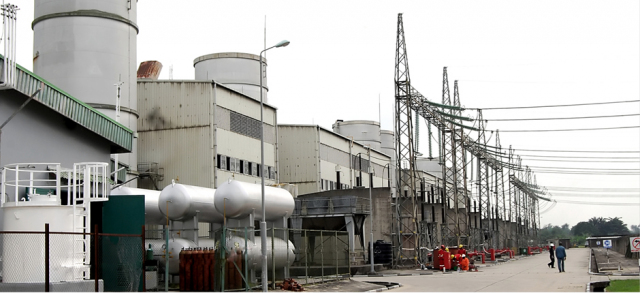
The , recorded stable power supply of 4,143.87 Megawatts from the Transmission Company of Nigeria, TCN, for five days.
According to Power Statistics posted at the Ministry of Power’s website on Monday, January 4, the quantum of power that the company sent out on December 28 remained unchanged till January 2.
During the period under review, power generation also remained unchanged at 4,241.39Mw, while peak energy generation remained unchanged at 4,553.2Mw.
Meanwhile, of the 4,241.39Mw generated, TCN was only able to evacuate 4,143.87Mw leaving 97.52Mw stranded in the network.The Minister of Power,Works and Housing, Babatunde Fashola said TCN lacked the capacity to evacuate the total power that the generation companies (GenCos) produced to the distribution companies (DisCos).
He said: “We intend to strengthen this part of our responsibility so that we can hold the GenCos and DisCos to their contracts with the citizens.We must play our own role of providing gas and expanding the transmission network.”
Fashola maintained that government is budgeting to carry power from GenCos to the DisCos.
He said: “We have identified a total of 142 projects of which 45 are at 50 per cent level of completion and about 22 can be completed within a year.
“The budget estimates are known and we intend to aggressively pursue completion to increase the carrying capacity from the GenCos to the DisCos.
“From there, we must expand the carrying capacity to run ahead of the generating capacity so that in future, there will always be capacity to carry whatever power is generated,” he stated.
The value of Nigeria’s crude oil export to India jumped by N31 billion, from N352bn in the second quarter (Q2) to N383bn in the third quarter (Q3) of 2015.
The National Bureau of Statistics, NBS, in its Foreign Trade Statistics for Q3, 2015 released recently, said India remains the largest buyer of Nigeria’s crude oil.
The value of Nigeria’s crude oil exports to the world’s third largest crude importer amounted to N381bn in Q1, but fell to N352bn in Q2 before climbing to N383bn in Q3, 2015.
The NBS quarterly report, which is largely from secondary data sources, showed, however, that the
Netherlands displaced Spain to become the second largest buyer of Nigeria’s crude.
In Q3, crude oil export to the Netherlands amounted to N228bn, while export to Spain declined from N260bn in Q2 to N160bn in Q3.
The NBS report also said Nigeria’s crude oil exports plunged by N372.8bn, or 18.8 per cent over the previous quarter, but contributed N1.6 trillion or 69.1 per cent to the value of domestic exports in 2015. Natural gas recorded N265.2bn of the total export value during the period under review.
The Nigerian Bulk Electricity Trading Plc, NBET, has topped power agencies under the Federal Ministry of Power, Works and Housing in votes allocation as it will get N60.754 billion for capital projects.
It had N194.198m in the previous budget.
NBET helps to cushion what could be dislocations in bills payment by paying upfront to the relevant parties before the Discos collect electricity bills and pay back for power consumption.
The agency NBET had in late 2015 lamented the partial payment of power bills by the distribution companies (Discos), leading to accumulated debts for power generation and gas-to-power.
The Minister of Power, Works and Housing, Babatunde Fashola, described the situation, in his maiden briefing, as critical, saying the accumulating gas debt could jeopardise the improving power supply.
The Nigerian Electricity Regulatory Commission, NERC, which got N202.290m for capital projects in 2015, will not have any allocation this year.
It is expected that it gets 1.5 per cent of every collection in the electricity market to run its business, the newly approved electricity tariff shows.
The ministry has also earmarked about N293.296bn from a total of N467.645bn allocation to cater to the headquarters’ needs.
One of the world’s major oil producing country, Ecuador, has called for the cooperation of Nigeria in a bid to halt the free fall of price of crude oil at the international market.
Already, Ecuador has proposed a cut in Organization of Petroleum Exporting Countries, OPEC, daily production quota which currently stand at 30 million barrel per day.
Ecuadorian Ambassador to Nigeria, Leopoldo Rovayo Verdesoto who spoke exclusively to Daily Trust in an interview in Abuja called for a cut in the current OPEC daily quota; stressing that the market was already flooded with the product.
The Envoy who happens to be the first ambassador of the South American country to Nigeria presented his Letters of Credence to President Muhammadu Buhari at the Presidential Villa in December, 2015.
He also called for the support of Nigeria in the push for the resuscitation of the OPEC monitoring committee..
Verdesoto argued that Nigeria and Ecuador could play the lead role in addressing the current situation in the international oil market.
“Nigeria and Ecuador could make a sign to the market and work towards reducing production on a daily basis,” he said.
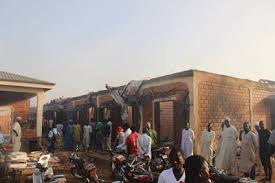
Abdulkadir Abdullahi Kure Ultra Modern Market, Minna Niger state was in pandemonium yesterday, as fire gutted part of the market destroying properties and cash worth millions of naira.
the fire which started about 1: am gutted 48 shops destroying the wares and the cash from sales in the shops .The fire was said to be have been caused by a generator that was used by one of the traders in the market .
It was learnt that one of those affected, Alhaji Salisu Mohammed of shop no 18 lost cash worth N40 million naira that he had converted to dollars to travel to Togo today (Monday).He was said to have collapsed immediately he heard of the fire incident and was taken to an undisclosed hospital for medical attention.
The Niger State Deputy Governor, Alhaji Ahmed Mohammed Ketso who led government officials to visit the market yesterday morning sympathized with the affected victims while calling on the Executive of the market , National Emergence Agency NEMA and the state’s Emergency Agency NSEMA to take inventory of the loss in each of the shops with the view to seeing how government can intervene
A Lagos lawyer, Mr Tope Alabi, has urged the Federal High Court in Lagos to dismiss MTN Nigeria’s suit against the Nigerian Communications Commission, NCC.
He said that the N1.04trillion fine imposed on MTN was in order, adding that the telecoms firm has no reasonable case against NCC.
MTN is urging court to quash the $3.9billion sanction imposed on it by NCC in October for failing to disconnect unregistered subscribers. The initial fine of $5.2billion was reduced by 25 per cent to $3.9billion. The payment deadline has expired.
But MTN through its lawyers led by Chief Wole Olanipekun, SAN, is challenging NCC’s powers to impose the fine. It argued that NCC being a regulator cannot assume all the functions of the state.
However, Alabi, in an application seeking to be joined as an interested party, said MTN’s suit was an abuse of court process that must not be tolerated, he further said MTN refused to register 5,200 subscribers despite the extension of deadline.
Alabi prayed the court to grant his application so that he could prove that MTN has no reasonable cause of action against NCC, and that granting MTN’s prayers will encourage a culture of impunity in Nigeria “whereby people would do all kinds of illegal and unlawful acts and get away with it so long as they can secure legal service to escape liability.”
Statistics from the Federal Inland Revenue service have shown that the Federal Government earned a total of N2.92 trillion from taxes in the first nine months of 2015.
The amount represented a fall of N520 billion when compared with the N3.44 trillion which the Federal Government had set for the FIRS as target for the nine-month period.
A breakdown of the tax revenue earned by the service within the period showed that the sum of N756.7 billion, raised from Petroleum Profit Tax, was collected in the first quarter of 2015, compared to the quarterly revenue target of N1.02 trillion.
For the second quarter, a total sum of N1.18 trillion was collected by the FIRS made up of N306.14bn from PPT, while the balance of N881.9bn was generated from non-oil taxes.
In the third quarter, the FIRS statistics showed that the sum of N980.48bn was generated from taxes as against the quarterly target of N1.14tn. The PPT generated the sum of N325.86bn and non-oil taxes accounted for N654.6bn.
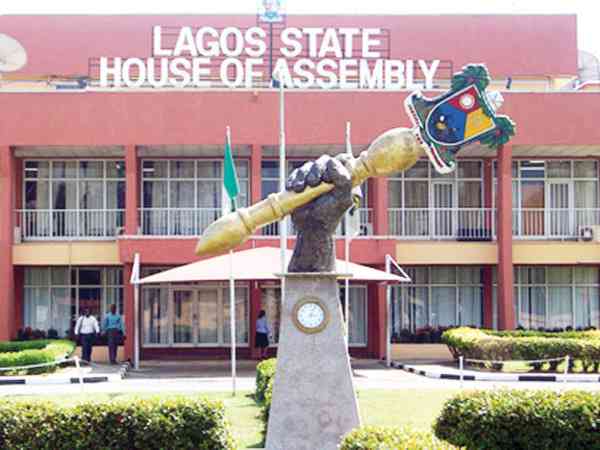
The Lagos State House of Assembly has approved a N25 billion Employment Trust Fund Bill for the governor’s assent.
The bill, which was passed alongside with the 2016 budget after stakeholders meeting on it, makes provision for a law for the establishment of the Lagos State Employment Trust Fund.
While considering the report of a joint committee set up by the House, members scrutinised the findings and recommendations of the committee with minor amendment.
The speaker in his remarks praised the governor for the initiative to engage unemployed teeming youths roaming the streets in a veritable venture that would bring out their potentials, empower and even grow the economy of the state.
He said the economy of the state would further thrive through improved entrepreneurship, trading, commerce and improved economic activities which the trust fund seeks to achieve.
Just about a few days into the new year,the government of Taraba has reported an outbreak of Lassa fever in the state.
According to the Commissioner of Health, Innocent Vakkai, one person has been confirmed dead while two other people kept in for observation.
He said: “One person died and two others quarantined and their blood samples have already been taken to Irrua Specialists’ Hospital in Edo State for further confirmation.”
He explained how the fever spreads.
“People usually get infected with the Lassa Virus after exposure to infected rodents, while person to person transmission occurs through direct contact with the sick person.”
“Other precautionary measures include putting food in rodent proof containers and wearing protections such as masks, gloves, gowns among others,” he added.
The commissioner further urged anyone who witnesses nasal bleeding as well as bleeding through the anus and mouth to the nearest hospital as they are among the symptoms of the fever.
Operators of e-commerce companies have identified costly electricity charges as a deterrent to investment and business development in Nigeria.
This is coming as the Association of Nigerian Electricity Distributors, ANED, reveals that less than 40 percent of electricity bills are paid by consumers and as a result higher tariffs are expected to be levied in a bid to plug the loss in power revenue.
Stakeholders’ state that with a recession poised to sweep through the economy, an unstable currency washing out capital security and epileptic power supply forcing a dependence on generators, the hike in electricity tariffs will limit industry growth.
Speaking on the issue, Kushal Dutta, managing director of Jovago Nigeria expressed, “One of the highest cost e-commerce companies in Nigeria cover is electricity. Because online-based business need constant power supply to function and deliver services to clients, we spend a bulk of our revenue which should go into increasing operations on buying diesel for generators that run almost 24 hours each day.
“Although we predict better market opportunities for the sector, there is need to curb this inflation in tariff pricing so investing companies can begin to thrive and achieve real growth,” Dutta said.
While consumers of power bemoan the instability and high cost of sourcing electricity, Sunday Oduntan, executive director of the Association of Nigerian Electricity Distributors, ANED, said that the high charges were dismissible in view of the low payment habits of Nigerians.
According to Oduntan in an interview granted to a national daily, consumers pay less than “40 per cent of their actual bills.” This revelation was made after electricity distributors began recording redline cash receipts on a quarterly basis.
“I’ve toured all the 11 Discos and I see the same pattern across board in terms of our peoples’ attitude with respect to the payment of electricity bills,” he said, “You give a bill of N5,000 and they’ll pay N2,000 and will tell you they will clear it next time. This is how it continues to pile up.”
With the government removing fuel subsidies and oil marketers refusing to sell diesel at pump prices, the cost of doing business in Nigeria is expected to double over the next three months especially as oil hits a benchmark price of $38 per barrel with the International Monetary Fund (IMF) predicting a further drop to $20 per barrel by mid-year.
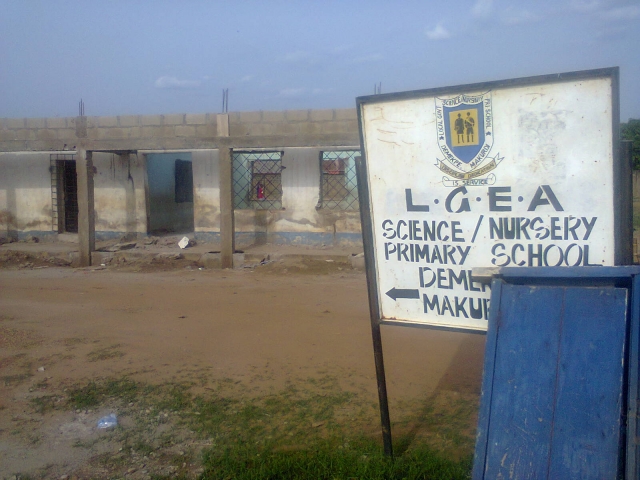
In a bid to improve the level of education in the state, the Benue State Government has unveiled an implementation strategy to employ 16,000 primary and secondary school teachers in the agrarian state.
Governor Samuel Ortom stated this in Makurdi at the weekend during the presentation of the 2016 Budget christened “Budget of trust, confidence and credibility.”
He added that out of the 16,000 teachers to be gainfully employed, 10, 000 are to be deployed to the primary school section while 6,000 would be trained in the secondary school system.
According to Ortom, one of the pillars of his administration is qualitative education, saying that government will renovate and furnish at least 400 primary and 44 secondary schools across the state.
Minister of Communications, Adebayo Shittu, has said no room will be given to telecoms service providers to shortchange any subscribers under the administration of President Muhammadu Buhari.
This remark is coming on the heels of numerous complaints of poor quality of service and regulatory deficiencies by subscribers.
The minister, In a statement on Sunday, by his Special Assistant on media, Victor Oluwadamilare, maintained that the various complaints of telecom subscribers across board and the challenges facing mobile telecom operators in Nigeria were being comprehensively examined with a view to finding lasting solutions in conjunction with relevant stakeholders within the shortest time possible.
Shittu added that the telecom sector holds a lot of promise for the economic growth of Nigeria in terms of revenue generation and massive employment generation if all the industry’s potentials and ICT’s limitless opportunities were well harnessed.
He urged the citizens to support President Muhammadu Buhari to provide the enabling environment for the industry to thrive.
Both chambers of Nigeria’s National Assembly has said it would not be part of the Treasury Single Account (TSA) being implemented by President Muhammadu Buhari.
President Buhari had, during last Wednesday’s media chat, said he was having challenge with the National Assembly over the TSA.
Reacting, both chambers of the National Assembly said they would not be a part of the TSA as such would amount to a surrender of their autonomy to the executive.
Spokesperson of the senate, Aliyu Sabi Abdullahi, said that the TSA is as an executive programme submitting to the TSA is surrendering autonomy of the Legislature as the first line of charge to the executive.
Similarly, spokesperson of the House of Representatives, Abdulrazak Sa’ad Namdas insisted that said TSA remains an executive policy.