






Home Blog Page 3020

5 Tips to Manage Roaches in a Rental Car

Many people prefer renting cars to using taxi cabs or public transport systems as it gives them  freedom and flexibility when traveling. But while a rental car allows flexibility on a trip, it can sometimes add a measure of complications to the journey – like finding out the car is infested with roaches and the company is unwilling to take responsibility.

Cockroaches are one of the most popular disease carrying pests. They leave saliva and excrement which can cause dysentery, diarrhea and is are threat to childhood asthma. The fact that they are ubiquitous in nature and very resilient is no help either as it makes getting rid of them almost impossible, however, Jovago.co, Africa’s No.1 online hotel booking site offers 5 tips to manage roaches in a rental car.

Fumigate

The first step to make the moment you find out your car is ridden with roaches is to fumigate. You can do this by dusting the interior with boric acid powder, using other insecticides or employing an exterminator to handle the process.  It is less tedious and more economical to use the boric acid powder though, you just need to make sure you apply the powder in every nook and cranny.

Park in clean surroundings

Sometimes the rental company is not responsible for the roach infestation. Most times, insects find their way into the vehicle through holes and crevices under car and through the engine, so, it is important to watch where you park the car while using it. Avoid parking next to dust bins or refuse dumps, local market places, and generally areas with unclean environment.

Do not eat in the car

eat in car roach

Have you ever been in a car, and the moment you start to eat maybe a wrap of Sharwarma or a burger, roaches start to pop out from every corner?

Roaches may be blind, but their sense of smell is sharp, and they are attracted to the smell of food. Wherever food and water are easy to find, roaches will invite themselves to lunch. So, the best way to cancel their reservations and get rid of them is by adopting a ‘no-food-in-the-car” policy.

Use the AC

Unknown to a lot of people, cockroaches prefer warm environments or places with hot air. They barely survive in cold room temperatures. So, in cases where you find your car being occupied by these vermin, you maybe want to use your air conditioner to expel them – especially at nights, as the cockroaches are nocturnal and naturally prefer to roam about at night.

Set sticky traps

trap roach

This is a cleaner and less laborious way to get rid of the roaches. Insects like to congregate in dark corners within the car and these are areas sticky traps can reach.

These traps help you accomplish two things. First, you are able to get a better look at the species of roaches that have infested your car, that way you can identify how best to get rid of them. And second, you get an idea which parts of the car are “high traffic” areas are for the cockroaches and vacuum these places often.
IDP Camps Receive Educational Supplies from Bank Workers

The Maiduguri branch staff members of Fidelity Bank Plc, recently put smiles on the faces of children at the Internally Displaced Persons’ (IDP) camps across Borno State. The workers under the aegis of Fidelity Helping Hands Programme (FHHP), the multi-purpose Corporate Social Responsibility (CSR) vehicle of the bank, contributed funds from their salaries to buy educational supplies, including branded school bags, books and writing materials, which they donated to the children.

The project tagged “Back to School,” was designed to better the lives of the victims of Boko Haram insurgency in the North East region, who are presently taking refuge at the IDP camps.

According to the Managing Director/Chief Executive Officer, Fidelity Bank Plc, Nnamdi Okonkwo, said the benefactors identified education out of the many needs of children in IDP camps due to strong correlation between education and socio-economic development.

“We do not want to alienate ourselves from the community where we operate. We maintain high standards of integrity in our relations with state governments as well as host communities. That is why staff of the bank can pull resources together to embark on such a humane project.

Indian Government Pledges to Sustain Bilateral Trade with Nigeria

The Indian government has pledged to continue to purchase Nigeria’s crude oil and sustain its bilateral cooperation with the country in power, agriculture, Natural Gas, and Small and Medium Enterprises (SMEs), the acting High Commissioner of the India High Commission has said.

 Mr Kaisar Alam said that the diplomatic relations between India and Nigeria has grown steadily since 1958.

According to the acting high commissioner, the economic relations between both countries had grown over the years, adding that India had remained Nigeria’s major trade partner in 2015.

He recalled that India had pledged a loan of $10 billion for Africa over the next five years at the recent India-Africa summit held in Oct. 2015. The envoy explained that the loan is expected to finance projects in infrastructure, agriculture, power skill development, among others.

Lagos Records Another Death from Lassa Fever

Lassa Fever

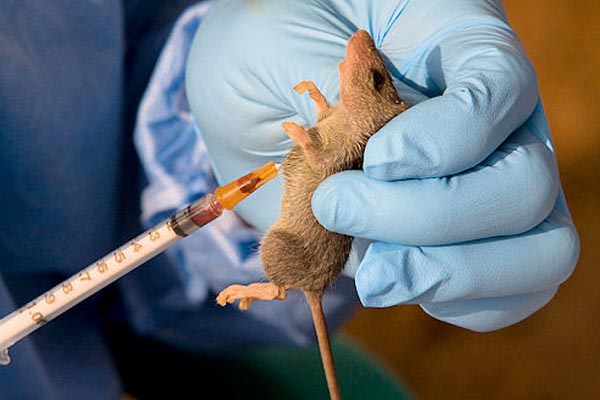
The commissioner for Health, Dr. Jide Idris, confirmed the death of a 27 -year-old lady who died of Lassa fever at the Ijede General Hospital in Lagos. According to him, deceased may have contacted the disease after she travelled to Edo State in December for the Christmas holiday and came back in January.

Idris also said that the health ministry had begun tracing 90 persons that might have had contact with the victim. “The remains of the patient have been kept in the morgue in a sealed body bag. She is to be buried after due consultation with her family,” he said.

He further revealed, “So far, Lagos State has recorded 20 suspected cases of Lassa fever since the outbreak of the disease. As of now 14 suspected cases tested negative, while four cases were confirmed positive. The results of two suspected cases are pending. The ministry has listed 537 contacts of the confirmed cases and 534 of the contacts are currently being monitored.”

 Mallam Danladi Yero said that the people of Ungwan Yero Community in Badarawa/Malali ward, Kaduna North Local Government Area of Kaduna State on Wednesday declared war against rats, rodents and other carriers of the dreaded Lassa fever. He noted that his area was known to be notorious for rats, adding that they are ubiquitous in the area and must not be tolerated any longer.

“With the recent outbreak of the Lassa fever, the community came together with the decision to kill as many rats that are visible within their community,” he said.

FG To Raise N192billion in T-bills

The Federal Government has unveiled plans to raise 192.39 billion naira ($967 million) in treasury bills with maturities between 3-month and 1-year.

This will take place at an auction on Feb. 3, the Central Bank of Nigeria said on Wednesday, January 27.

The apex bank said it will raise 45.17 billion naira in the 3-month paper, 30 billion naira in the 6-month deb.


Buhari Moves To Re-enact Money Laundering Prohibition Act

President Muhammadu Buhari has instructed  the Senate to repeal and re-enact the Money Laundering Prohibition Act.

This is contained in a letter to the Senate President, Abubakar Bukola Saraki, entitled: “The Money Laundering Prevention and Prohibition Bill 2016 and the Mutual Legal Assistance in Criminal Matters Bill 2016.’

The President said the bill provides for the repeal of the Money Laundering Prohibition Act 2011 as amended in 2012, to make comprehensive provisions prohibiting the laundering of criminal activities, expand the scope of money laundering offences, provide protection for those who may discover money laundering, enhance customer due diligence, provide appropriate penalties and expand the scope of supervisory bodies, while recognising the role of certain self-regulatory organisations to address challenges in the implementation of a comprehensive anti-money regime.

“I hereby introduce for formal consideration and enactment into law the Money Laundering Prevention and Prohibition Bill 2016 and the Mutual Legal Assistance in Criminal Matters Bill 2016.

‘’Money Laundering Prevention and Prohibition Bill 2016: This bill provides for the repeal of the Money Laundering Prohibition Act 2011, as amended in 2012, to make comprehensive provisions to prohibit the laundering of criminal activities, expand the scope of money laundering offences, provide protection for employees of various institutions, bodies and professions, who may discover money laundering, enhance customer due diligence, provide appropriate penalties and expand the scope of supervisory bodies, while recognising the role of certain self-regulatory organizations to address challenges in implementation of a comprehensive anti-money regime.

“The Mutual Legal Assistance in Criminal Matters Bill 2016: This bill seeks to facilitate the provision and obtaining by Nigeria of international assistance in criminal matters, including the provision and obtaining of evidence, making of arrangements for persons to give evidence or assist in criminal investigations, recovery, forfeiture or confiscation of property in respect of offences; restraining dealings in property or the freezing of assets that may be recovered, forfeited or confiscated in respect of offences; execution of request for search and seizure, location and identification of witnesses and suspects, service of documents and other matters connected herewith.”


Senate Fixes February 25 to Pass 2016 Budget

The Upper Chamber on Wednesday, January 27, fixed February 25 for the passage of the 2016 Appropriation Bill.

The appropriation bill scaled second reading in the Senate. The bill was committed to the Committee on Appropriation to coordinate budget defence by ministries, departments and agencies (MDAs) of government.

Senate President Bukola Saraki warned senators against financial inducement in the course of budget defence by MDAs.

Saraki said any lawmaker involved in unwholesome conduct in the course of budget defence would not be spared.

On the general principles of the budget, Saraki said the proposal was a major departure from past budgets, particularly with regard to withdrawing focus on oil as major revenue source for funding the budget.

He said: “This to me and to all of us is the most important area of this budget in the sense that it will be a great foundation not only for today but for the future if this can be achieved.

“Also, with the pegging of Capital Expenditure at 30 per cent, a number of comments were made about the level of borrowing but I think what matters is what the money is used for.

“As of the percentage of Gross Domestic Product (GDP), we are still within the limits and parameters but what is important is to ensure that the money is judiciously used for what it is meant for.”

Saraki said the Senate would also take a look at the issue of benchmark and various budgetary allocations, where most senators expressed concern.

Med-view Airline Gets Approval for 17 International Routes

The Federal Government has granted indigenous carrier, Med-view Airline permission to fly 17 regional and international destinations.

Managing Director of the airline, Muneer Bankole, disclosed this on Wednesday, January 27, during a forum organized by Med-View for travel agents and tour operators in Abuja.

The forum was an avenue for the airline to introduce its new routes to the travel agents and also interact with them.
As part of its expansion drive, the airline recently flagged off Lagos- London and Lagos – Kano- Jeddah international operations and also commenced local flight from Lagos to Kano.

Bankole, who spoke through the company’s Executive Director, Business Development, Is’haq Na’Allah, disclosed that the airline would soon commence international operations into other countries it has been designated to fly.

Among the new routes which the government has granted the airline approval to fly into, according to the MD, were Lagos – Dubai, United Arab Emirates (UAE), Dakar Senegal; Freetown Sierra Leone; Monrovia in Liberia.

He added that plan is also in top gear to procure additional aircraft to beef up its fleet in 2016.

Market Capitalization Loses N171billion in Mid-week Trading

The market capitalization at the end of the mid-week trading on the floor of the Nigerian Stock Exchange, NSE, crashed from N8.196 trillion to N8.025 trillion.

At the end of trading on Wednesday, January 27, the year to date returns on the Nigerian bourse stood at -18.54 per cent.

Market breadth closed negative as Seplat Petroleum Development Company led 11 gainers against 24 losers topped by Transnational Corporation of Nigeria at the end of the trading session which was an unimproved performance when compared with previous outlook.

Market turnover closes positive as volume moved up by 82.63 per cent against 33.61per cent decline recorded in the previous session. Zenith Bank, UBA and FBN Holdings were the most active to boost market turnover. Zenith Bank and Guaranty Trust Bank top market value list.


Bear Invasion Strengthens As Stock Market Index Sheds 2.09%

Transactions on the Nigerian Stock Exchange, NSE closed market on a downward slope on Wednesday, January 27, as the All Share Index lost 2.09 per cent to close at 23,333.34 points from 23,832.03 on Tuesday, January 26.

Similarly, the market capitalization also shed from N8.196 trillion to N8.025trillion.

The market recorded 11 gainers today led by SEPLAT with a gain of N14.12 or 8.26 per cent to N185.00 followed by Cadbury with a gain of N0.79 or 4.96 per cent to close at N16.71 while AIICO gained N0.04 or 4.94 per cent to close at N0.85 per share.

On the other hand, Transcorp topped 24 stocks on the losers’ chart with N0.12 loss or 9.16 per cent to close at N1.19 followed by UBA that lost 0.23 or 7.72 per cent to close at N2.75 per share, and FCMB that lost N0.08 or 7.62 per cent to close at N0.97 per share.

All together, a total of 260,480,900 shares worth N1.705 billion exchange hands in 3,465 deals.

CBN Clears 128 BDCs Compliant With N35million Caution Deposit Directive

The Central Bank of Nigeria, CBN, on Wednesday, January 27, cleared more Bureaux De Change , that met the N35 million mandatory capital base.

This followed the removal of the caution deposit for all operators after the regulator stopped dollar sales to BDCs.

Data released yesterday by the apex bank showed that 128 BDCs recapitalised in the last one week, bringing the total number of operators to 2,964.

There were 2,836 operators previously.

The CBN is expected to refund nearly N100 billion to all the BDCs that paid the mandatory N35 million caution deposit that was scrapped last week.

A circular signed by CBN’s Director, Financial Policy & Regulation, Kelvin Amugo, said the decision was reached following recent development in the in the operations of BDCs in the economy, prompting the apex bank to refund the mandatory caution deposit of N35 million each to all BDC operators.

He however, said the regulator will retain the N1 million licencing fee paid by each of the operators. Amugo said the eligible BDCs are expected to apply for refund of their caution deposit, attaching evidence of payment and bank transfer details.

President, Association of Bureau De Change Operators of Nigeria (ABCON), Aminu Gwadabe told The Nation that the cash refund is a welcome development.

He said the initiative is an indication that the CBN has finally shut its doors to the BDCs. He said since the caution deposit was to enable operators’ access the official forex window, the stoppage of dollar sales to BDCs by the CBN means the fund should be refunded.


Lagos Government Earmarks N6.5billion for Accrued Pension Rights

The Lagos State Government has voted N6.5 billion in this 2016 budget for the payment of accrued pension rights to its retirees under the Contributory Pension Scheme (CPS).

The Director-General, Lagos State Pension Board (LASPEB), Folashade Onanuga, who revealed this, said the government has also increased its Retirement Bond Redemption Account funding rate from five per cent to 10 per cent of employees monthly wage bill.

Onanuga also said Lagos is the only state in the country that does not owe retirees pension contributions paid into their Retirement Savings Account (RSA) and workers under the CPS.

“For the payment of accrued pension rights, that is, State Government’s Liabilities to employees in service, before the commencement of the CPS, the state government has increased its Retirement Bond Redemption Account funding rate from five per cent to 10 per cent of employees monthly wage bill,”she said.

“Also, the state government has set aside N6.5 billion in the 2016 budget to augment the funding of the Retirement Bond Redemption fund Account.”
Onanuga said based on this, the government was recognised as a top contributor by the Trustfund Pensions Plc, which presented her with an award.

She said: “The state government is the only one to issue Retirement Benefit Bond Certificates and the only state government that is paying accrued pension rights into the RSA of her retirees regularly. The state today has all her workers registered under the CPS.

“It is the right of retirees having served the state meritoriously to receive their terminal benefits on time. All over the world, funding of terminal benefits of retirees remain a herculean task. As a country, Nigeria moved away from the Pay As You Go Pension Scheme dispensation to the CPS dispensation to ensure availability of funds to pay terminal dues at exit of an employee.

“While Nigeria subscribed to the CPS in June 2004, Lagos State joined the Scheme on the April 1, 2007 and today, Lagos State is the role model of effective pension scheme administration in Nigeria. ”

She said the state started the CPS in 2007 with only six pension fund operators, adding that eight years later, it has added five insurance firms as Life Annuity Service providers and four Pension Fund Administrators (PFAs).

The four PFAs are PAL Pensions, Premium Pensions, AIICO and Fidelity Pensions. This is, ultimately, to expand the choices available to the workers and retirees, she added.

She advised all beneficiaries to be careful when deciding what to do after retirement.

“You will all agree with me that appropriate utilisation of money turns it to assets. You are advised to consider your individual circumstance before choosing any of the two exit options of the Programmed Withdrawal and the Annuity. However, whichever of the two options you choose, you are assured of the safety of your benefits as provided under the pension reform law. This is the beginning of your financial Independence,” she added.

Capital Market Loses N4trillion in Two Years

The lingering fluctuation of trading activities on the floor of the Nigerian Stock Exchange, NSE, has led to heavy in stock value in the last 25 months.

The bear momentum in the last two years has taken more control of the Nigerian Stock momentum, seeing trading maintaing more of a downward trajectory.

Market operators have revealed that the abysmal performance has cost the capital market a whooping N4 trillion in two months occasioned by waning confidence of agitated investors.


Stock Market Stakeholders Seek N200billion Intervention Fund

Capital market operators on Wednesday, January 27 called on the Federal Government to put a halt to the crash in the market which has caused a massive loss of N4 trillion in 25 months.

The Nigerian equities market has lost nearly one-fifth of its capitalization so far this year.

At a media briefing on the state of the capital market in Lagos, stakeholders under the auspices of the Chartered Institute of Stockbrokers (CIS), Association of Stockbroking Houses of Nigeria (ASHON) and Association of Issuing Houses of Nigeria (AIHN) said the Central Bank of Nigeria (CBN) should create a N200 billion intervention fund for market makers as a short-term measure to stave off the downward trend orchestrated by divesting foreign portfolio investors.

They also called on the government to step in to support the market at any time of steep decline by buying and warehousing shares as this is a common practice in advanced markets where government takes active interest in the performance of the capital market.

Market operators said government should use the platform of the Nigerian capital market for funding of its 2016 budget as well as continuing privatization of government agencies and corporations.

Stakeholders also called on Securities and Exchange Commission (SEC) to structure unclaimed dividends in a way that they could be reinvested in the capital market.

Market operators said government should take a bold long-term move of instituting a zero interest policy for banks in order to discourage recourse to short-term money market instruments and to encourage long-term savings and investments.

Acting president, Chartered Institute of Stockbrokers (CIS), Mr. Oluwaseyi Abe, noted that the Nigerian capital market has been going through challenges that are not uncommon with other markets especially the automated markets which operate in a crest and trough pattern in response to variables in the macro economy and within the market itself.

He pointed out that the current steep decline at the stock market is due to three main factors including adverse macro-economic environment largely due to the drastic drop in the price of crude oil, negative public sentiment which is related to the state of the macro-economy and the retreat of foreign portfolio investors which is related to CBN’s policy on foreign exchange.

President, Association of Stockbroking Houses of Nigeria (ASHON), Mr Emeka Madubuike, explained that the N200 billion intervention fund would provide liquidity to the market makers such that each market maker should be able to access between N1 billion and N10 billion in concessionary funding.


NEPC Targets $30billion Rise in Non-Oil Export Earning In Five Years


The Nigerian Export Promotion Council, NEPC, has stated that it has marked down 11 strategic products and 21 countries to market Nigerian goods.

The was contained in a statement issued by Head, Public Relations of the council,Joe Itah in Abuja on Wednesday,January 27.

The NEPC said this would help to grow non-oil foreign exchange income from 2.7 billion dollars to 30 billion dollars in five years.

“More recently, we have developed the Zero Oil Plan in response to this administration’s charge that Nigeria must begin to look for new drivers of the economy.

“The plan is Nigeria’s strategic effort to build an economy that does not need oil to survive and can serve as a major flagship economic programme for the country.

“The plan identifies 11 strategic products and 21 countries for Nigerian goods to grow non-oil foreign exchange from 2.7 billion today to 30 billion dollars in five years,’’ it stated.

The steps, it noted were the One-State-One Product programme for assisting each state to develop and promote a choice exportable product where it had comparative and competitive edge.

Others are the 13 National Strategic Export Products which are in three categories.

The categories are Agro Industrial – Palm Oil, Cocoa, Cashew, Sugar and Rice.

The mining related products are cement, iron ore and metals, auto parts and cars, aluminium, while oil and gas industrial products, include petroleum products, fertiliser and urea, petrochemical and methanol.

Also, the Nigerian Diaspora Export programme which has three major components targeted at Nigerians in diaspora.

“The components are cuisine beyond borders, establishment of Nigerian Heritage Houses and encouraging our teaming diasporas to invest in the non-oil export sector,’’ the statement said.

It stated that the minister announced plans to organise a national agricultural summit aimed at engaging the youth to get their buy-in and change the orientation that agriculture was only meant for never-do-wells.

The statement said the minister commended the council for articulating a Zero Oil Plan to support the rapid diversification of the nation’s economy through non-oil exports.


World Bank Cuts 2016 Crude Price Forecast to $37 Per Barrel

The World Bank has lowered its 2016 projection for crude oil prices in its latest Commodity Markets Outlook report from $51 per barrel in its October projections.

The lower forecast reflects a number of supply and demand factors.

These include sooner-than-expected pick up of exports by the Islamic Republic of Iran, greater resilience in U.S. production due to cost cuts and efficiency gains, a mild winter in the Northern Hemisphere, and weak growth prospects in major emerging market economies, according to the World Bank’s latest quarterly report.

Oil prices dipped by 47 per cent last year and are expected to decline, on an annual average, by another 27 per cent this year.

However, from current lows, a gradual recovery in oil prices is expected over the course of the year, for several reasons. First, the sharp oil price drop early this year does not appear fully warranted by fundamental drivers of oil demand and supply, and is likely to partly reverse.

Second, high-cost oil producers are expected to sustain persistent losses and increasingly make production cuts that are likely to outweigh any additional capacity coming to the market. Third, demand is expected to strengthen somewhat with a modest pickup in global growth.

The anticipated oil price recovery is forecast to be smaller than the rebounds that followed sharp drops in 2008, 1998, and 1986. The price outlook remains subject to considerable downside risks.

“Low prices for oil and commodities are likely to be with us for some time. While we see some prospect for commodity prices to rise slightly over the next two years, significant downside risks remain,” said John Baffes, Senior Economist and lead author of the Commodities Markets Outlook.

Hyundai Heavy Industries, Nigerdock Complete Chevron’s $30million Oil Platform

The 2,700 ton Sonam Non-Associated Gas Wellhead Platform (Sonam NWP) built by Hyundai Heavy Industries in partnership with Nigerdock in Lagos for the Nigerian National Petroleum Corporation (NNPC) and Chevron Nigeria Limited (CNL) Joint Venture, has been completed.

The Wellhead Platform is ready for load out and sail to Sonam field for installation, according to the companies.

The Chairman/Managing Director, Chevron Nigeria Limited, Clay Neff, who spoke at its inauguration at Nigerdock’s fabrication yard on Snake Island, Apapa, Lagos,  represented by the company’s Director for Business Services, Emmanuel Imafidon, said the project accomplished in over 2.8 million man-hours, was done without injury or incident.

Neff said the Sonam non-associated gas (NAG) platform will enable the delivery of up to 300 million standard cubic feet per day (mmscf/d) of gas from Sonam to Escravos gas plant. This project will enable delivery of additional gas supply to the domestic market, which will help to significantly boost the Nigerian economy, he added.

“In addition to the impressive safety record of over 2.8 million cumulative man-hours without an injury or incident, the Sonam NAG Well Platform project, as one of CNL’s Domestic Supply Gas Obligation (DSO) projects, has and is still contributing immensely to the development and sustenance of Nigerian content,” he added.

The Chairman of Nigerdock and Jagal Group, Anwar Jamarkani said the platform has a height of 28 metres, width of 40 metres and a length of 50 metres, making it the largest topside module ever built in Nigeria. Because of the volume of gas the platform will produce, he said the project is a major milestone as it will provide feedstock for the much needed power generation.

He said: “The project will boost power generation ability and provide the much needed power for Nigeria’s domestic and industrial needs. It will significantly eliminate gas flaring from the project in fulfillment of government’s gas flaring policy, and attract gas investment opportunities thereby boosting this administration’s effort to diversify the economy from dependence on crude oil proceeds.

“The DSO project is a major milestone in government and industry’s quest towards achieving increased local content in the nation’s oil and gas sector. In the course of the project, Nigerdock recorded several remarkable achievements leveraging Nigerian human and material resources, and maintaining its commitment to investment in equipment, infrastructure and technology.

“We are truly humbled to play a part in such landmark achievements which will no doubt have a transformative effect on our country. However, we believe we can do much more and raise the bar.”


NCC Set to Issue Operating Licences To Five Broadband Firms

The Nigeria Communications Commission, NCC, on Wednesday, January 27,in Lagos, said its preparations for the licensing of five new broadband infrastructure companies, Infracos, has reached an advanced stage.

The nation’s telecoms industry regulator added that before the end of the first quarter of 2016, the licencees will emerge.

Its Executive Vice Chairman/Chief Executive Officer, Umar Dambatta who spoke during his maiden press conference at Lagos Sheraton Hotel and Towers, Ikekja, said a committee to handle the award of the licences has already been constituted in the Commission.

Dambatta who unveiled what he termed his “Eight Point Agenda for 2015-2020” said the pillars will ride on a tripod of three ‘As” which represent availability of service; accessibility of service; and affordability of service in line with the President Muhammadu Buhari administration’s change agenda, an ideological shift in the creation of structures for social benefits and inclusiveness for national development.

He said ubiquitous broadband provision is very important, noting that while two Infracos have already been licenced to provide services in Lagos and the Northeast, the remaining five other geopolitical zones will be captured in the next licensing round.

He said though not much is going on in the deployment of services in the two licensed zones, the Commission has invited MainOne which won the Lagos licence for discussion while HIS which won the Northeast licence will be engaged in meaningful discussion to drive the implementation of the National Broadband Plan of the Federal Government, grow sector contribution to national gross domestic product (GDP), create jobs and enhance good life for the citizens of the country.

Customs Impound Illegally Imported Items Worth N145 Million

The Nigeria Customs Service, Federal Operations Unit, Zone “C”, Owerri, Imo State has confiscated illegally imported items with an overall Duty Paid Value of N145,165,705.

The Customs Area Controller of the zone, Mr. Haruna Mamudu, said the seizures occurred on the Benin expressway, Aba-Eleme- Port Harcourt road and the Aba-Eleme axis.

Mamudu, who spoke with newsmen in Owerri, said that the seizures made were 1,500 cartons of poultry products, (concealed with scaffolding iron, big drums and wheel barrows) with a DPV of N21,000,000 and a truck load of 156 jumbo bales of second hand clothing with a DPV of N26,892,000.

“Also impounded was a truck load of fake and unregistered medicaments made up of 190 cartons of Tremadol, 10 sodium laury/sulphate, 30 bags of potassium chloride, 10 bags of fatty alcohol and 39 bags of sodium citrate with a DPV of N87,228,105.”

Others, according to him, are 1,700 pairs of shoes with a DPV of N2,778,000, 115 pieces of used tyres with DPV of N624,000 and assorted foreign soap/cosmetic with DPV of N6,573,600.”

He however assured that, the NCS would continue to ensure zero tolerance for corruption as has been enunciated by the Comptroller-General of Customs, Col. Hameed Ibrahim Ali (retd.).

Mamudu,  said the NCS would apply strict measures to block all areas of leakages to meet up with its revenue target, and also told members of the custom service to be bucle up so as to meet up with the requirements of the current administration.

Nigerian Oil Producers Making $5 Loss Per Barrel – Stakeholders

The Chairman, Petroleum Technology Association of Nigeria (PETAN), Mr. Emeka Ene has disclosed that Nigerian oil firms may be producing at up to $5/barrel loss, as average production costs for independent and marginal field producers is between $30 and $35/barrel and also with pipeline vandalism activities on the rise, costs may shoot up by another $10/barrel.

Oil prices, yesterday, resumed their free fall, with Brent crude, similar to Nigeria’s sweet crude grade, falling 2.6 per cent to $31.34 a barrel following a 10 per cent rise on Friday, while U.S. oil shed 95 cents to $31.24.

However, industry executives have insisted that the Federal Government needs to talk with Nigerian producers and come up with possible solutions, if it must save indigenous companies from running aground and plunging the economy into deeper crisis than it is in already.

BizWatchNigeria.Ng
Privacy Overview

This website uses cookies so that we can provide you with the best user experience possible. Cookie information is stored in your browser and performs functions such as recognising you when you return to our website and helping our team to understand which sections of the website you find most interesting and useful.