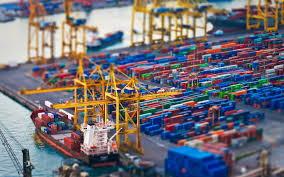
Nigeria has recorded a decrease in volume of imported food products and live animals following the drop in world oil and gas price.Import and Export Trade volume report released by the National Bureau of Statistics (NBS) revealed that general import levels saw a decline with imported food and live animals having merely 15.0 per cent of import size at the end of quarter four (Q4) of 2015.
The structure of Nigeria’s import according to the report showed that machinery and transport equipment got the lion’s share of import volume in the period under review with 32.4 per cent import volume, followed by mineral fuel import, which had 18.5 per cent of import volume in the period under review.
“The report indicates that value of Nigeria’s imports stood at N1,576.4 billion at the end of Q4 in 2015, 6.6 per cent less than the N1,688.2 billion recorded in the preceding quarter. Comparison with the corresponding quarter of 2014 showed a decrease of N454.6 billion or 22.4 per cent.
“The structure of Nigeria’s imports, according to SITC, was dominated by the imports of “machinery and transport equipment”, “mineral fuel”, and “food and live animals”, which accounted for 32.4 per cent, 18.5 per cent and 15.0 per cent in 2015,” the NBS said.
About 15,000 students in primary and secondary schools across the country benefited from the voluntary teaching programme organised by Sterling Bank Plc in honouring of the 2016 Financial Literacy Week which was held last week.
According to the training, it is part of the ‘One Education’ initiative of Sterling Bank in order to further combine the strategic focus of the bank on education and its commitment to youth empowerment and development in line with the Financial Literacy Policy of the Central Bank of Nigeria (CBN).
This Financial Literacy Week is usually observed annually under the Global Money Week and it is recognized nationwide as part of efforts to establish and maintain healthy financial habits among kids and teenagers which Sterling Bank also identifies with.
However, the CBN assigned Gateway Secondary School, Abeokuta, Ogun State, to the bank, Sterling Bank, It also, took the initiative to include additional schools from states such as Ekiti, Zamfara, Kano, Katsina, Plateau, Bornu, Gombe, and Bauchi. Others schools in Kwara, Lagos, Edo, Delta, and the Federal Capital Territory, Abuja, which were equally adopted by the bank to enable it cover more areas. Copies of the revised edition of its two books on financial literacy: ‘My Little Money Book’ and ‘Funds,’ and gift items, such as school bags and writing materials, were distributed free to students.
Shina Atilola,The group head, Strategy & Communications of the bank also, who represented the managing director and chief executive of Sterling bank, Mr Yemi Adeola, in Abeokuta, explained that the bank took the decision to expand the coverage beyond the scope assigned to it by the CBN in order to reach out to more students and teach them how to learn the culture of financial management at a young age. This, according to him, would enable them to understand the basic elements of financial management, adding that “the Sterling volunteers’ team had used the opportunity of this year’s programme to impart useful knowledge, discipline and patriotism to the younger generation.”
According to him, he noted that Sterling Bank had remained consistent in providing adequate support for child education by providing materials that could be of help to them in their educational pursuits. The Bank also provided an e-library for the College of Education, Ikere Ekiti to improve the nations’s educational sector under our ‘One Education!’ initative.
Mr. Atilola also added that “Our objective is to transform education; to invest in education and enable investment ion the sector.
The Department of Petroleum Resources (DPR) has said that the licences of private refineries which failed to come on stream between 2002 and 2014 have not been withdraw. It also said the licences of all private refineries, both conventional and modular, would be valid till 2017.
It noted that the $1 million commitment fee mentioned in the publication is no longer a requirement in the current guidelines for establishment of refineries in Nigeria
DPR stated: “There are currently 25 private refinery licences issued by DPR and not 45 as stated in your report. Of the 25 licences, 21 are in the Licence to Establish (LTE) category, while four are in the Approval to Construct (ATC) category.
Of these, three are billed to construct conventional stick-build plants and 22 will construct modular units with a combined capacity of 1,429,000 barrels per day (bpd)
“DPR did not revoke the licences issued to investors in 2004 as claimed in the report, rather, the Department granted Approvals to Construct (ATC) to 17 companies with a 24 months validity period.
“This culminated in the review of the statutory framework for licensing and the birth of a new guiding document ‘Guidelines for the Establishment of Hydrocarbon Processing Plants in Nigeria’ which is currently in use.”
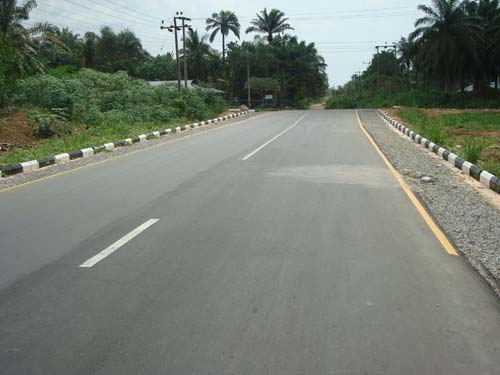
Governor Umaru Tanko Almakura of Nasarawa state has disclosed that the state government has earmarked N500m for the construction and rehabilitation of rural roads and bridges in the state. He added that rural emancipation has been the centrepiece of his administration’s focus.
Almakura said areas that are most vulnerable and have the worst challenges are those in the Lafia east and Lafia north development areas. He explained that so far about 33 bridges and box culverts have been identified in the southern senatorial zone alone with 13 on the Ashige, Alawagana, Gidan Buba, Fadama Bauna Abulagu roads visited by the governor.
He further revealed that government has engaged the services of Triacta Nig. Ltd who have the capacity and sophistication to complete the work before the rains peaked and have been given two months to complete the projects.
Kaduna State Governor, Mallam Nasir el-rufai has revealed that the on-going payroll verification exercise is already helping the state to save N500m monthly.
The governor stated that steady progress has been made since the verification process for workers and pensioners commenced in June 2015.
He added that “the results so far show that the payroll for wages and pensions has declined from the N2.7bn it cost to pay workers in May 2015.”
“To build on this success and ensure the integrity of the payroll, the government is pressing ahead with the concluding phase of the verification exercise.
“This is expected to end in April 2016. Workers who have patiently partaken in the exercise since June 2015 should demonstrate the same spirit now that verification is close to the finishing line.
“As an employer, the government regrets that some workers have encountered hitches during the verification process. The process we have launched to end in April will give a conclusive picture of public service data and hasten redress for the affected workers.Employees should update their personnel records fully.’’
The Public Relations Consultants Association of Nigeria will hold the sixth edition of its highly acclaimed PR Breakfast Meeting session on Thursday, March 24, 2016 at Amber Residence Hotel, Ikeja, Lagos.
Guest speaker is Mr. Lampe Omoyele, Managing Director of Nielsen West Africa, a foremost research company who will treat the topic, ‘Research as a Strategic IMC Function.’
Omoyele has a rich experience in gathering data on consumer habits and choices across 100 countries and has been in brand management and sales for about 25 years.
The previous well attended five sessions had featured speakers from various segments of communications and marketing. They included Kufre Ekanam, Corporate Affairs Adviser of Nigerian Breweries; Emeka Oparah, Director of Corporate Communications and CSR at Airtel Networks; and David Okeme, who was then Brand Building Director at Unilever Plc and President of the Advertisers Association of Nigeria (ADVAN).
Others were: Tony Ojobo, Director of Public Affairs at Nigerian Communications Commission (NCC) and Mrs Nkiru Olumide-Ojo, Head, Marketing and Corporate Communications at Stanbic IBTC.
This session will be sponsored by PRCAN member-firm, Publicis|Soulcomms and will be attended by PR agency heads, senior managers within and outside PRCAN member-firms and the media.
Speaking about the event, the President of PRCAN, John Ehiguese explained that data had become the new currency and a means of choosing what service to offer to consumers and that research was the only way to gather such data.
He said: “In today’s business world, research has become increasingly important and data is now the new currency. Companies that carry out research and collect data are able to gather consumer insights by analysing the data collected which help them make informed decisions on what services to offer and how to better manage their clients. The session with Lampe will allow participants tap into his vast knowledge of consumer insight.”
PRCAN is the consulting arm of NIPR established by a bye-law. Membership is exclusively restricted to consulting firms whose key executives must be members of NIPR and registered to practice public relations in Nigeria.
Its primary objective is to promote professional reputation management in Nigeria within the public and private sectors. It is also committed to maintaining professional standards and discipline among members and providing facilities/professional capacity for the public and private sectors to meet their PR consultancy needs.
Nestled in Ogun State, Ijebu-Ode is a warm, animate and touristic town that boast of a fingerlicking gourmet, overwhelming hospitality and a magnetic festival that attracts all and sundry from different parts of the world.
The town is the second largest city after Abeokuta in Ogun state and the thriving traditional institution led by Oba Sikiru Adetona further attests to the rich heritage of Ijebu-Ode. These makes Ijebu-Ode one of the most sort after destinations in Nigeria. Jovago.com, Africa’s No. 1 hotel booking tells you a tale of the people, their festival as well as how to navigate this receptive town.
Top 3 tourist attractions
Ojude-Oba Festival
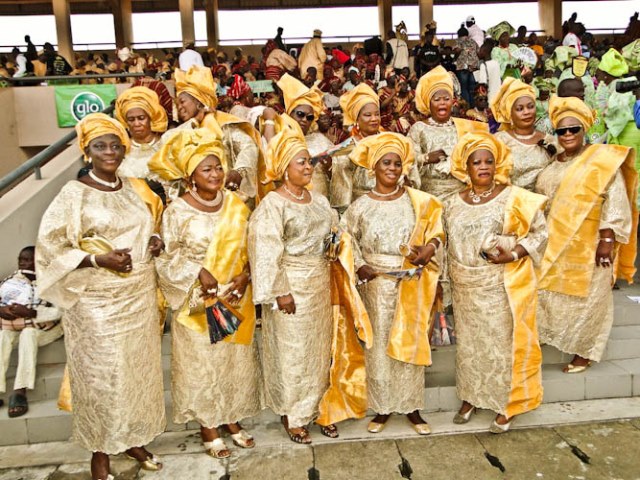
Arguably one of the most anticipated festivals in Nigeria. Ojude-Oba festival is a widely and lavishly celebrated festival in Ijebu-ode. It is a day set aside to pay homage to the King and commemorate the values, culture and tradition of Ijebus’. Hotels are fully booked, homes are filled with visitors and tourists come from far and wide to experience the festival. Key highlights of the festival include horse displays by the various horse-riding families, dancing competitions among the various regbe regbes i.e age grades, resplendent attires and deftly plaited hairdo of women. The festival is held opposite the Oba’s palace. It is a festival to quench your desire for fun
Awujale’s Palace
Led by His Eminence Oba Sikiru Kayode Adetona, the Awujale’s palace over the years is a historical monument that houses valuables of past Awujales of Ijebuland as well as provide relevant information about the history of Ijebu-Ode. The palace is a compendium of the people’s culture, craft and art.
Sungbo’s Eredo
Sungbo’s Eredo is the wall that was dedicated to Bilikisu Sungbo for her commendable contributions to the development of Ijebu-Ode. The sungbo Eredo is also believed to be the final resting place of the Queen of Sheba. The site was added to the tentative list of World Heritage Sites on 1st November 1995.
Ifokore
Unwinding
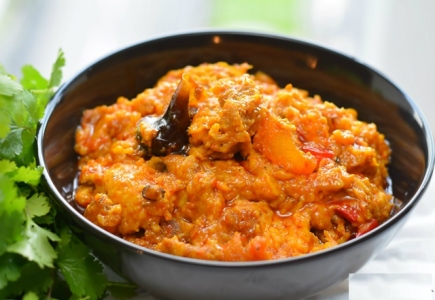
Ikokore is a meal readily available in Ijebu-Ode. They own this delicious cuisine. It is a must eat for visitors to the state. It is prepared with Water yam sprinkled with fresh fish, prawn, crab, pepper. Yummy! If you cannot get someone to prepare it for you, you can walk into these restaurants to order for ikokore or any one of your favourite food-Tasty Food consult, Ademola Food Canteen, lollyboi kitchen. Goodnews delicious restaurant and Odunsi Eatery.
Shopping
Ife-oluwa variety store, Deo Gratias Superstore, Mariam Variety store, and Olori Mini Mart are amongst the small scale that you can do your shopping. It is a developing town, do not bother to search for giant shopping like you have in Lagos.
Hotel
As a town where a popular festival is held, there are various stars of hotels that correspond with your taste. Visit Jovago.com to select any one of the 38 available hotels. These hotels are inexpensive.
Fun fact
Indigenes of Ijebu-Ode are known to be party freaks. They love to rock the dance floor with glossy attire and flamboyant hairdos. It should come as a surprise that they host one of the biggest festivals in Nigeria.
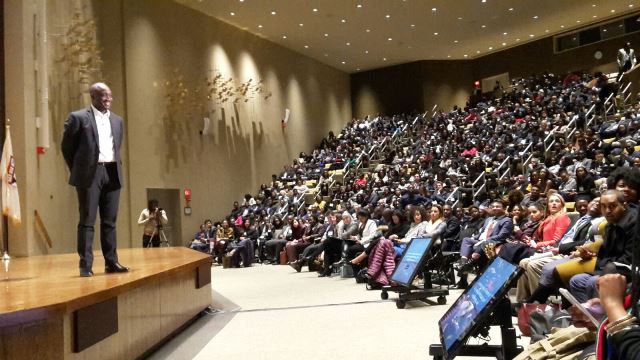
Charles Ifedi, the CEO Of Verve International, recently opened a rare window into himself as he spoke to a select audience of business and thought leaders at the Harvard Africa Business Conference in Boston, USA.
The conference, which held on Saturday 27 February 2016, was themed “Unite. Innovate. Disrupt: Home grown models for Africa’s Prosperity”.
With the stated aim of inspiring a new generation of young, smart Africans, Charles Ifedi, went into depth in his 20-minute presentation, outlining his personal take on leadership using his personal experiences of motivation, passion, teamwork and continuous improvement as a case study.
Speaking on his participation in the conference, he later remarked,
“The goal of this conference is to share information with people with the power to create positive change through making better informed business, investment and policy decisions, and I am honoured to have been invited to share my insights and experiences here. I am sure everyone here took something useful away and that alone makes this worthwhile.”
The conference also had a panel session moderated by CEO Interbrand Africa, Doug de Villiers, which featured Charles Ifedi alongside CEO Dangote Foundation, Zouera Youssoufou and Marketing Director Nando’s, Doug Place. The panel session, themed “Breakthrough Brands In Africa”, was broadcast live by CNBC.
A member of Nigeria’s House of Representatives, Rotimi Agunsoye at the weekend called for an end to gender inequality and advocated the encouragement of economic freedom for Nigerian women.
“My message is simple, we need a 21st Century mentality for women’s economic emancipation, we need to flush out the negative gender inequality and give women economic freedom”, the lawmaker representing Kosofe Local Government of Lagos State has said.
Mr. Agunsoye made this call at the empowerment programmed he organised for fifty women that would be trained in various skills and vocations including: hairdressing, fashion designing, soap/cream/bead making, wire works by officials from the National Directorate of Employment (NDE).
The lawmaker said, the empowerment programme was designed mainly for women due to the need for them to bridge the gap existing between men and women in skill acquisition and economic freedom.
He noted that lack of good education through skills acquisition had created a disadvantage, adding that, however, the programme been offered like others in such category would help women attain economic freedom.
According to the National Bureau of Statistics, NBS, exports slid by 40.3 per cent last year after a fall in crude prices slashed government’s revenues, weakened the currency and caused the economy to grow at its slowest pace in decades.
NBS said with limited manufacturing capacity, Nigeria imports most of what it consumes, and last year imports fell 9.2 per cent, adding that the decline helped mitigate a trade balance.
The balance of trade for 2015 was N3.03 trillion, down from N8.93 trillion, a year earlier ($15.2 billion – $44.9 billion).
“This development arose largely due to a sharp decline in the value of exports. The structure of Nigeria’s exports is dominated by crude,” the NBS said.
Nigeria’s exports dropped by 29.7 per cent in the fourth quarter from a year ago and imports declined 22.4 per cent, the NBS said. The fall in crude oil exports, which accounted for 71.4 per cent of total domestic exports last year, hit the economy the most.
The nation’s economy slowed in 2015 to grow at 2.8 per cent, its slowest growth in decades, down from 6.2 per cent in 2014, as currency controls introduced by the central bank last year to support the naira, as oil prices plunged, started to hurt growth.
The dollar restrictions caused inflation to jump in February, rising to almost a three-and-half-year high while forcing lenders to delay hard currency loan and trade repayments to foreign bank.
According to a projection by PWC, Nigeria’s gross domestic product, GDP,will soar to $6.4 trillion by 2050, moving the country to the ninth position on the world ranking, surpassing Germany, United Kingdom, France, and Saudi Arabia.
The report released at the weekend also noted that Nigeria’s intrinsic potential lies beyond oil, adding that harnessing this potential has become an imperative given the expectations of lower oil prices and heightened competition in the oil market.
Based on recent trends, the report reviews the impact of low oil prices on key economic indicators and the real sector as well as addresses the question of priority sectors that should be targeted for diversification efforts.
The PwC report identified agriculture, petroleum, retail and ICT as priority sectors with the most dominant transmission links to the overall economy.
“Forward linkages to agro-processing and other services, such as logistics as well as backward integration to input supply sectors, could improve farm incomes, increase employment and improve domestic food security,” the report reads in part, stating that Nigeria’s global agriculture exports could take-off at a rate similar to Brazil’s, with $59 billion in export revenues by 2030. It noted further that value added to oil and gas output needs to urgently improve by implementing diversification within the sector.
“This implies investments across the downstream sector to develop petrochemicals, fertilizers, methanol and refining, industries relevant in both industrial and consumer products which Nigeria currently imports.
Lafarge Cement Announces Defers Filing of Audited Reported
Giant building material manufacturer, Lafarge Africa Plc has posted a steep fall in its key performances in the group consolidated and separate financial statements for the year ended 31 December, 2015 released to the Nigerian Stock Exchange in Lagos last week.
The group’s profit after tax slid by represented 19.52 per cent, from N33.545 billion it made during the 2014 financial year to end the current year at N26.998 billion.
It’s profit before tax stood at N29.275 billion at the end of 2015 from N40.358 billion of 2014, this is N11.083 billion which is 27.46 per cent decline.
The cement producing company’s spent 69.12 per cent of its revenue on cost as its cost of sales rose to N184.703 billion against N177.783 billion which is 68.17 per cent of revenue spent on the same purpose during the 2014 financial year.
Lafarge Africa revenue slightly increased by N6.424 billion translating to 2.46 per cent at the end of 2015 year end.
Its earnings per share slumped by 138 kobo or 17.99 per cent from 767 kobo in 2014 to 629 kobo in 2015.
The total equities and liabilities of the group increased by N37.065 billion from N415.947 billion of 2014 to N453.012 billion it made at the end of 2015 financial year.
In the same vein, Lafarge Africa declared N3.60 kobo dividend for its shareholders which is lower than N3.60 kobo paid last year.
Toyota Nigeria Limited, TNL, has posted a 50 per cent decline in total vehicle sales in 2015.
The automobile company also expressed concern over the multiple glitches plaguing the nation’s auto sector which has continued to hamper growth in recent times.
Managing Director of the company, Kunle Ade-Ojo revealed these in Lagos during the launch of Toyota’s Special Service Campaign, an initiative to give hassle-free maintenance and high standard of after- sale service to users of the brand who bought their cars from authorised dealers across the country.
Ade-ojo also identified that one of the problems government should tackle is the Nigeria’s porous border management system.
Nigeria’s population size has been projected to hit 752 million people in 2100, should the country fail to manage population growth.
Vice President and distinguished scholar, Population Council, New York, John Bongaarts, who revealed this at the weekend while making a presentation titled ‘Nigeria’s population and development future’ during the 10th anniversary celebration of Population Council Nigeria in Abuja.
Bongaarts aid Nigeria’s population size was expected to quadruple between 2015 and 2100 and this would pose a severe challenge.
While stating that the Nigerian government spends less than one percent of the country’s budget on family planning, he said officials should recognize the multi-sectoral benefits of family planning and slower population growth, and make investments in family planning programmes a development priority supported by the government.
According to him, family planning programmes, help women to avoid unplanned pregnancies and thus reduce birth rate, in addition to substantial health, socio-economic, environmental, governmental and political benefits that accrue to countries from fertility decline.
United Bank for Africa Plc, UBA, has restated its commitment to sustain net interest margin at a minimum of 6.3% in 2016.
The bank Group Managing Director designate, Kennedy Uzoka, said this during the presentation of 2016 Strategic Imperatives and Earning Guidance at the Investors and Analysts Conference held in Lagos.
The UBA Group had last week released its audited 2015 financials announcing N69 billion profit before tax; representing a 22% year-on-year growth.
“We will leverage on our balance sheet optimization initiatives, to further improve asset yields. Interestingly, our improving deposit mix and funding cost will enhance our ability to sustain our NIMs,” Uzoka said.
Uzoka noted that despite the external cost pressures, UBA Group would remain committed to its cost efficiency initiatives.
He stressed that UBA will keep its cost growth below inflation rate and further moderate the cost-to-income ratio to a level below 65%.
The incoming CEO, also used the opportunity to inform investors and analysts from Nigeria and around the world that UBA Plc will grow customer deposits book across its 19 African subsidiaries from 10% to 15%.
Multi-line insurance company, WAPIC Insurance has announced its audited financial results for the period ended December 31, 2015, with N1.7 billion profit before tax (PBT) recorded during the financial year.
The current profit margin was as a result of the growth in the topline and returns from strategic investment in associated companies, according to a statement on Sunday, March 20.
The company also announced that its underwriting profit increased by 12 per cent to N1.5bn, driven mainly by a 33 per cent increase in underwriting income, while its gross written premium of N7.1bn grew by 36 per cent against the figure recorded in the 2014 financial year.
Besides, the insurance company paid out N2.2bn in claims, representing a 100 per cent increase on the payout in the 2014 financial year, while its gross claims increased to 31 per cent in the current financial year, against the 21 per cent in the previous year.
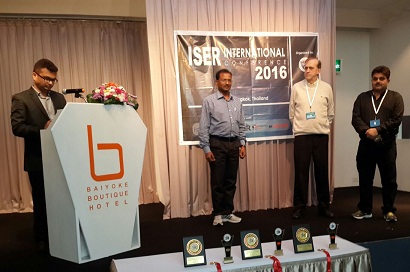
The International Conference on Social Science and Humanities, organized by the International Academic of Science, Technology, Engineering and Management will take place on 29th March 2016 at the Sheraton Abuja Hotel in Abuja, Nigeria. The conference will cover areas like Design Technology, Design Management, Fine Arts Technology, Visual Communication, Ergonomics, Arts & Design History.
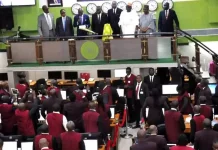
Aggregate market value of all quoted equities slid by N101 billion from the week’s opening value of N8.940 trillion to close at N8.839 trillion.
Most equities with price changes ended on the negative side. There were 20 gainers against 41 losers last week as against 39 gainers recorded against 22 losers in the previous week.
The benchmark indices at the NSE showed widespread underlying selling sentiments, in spite of earnings reports by many companies during the week.
The All Share Index (ASI)- the value-based index that tracks prices of quoted equities, dropped by 1.13 per cent to close the week at 25,694.79 points as against its week’s opening index of 25,988.40 points.
Oando recorded the highest percentage decline during the week, dropping by 25.23 per cent to close at N4. Ecobank Transnational Incorporated dropped by 20.28 per cent to close at N14.35. Access Bank declined by 10.63 to close at N3.95. Honeywell Flour Mills lost 10 per cent to close at N1.62 while Ikeja Hotel dropped by 9.62 per cent to close at N2.35 per share.
On the positive side, Conoil led the contrarian stocks with a gain of 21.38 per cent to close at N20.10. United Bank for Africa followed with a gain of 9.59 per cent to close at N3.77 while Law Union and Rock Insurance rose by 9.38 per cent to close at 70 kobo per share.
Following the completion of two major acquisition deals at the Nigerian Stock Exchange, turnover at the stock market gained 971.7 per cent last week.
Turnover jumped to 11.91 billion shares valued at N18.34 billion in 19,508 deals, representing 972 per cent and 146.2 per cent increase in turnover volume and value. In the previous week, turnover stood at 1.11 billion shares valued at N7.45 billion in 15,562 deals.
The turnover last week was driven by major acquisition deals on Wema Bank Plc and Unity Kapital Assurance Plc. A total of 4.16 billion shares of Unity Kapital Assurance Plc were swapped in a cross deal at 77 kobo per share. This represented about 30 per cent equity stake in Unity Kapital Assurance. The transaction on Unity Kapital was a divestment of the major equity stake of Unity Bank Plc, according to a reliable source.
Also, a total of 6.67 billion shares of Wema Bank Plc were swapped in three deals at 90 kobo per share. The deals were block divestments. A source said the divestments were part of the share sales by Asset Management Corporation of Nigeria (AMCON). The three deals represented 17.3 per cent equity stake in Wema Bank.
The acquisition deals expectedly placed Wema Bank and Unity Kapital atop the activities’ chart. The trio of Wema Bank Plc, Unity Kapital Assurance Plc and Zenith Bank International Plc accounted for 11.01 billion shares worth N11.27 billion in 2,856 deals, representing 92.4 per cent and 61.5 per cent of the total equity turnover volume and value respectively.
The financial services sector remained the most active sector with a turnover of 11.69 billion shares valued at N14.73 billion traded in 13,094 deals; representing 98.2 per cent and 80.35 per cent of the total equity turnover volume and value respectively.
The conglomerates sector followed with 71.89 million shares worth N175.60 million in 777 deals while the consumer goods sector placed third with a turnover of 69.72 million shares worth N1.18 billion in 3,019 deals.
Also traded during the week were a total of 294,047 units of Exchange Traded Products (ETPs) valued at N3.209 million executed in 42 deals, compared with a total of 72,054 units valued at N637,635.25 traded in 26 deals two weeks ago.
In the bonds segment, a total of 12,470 units of Federal Government bonds valued at N14.348 million were traded in eight deals last week.
The stock market however came under intense sell pressure as investors readjust portfolios ahead of the monetary policy meeting of the Central Bank of Nigeria (CBN).
The Nigerian Extractive Industrial Transparency Initiative, NEITI, has said, Federal Government exported 328, 897 million barrels of crude oil in the last four years.
The agency, in a paper titled: ‘’NNPC offshore processing and swap arrangements: Revenue loss to the nation’’ obtained at the weekend, showed that the Federal Government allocated 655,235million barrels of crude during the period under review, of which it exported 328, 897 million barrels to generate revenues for the country.
The paper, which gives an account of the number of volumes of crude oil allocated per year, volumes delivered to the refineries for processing into petrol, kerosene, diesel and other finished products, volumes supplied for offshore processing, and those exchanged between Nigeria and her partners abroad, said the government supplied 134, 387 million barrels of crude oil to the refineries during the period.
In the paper presented by former NEITI Acting Executive Secretary, Dr Orji Ogbonaya Orji, the government allocated more crude oil for exports since it derives more than 70 per cent of its earnings from oil exports.
Giving a breakdown of crude oil dealings during the period under review, NEITI said the country allocated 161,914 million of crude oil in 2009; 166, 523millions in 2010; 164,455million in 2011; and 162,343millions in 2012.
It said the government exported 142, 500 million barrels of crude oil in 2009; 97, 792 million barrels in 2010; 39, 341 million barrels in 2011 and 49, 215 million barrels in 2012.
The paper said the government delivered 19, 363 million barrels to the refineries in 2009; 34, 703 million barrels in 2010; 48, 394 million barrels in 2011 and 34, 927 million barrels in 2012.
Others include crude oil offshore processing-27,556 million barrels of crude oil in 2010; 26, 688 million barrels of crude oil 2011; and 22, 755 million barrels of crude oil in 2012.