Giant oil company, Mobil Oil Nigeria Plc has revealed that its revenue for the year ended 31 December, 2015 plunged significantly by N25.363 billion, representing 31.87 per cent.
The company reported N54.220 billion in 2015 as against N79.584 billion it made in 2014.
The gross profit of Mobil Oil Nigeria jumped by N253.752 million which was as a result of drop in its cost of sale in 2015.
Also, operating profit of the firm increased from N5.622 billion in 2014 which rose to N6.955 billion at the end of 2015 financial year.
It’s profit before tax dropped by N1.540 billion from N8.446 billion to N6.906 billion in 2015.
Mobil reported a decline of N1.520 billion profit after tax in its full year 2015 financial results translated to 23.77 per cent.
According to the results, profit after tax dropped from N6.393 billion it made in 2014 to end 2015 at N4.873 billion.
Earnings per share of the oil and gas firm also dropped by 23.80 per cent from 1,773 kobo in 2014 to 1,351 kobo at the end of December 2015.
Total assets of the firm rose from N49.227 billion in 2014 to N54.072 billion at the end of 2015, accounting for N4.846 billion or 9.84 per cent.
However its total liabilities rose from N49.227 billion to N54.072 billion.
Mobil Oil Nigeria declared N7.20 kobo final dividend which was subject to shareholders’ approval at the upcoming annual general meeting of the company.
The Federal Government has made over N500million from the renewal of dormant mining licences, as the 30-day ultimatum given to owners of dormant mining licences to renew them elapses today, Thursday, March 31.
More than half of the owners of the dormant licences published for revocation have for the past few days been scurrying to beat the deadline to avoid losing the licences.
The Minister of Solid Minerals Development, Kayode Fayemi, had over a month ago warned that government was set to revoke over 1,500 mining licences and leases on account of dormancy.
A source in the ministry, saidNigeria has been losing a lot of money from the non operation of the licences and about 8,000 jobs have not being created as a result of it.
“As the revocation deadline drew near, a lot of people have been rushing over to renew their licences. Over N500million has so far been raised so far from dormant licence owners coming to renew their licences which is good for the country. These dormant leases were just sitting there and not generating any revenue for the country,” the source said
“The truth is that if these licences were active, it would have created about 8,000 jobs which were not there because the licences were dormant. But with the re-activation of these licences, jobs will be created in the industry.”
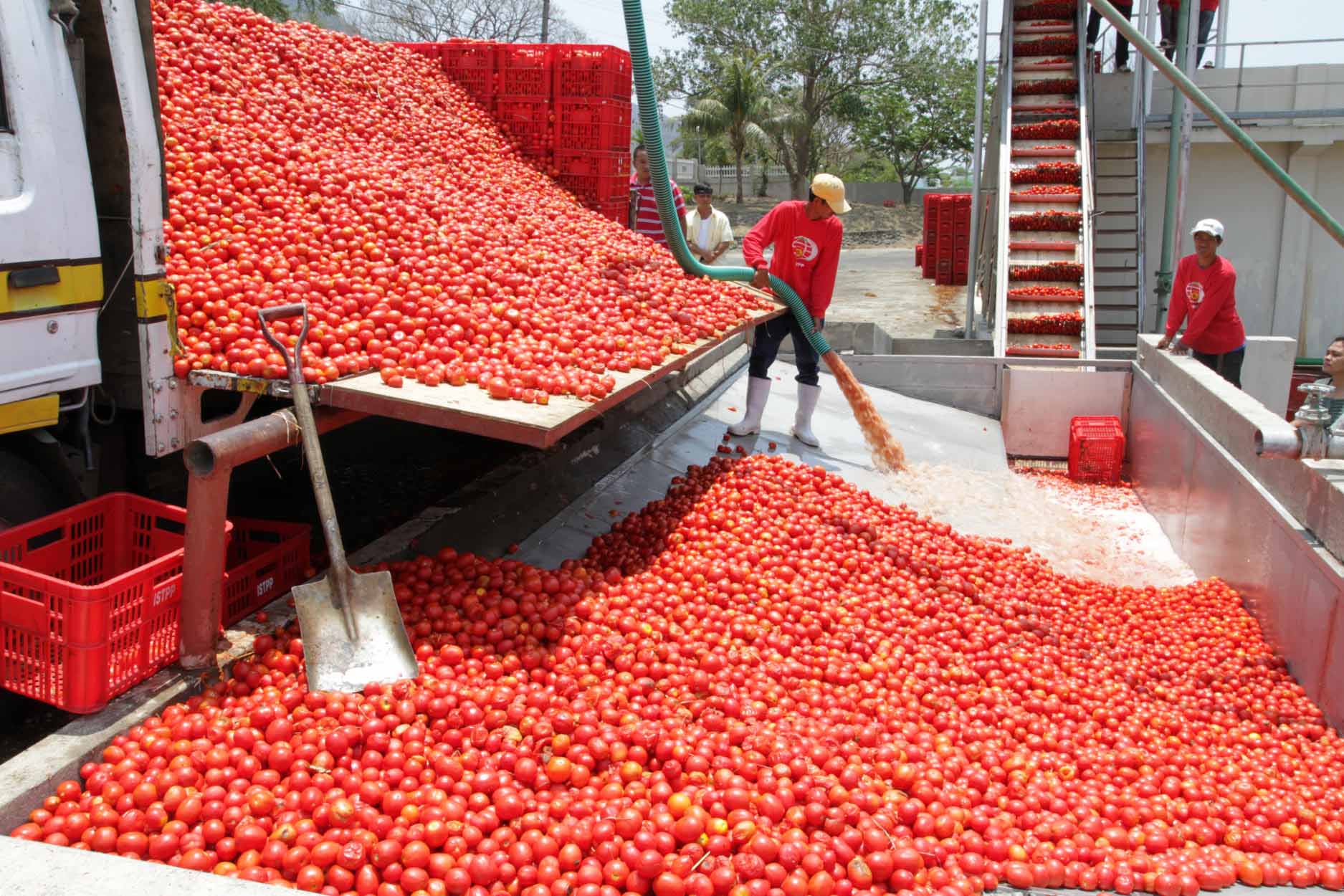
NASCON Allied Industries Plc has posted improved performance in its financial results for the year ended December 31, 2015 as salt and tomato processing company revenue soared by N4.928 billion accounted for 43.80 per cent.
The company revenue surged from N11.251 billion it made in 2014 to N16.178 billion at the end of 2015 financial year.
Principal activities of NASCON during the year include processing of raw salt into refined, edible and industrial salt. The company also produces seasoning tomato paste and vegetable oil.
Profit before tax stood at N3.018 billion in 2015 from N2.856 billion, represented N161.165 million or 5.64 per cent.
However, the company profit after tax move up from N1.867 billion to N2.106 billion which was N238.608 million or 12.78 per cent increase.
NASCON Allied Industries retained 13.02 per cent of its revenue as profit for the year in 2015 as against 16.60 per cent it retained during 2014 financial year. It proposed dividend of 55 kobo at the end of 2015 financial year against 50 kobo it declared last year.
The market capitalization of the 190 equities quoted on the Nigerian Stock Exchange, NSE, on Wednesday, March 30, lost N45 billion to end the day at N8.650 trillion from N8.695 trillion.
Market turnover closes positive as volume rose by 178.35 per cent against 28.80 per cent dropped recorded in the previous session.
The total value of stocks traded on the floors of the NSE today increased by 60% to N2.14 billion from N1.34 billion sold yesterday, while the total volume of stocks traded was 504.21 million in 3,374 deals compared to 282.7mn shares exchanged in 3,225 deals yesterday.
Top five financial gainers during the day’s transactions were SEPLAT which added N10, WAPCO and Dangote Cement which rose by N2 each, 7up which gained N1.41 and Flourmill which increased by 86 kobo per share.
Trading activities on the floor of the Nigerian Stock Exchange, NSE, remained in the Red Zone on Wednesday, March 30, as the All Share Index shed 132.01 basis points represented 0.51 per cent.
At the end of the trading, general index which opened with 25,277.29 points end with 25,145.28 points yesterday.
The depreciation recorded in the bourse’s indices fell on losses recorded in share prices of Nigerian Breweries which dropped by N4.83, Guinness with a loss of N3.18, PZ Cussons Plc with a decline of N1.19, UACN’s fall of 48 kobo and Zenith Bank’s depreciation of 35 kobo.
At the end of the trading, Livestock Plc led the most traded stocks with 100.340 million unit of share worth N107.380 million followed by Sterling Bank Plc with 70.598 million shares at N111.526 million, UAC of Nigeria Plc with 65.691 million shares valued at N122.675 million, FCMB Plc with 40.241 million of share at N35.219 million and FBN Holdings Plc with 37.698 million share worth N115.457 million.
Construction firm, Julius Berger Nigeria Plc annual reports 2015 and financial statements released to the Nigerian Stock Exchange, NSE, in Lagos indicated massive drop in 2015 profit.
Profit after tax of Julius Nigeria Berger Plc declined by N5.799 billion represented 70.39 per cent from N8.239 billion to end 2015 with N2.440 billion.
The firm’s profit before tax also went down from N13.135 billion it made in 2014 to N6.499 billion in 2015. This is N6.634 billion translating to 50.51 per cent.
Julius Berger’s operating profit slumped by N7.067 billion or 37.43 per cent from N18.881 billion to end N11.814 billion.
It’s gross profit shrink by N17.160 billon, from N50.495 billion to end 2015 with N33.334 billion in 2015.
The revenue of Julius Berger dropped from N196.809 billion of 2014 financial year to N133.808 billion. The decline during the 2015 financial report was N63 billion accounted for 32.01 per cent.
Nigeria lost over N90billion from about 3,599 cyber-attacks carried out on internet users and websites in between April 2015 and February 2016.
A cyber-security expert, Abdulhakeem Ajijola, who is the lead consultant at Consultancy Support Services (CS2) Limited, gave the figures out in Abuja on Wednesday, March 30, at the opening ceremony of a three-day cyber security awareness campaign and capacity building workshop organiszed by National Information Technology Development Agency (NITDA) in partnership with Malaysia Cybersecurity Agency.
He said more than 2,518 websites were defaced in Nigeria between 2011 and now, adding that 0.80 per cent of Nigeria’s Gross Domestic Product (GDP), equivalent to the Cement sector, is lost to cybercrime yearly.
He listed some of the websites attacked to include: The Embassy of Nigeria in Saudi Arabia (attacked on 09 Jan 2016), Federal Court of Appeal (attacked on 19-Dec-15) in protest of the deaths of Shiite members in Zaria during clash with Nigerian Army), Independent National Electoral Commission (attacked on 11 Jul 2014), and Nigeria’s House of Representatives (attacked on 01-Oct-14 ).
Others include: Federal Ministry of Information (attacked on 08-Jul-13) and Economic Financial Crimes Commission (EFCC), which was attacked on 28-Oct-2011.
Secretary of State John Kerry on Wednesday, March 30, in Washington, said the United States will invest more than $600 million in Nigeria in 2016.
He spoke during the opening session of the U.S.- Nigeria Bi-National Commission meeting.
The Nigerian delegation was led by Foreign Affairs Minister Geoffrey Onyema, supported by other officials including Nigerian Charge d’Affaires Hakeem Balogun.
Those with Kerry include leaders from the State Department, USAID, the Defence Department, Commerce Department, and other key agencies. The U.S. Ambassador James Entwistle also attended.
Kerry, who lauded President Muhammadu Buhari’s actions in office in the area of security and the attaempt to diversify the economy, said:”Our development assistance this year will top $600 million, and we are working closely with your leaders – the leaders of your health ministry – to halt the misery that is spread by HIV/AIDS, by malaria, and by TB.
“Our Power Africa Initiative is aimed at strengthening the energy sector, where shortage in electricity has frustrated the population and impeded growth.
“And our long-term food security programme, Feed the Future, is helping to create more efficient agriculture and to raise rural incomes in doing that.
“Our Young African Leaders Programme, in which many Nigerians participate, is preparing the next generation to take the reins of responsibility….and in education, we are working together to try to fight illiteracy, especially in the country’s north, where the lack of opportunity has been holding people back, and where the terrorist organisation, Boko Haram, has murdered thousands and disrupted the lives of millions.”
The Nigerian Electricity System Operator, an arm of the Transmission Company of Nigeria, TCN, that allocates energy to the DisCos on Monday, March 30, said it wheeled 2,905.70megawatts (Mw) to the 11 electricity distribution companies (DisCos) across the country.
The operator said it released 435.86Mw to Ikeja, 334.16Mw to Abuja, 319.65Mw to Eko, 261.51Mw to Benin, 261.51Mw to Enugu, as Ibadan received 377.74, and Jos got 159.81Mw.
Meanwhile, it allocated 232.46Mw to Kano, 232.46 to Kaduna, 188.87 to Port Harcourt, and 101.70Mw to Yola.
The System Operator’s website that made this disclosure yesterday recalled that on Monday, it attained a peak generation of 3778.90Mw, low generation of 3,305.80Mw.
It also noted that its highest frequency was 51.28 Hz while lowest frequency was 48.83Hz.
Pan-African finance institution supporting the development of the housing and real estate sector in Africa,
Shelter Afrique, has received a $8.2 million boost of equity by the African Development Bank, AfDB.
In a statement by the AfDB, the fund is meant to bolster its balance sheet and help achieve its objective of providing quality affordable housing in Africa.
AfDB said: “Africa’s economic landscape remains positive with promising scope for growth; Gross Domestic Product remains robust supported by multiple factors. The continent’s growing population, a growing middle class and the fastest urbanization rate in the world are some of the factors driving increased demand for affordable houses and housing finance.”
The Managing Director, Shelter Afrique, James Mugerwa, said the equity increase is a testimony to the confidence reposed by AfDB in his firm.
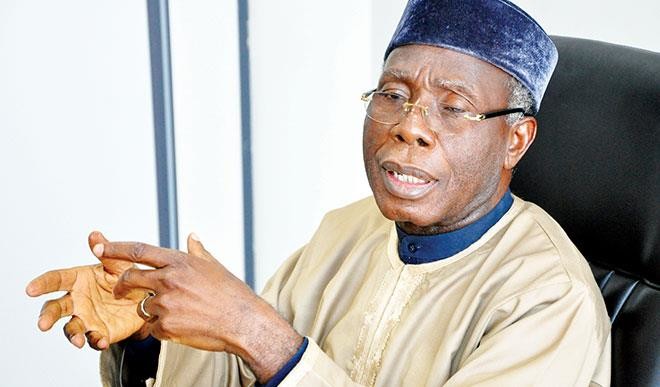
Minister of Agriculture and Rural Development, Audu Ogbeh
Nigeria’s Minister of Agriculture and Rural Development, Chief Audu Ogbeh, has said the Federal Government might soon expand the ban on importation of food items, which currently included rice, to other items.
The minister made the disclosure in a keynote speech he made at the Eighth Annual Bola Tinubu Colloquium, with theme: “Agriculture: Action, Work and Revolution” in Abuja.
Chief Ogbeh, represented by the Minister of State for Agriculture, Mr. Heineken Lokpobiri said, acting on the advice of the National Agency for Food, Drug Administration and Control (NAFDAC), a list of some injurious imported food products was been compiled.
However, The minister did not mention the likely food products , but hinted that the list, when concluded would be passed on to President Muhammadu Buhari for his consent.
Lokpobiri argued that the impending ban was necessary due to the increasing health hazards been suffered by Nigerians, including kidney problems and others related to organ failure.
He added that the nomadic farming was no longer sustainable, hence the efforts to have a more enduring method of cattle rearing that would cut the huge foreign exchange spent on importation of milk.
The junior minister further disclosed that the nation spends the equivalent of N198.5 billion annually on importation of milk.
He concluded the future of the nation’s agriculture sector was very bright, adding that the country would, in three years achieve self-sufficiency in rice, sorghum and millet production, self-sufficiency in tomato paste would be attained by the end of this year.
He said part of the government’s strategic plan to reposition agriculture would be subsidising fertiliser, while the states would be encouraged to provide extension services and build feeder roads to facilitate evacuation of agricultural produce.
Lokpobiri also said the ministry would in collaboration with the Federal Ministry of Water Resources move agriculture from a seasonal business to an all-year round enjoyment “to enable us put into proper use, the over 200 under-utilised dams scattered across the country”.
Royal Dutch Shell said on Wednesday Dutch investigators recently visited its headquarters in the Hague in the Netherlands in relation to an investigation into a Nigerian offshore oil field, OPL 245.
“Representatives of the Dutch Financial Intelligence and Investigation Service and the Dutch Public Prosecutor recently visited Shell at its headquarters, ” a spokesman said.
“The visit was related to OPL 245, an offshore block in Nigeria that was the subject of a series of long-standing disputes with the Federal Government of Nigeria.”
Shell is cooperating with the authorities and is looking into the allegations, the spokesman said.
The Federal Government of Nigerian had threatened to retrieve one of Africa’s richest oil blocs from oil giants, Shell and Eni.
Not only will the two oil giants lose OPL 245, should President Muhammadu Buhari approve the recommendations, they would also be fined billions of dollars for illegal activities, including payments to fraudulent public officials and private citizens in order to secure the bloc.
The retrieval of the controversial oil bloc, estimated to contain about 9 billion barrels of crude, as well as placing heavy fines on the oil giants was contained in a far-reaching recommendation by the office of the Director of Public Prosecution, DPP, Mohammed Diri.
The recommendation was at the instance of the Attorney General of the Federation and Minister of Justice, Abubakar Malami, who was set to advise the government on how to proceed on the controversial deal being investigated by authorities in four different countries.
In arriving at its recommendations, the DPP committee, which included lawyers from his office, called for the cancellation of the ‘settlement agreement’ that ceded the oil bloc to Shell and Eni.
The ‘settlement agreement’ in question was reached sometime in 2011 and made up of three different parts. ‘Resolution agreement’ signed by the parties involved in the OPL 245 saga.
The first, titled “BLOCK 245 MALABU RESOLUTION AGREEMENT” was signed between representatives of the federal government and those of Malabu, which was represented during the discussions by a former petroleum minister, Dan Etete.
The second agreement, titled “BLOCK 245 RESOLUTION AGREEMENT” was between the Nigerian government and officials of Shell and Eni/AGIP; and the third agreement, titled “BLOCK 245 SNUD RESOLUTION AGREEMENT”, was signed by officials of the Nigerian government and Shell.
The immediate past attorney general of the federation, Mohammed Adoke, and immediate past petroleum minister, Diezani Alison-Madueke signed all the agreements on behalf of the Federal government.
They are among officials being investigated by Nigeria’s foremost anti-graft agency, the Economic and Financial Crimes Commission, for their roles in the scam and some others.
The agreements saw the transfer of OPL 245, first from the Malabu to the Nigerian government and then from the government to Shell and Eni. The agreements also effectively cancelled all previous law suits and judgments related to the case.
It was based on these agreements that Shell and Eni paid a total of $1.3 billion into Nigerian government accounts, the money eventually ended up in phoney account according to an online publication.
A new committee constituted by the Attorney General Malami recommended that the agreement be cancelled, describing it as “null and void”, and saying it “should not be given any legal effect by the government.
The committee averred that doing so would amount to the Federal Government of Nigeria) condoning and perpetuating illegality.”
One of the reasons the panel consider the agreement illegal is that the ex-convict, Mr. Etete, had no legal authority to negotiate the agreement on behalf of Malabu as he was not a shareholder of the company nor had the permission of the shareholders to do so.
Also, the oil bloc was awarded to Malabu in furtherance of Nigeria’s policy to encourage local companies and part of the conditions for the award was that “foreign participation interest in the blocks (OPL 245 and 214) shall not exceed 40%, i.e. 60/40 indigenous to foreign;” a fact Shell was aware of but chose to ignore.
The committee also sought the cancellation of the agreement based on a resolution by the last House of Representatives, which called for the cancellation and demanded that Shell be“censured or reprimanded… for its lack of transparency and full disclosure in its bid to acquire OPL 245.”
Also, although Shell and Eni claimed they only struck an agreement with the federal government and that they did not know, before the agreement, that the money they paid was going to Malabu, evidence by investigators in Italy and the Nigerian anti-graft agency, EFCC, showed that the oil firms knew the payment was eventually going to Malabu accounts controlled by Etete, a man once convicted for money laundering in France.
Apart from calling for the cancellation of the agreement, the DPP panel also recommended the full recovery of the money paid by Shell and Eni, describing it as “proceed of crime.”
An Online publication had reported how the Federal Government paid over $800 million of the money into accounts controlled by Etete and how Justice Edis of the Southwark Crown Court in England refused to release $85 million of the remaining sum to Etete in December.
National Union of Petroleum and Natural Gas Workers (NUPENG) has assured Nigerians that the long fuel queues at filling stations across the country would disappear very soon if Nigerian National Petroleum Corporation (NNPC) maintains the current tempo of loading at the depots till weekend.
The union’s South-West Chairman, Alhaji Tokunbo Korodo said that NNPC has commenced massive pumping of petrol to its depot at Mosinmi early this week and loading of petroleum trucks was going on simultaneously.
He said,“Going round some depots in Lagos, I observed that loading was going on and more filling stations are beginning to sell the product at the control price,” adding that, “Some filling stations that are selling between N130 and N150 would be forced to sell at control price when the market is flooded with petrol.”
“If NNPC can keep the tempo of the loading till weekend, more filling stations will have petrol and the queue of motorists at filling stations will reduce”, he opined.
Advising that, “The corporation should ensure that it keeps on pumping petrol to both major and independent marketers’ depots to reduce the scarcity.”
Mr Korodo appealed to the management of NNPC to ensure that all stakeholders in the oil and gas sector were carried along in the trouble-shooting efforts to end the scarcity as promised.
Minister of State for Petroleum and Group Managing Director of NNPC, Dr. Ibe Kachikwu, had earlier promised that the current long queues at petrol stations nationwide would disappear by April 7.
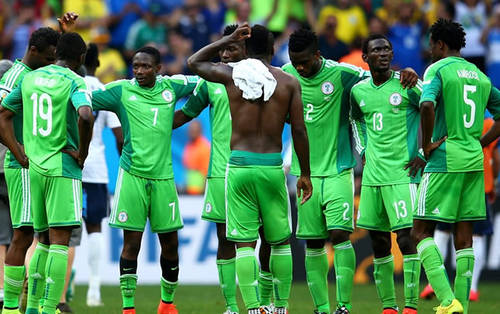
Super-Eagles-players after the loss to the Pharaoh Boys
Nigeria’s Super Eagles would not be competing in next year’s Africa Cup of Nations (AFCON) to be hosted by Gabon as the players succumb to 1 – 0 loss to the Pharaohs of Egypt on Tuesday. The match was played in Egypt.
The Egyptians edged out its Nigeria counterpart from the tournament having grabbed a controversial last minute goal in the first leg played in Kaduna, Nigeria last Friday. The match ended in 1 – 1 draw.
Yesterday’s victory gave the Pharaohs a 5-point atop Group G.
Egypt’s 19-year-old Ramadan Sobhy scored the loan goal of the match in the 64th minute, securing the Pharaohs a spot in the 2017 edition of AFCON after missing the last three contests.
The Super Eagles, who failed to qualify for the 2015 edition, had their position in Group G impacted after Chad dropped out of the tournament.
Chad’s withdrawal gave Group G an uneven number of teams (Nigeria, Egypt, and Tanzania), allowing only one team to advance as the results of all the matches against Chad were nullified. The Super Eagles had defeated Chad 2-0.
After Tuesday’s match, Egypt stands on top of the Group G standings with 7 points. Nigeria trails with 2 points, while Tanzania sits in last with 1 point.
The Super Eagles said their “focus is to get these setbacks behind us and quickly regroup for the fast-approaching 2018 World Cup qualifiers starting in October”.
Interim coach Samson Siasia, who took over after Sunday Oliseh’s shock resignation a month ago, was more matter of fact. “We inherited a broken bridge which we couldn’t fix. We only amended it,” he said.
Garba Lawal said, “Not qualifying for the biggest tournament in Africa, the Nations Cup, is a disaster on its own and the World Cup qualifiers will be a lot tougher. “It is very disturbing because there are more questions than answers, like who is our next coach and what do we need to do to improve the current team?”
Nigeria’s run of poor results and another failure to qualify for a major tournament heaps pressure on the executive committee of the Nigeria Football Federation (NFF) to step down, he added.
Rice Farmers Association of Nigeria (RIFAN) has launched a campaign tagged, `Operation Produce More and Eat Nigerian Rice’ to encourage production and consumption of local rice, while putting end or reduction to its importation.
The South-West Zonal Coordinator of RIFAN, Mr Segun Athoh disclosed that the association was already clearing and preparing some lands in Badagry, eastern part of Lagos State to grow rice.
He said, “We are presently on the farm now doing land preparations to grow rice in Badagry. What I will advise Nigerians, according to my slogan, is: Operation produce more and eat Nigerian rice.”
“It is high time Nigerians changed their pattern of feeding; if we can grow rice, wheat, guinea corn and many others, there is nothing bad to eat our own, “Nobody will query us for eating our local produce, we have to change our pattern and look inward,’’ he said.
Adding that, “We have the dedication, ability and discipline to achieve this, so that we can match other nations, shoulder to shoulder.”
The coordinator, however, urged the Federal Government to do more in terms of direct funding.
“It is time for everybody to have a sober reflection on the state of agriculture in the country. Everybody should start growing what we can eat.
“We have to do what we call backward integration so that at the end of the day, we will be self-sufficient in Lagos State, and the country at large.
“With the little land in Lagos State, I believe we can feed ourselves. Where we have shortfalls, we can get more to add to what we have,’’ Athoh said.
Nigeria imported about 8 million metric tonnes of rice mainly from China and Taiwan.
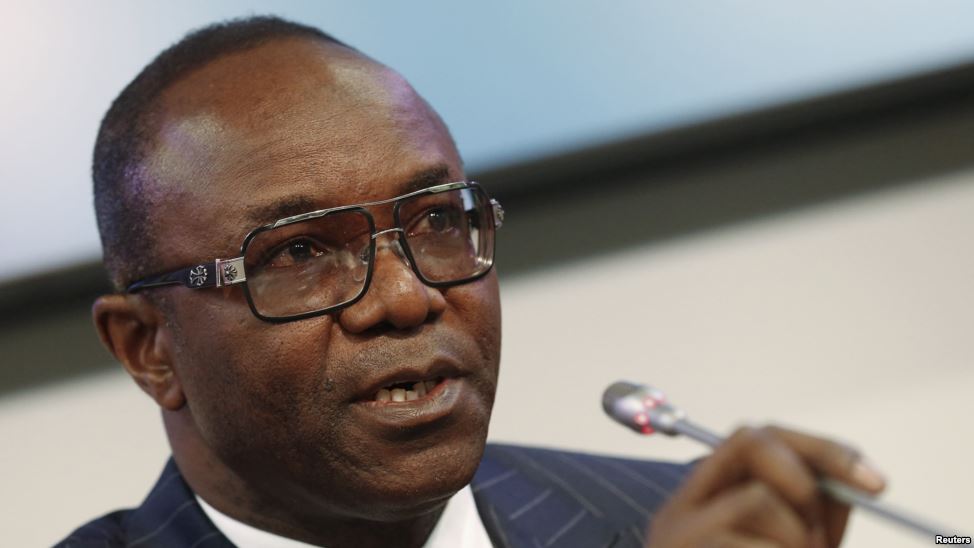
The Minister of State for Petroleum, Dr. Ibe Kachikwu has said that he would not yield to call of those asking him to resign, claiming, he still has a lot of work to do in the ministry.
Ibe Kachiwu, who is also the Group Managing Director of Nigerian National Petroleum Corporation, (NNPC) made this assertion while briefing the Senate Committee on Petroleum (Upstream) on the cause of the lingering scarcity of petroleum products across the country and how to end it.
Newspaper reports had published that National Association of Nigerian Students (NANS), the South South APC, and some Civil Society Organisations called for the minister’s resignation following his recent unfavorable, ”I am not a magician”, comment reported by some media.
He said: “All those planning to come to Abuja for a protest should save their fuel, I am not going to resign, I have a lot of work to do.’’
Kachikwu noted that he did not accept to be minister of petroleum in order to create scarcity. He assured that he would work hard to find lasting solutions to the problems in the industry.
The minister said that he was pained as much as many Nigerians that the nation still suffer petroleum scarcity in spite of being one of the largest producers of crude oil in the world.
A litre of petrol currently sells for between N150 and N190 in some parts of Lagos, Ogun and Oyo states while its sold as high as N250 in some other states, largely in the north.
The Association of Nigerian Electricity Distributors (ANED) has disclosed that the nation would require $40 billion (about N7.8 trillion) to attain a steady 20,000 mega watts (MW) of power supply in parts of the country.
ANED said the investment would be needed to strengthen the networks across the three-level value chain of generation, transmission and distribution in the medium term.
According to the group’s Executive Director, Sunday Oduntan, operators are seeking a Federal Government sovereign guarantee to enable them approach global lenders to secure the facility.
The Director pointed out that in spite of a recent increased in tariff, the operators were still running at a loss due to the high exchange rate and the consequent increase in the cost of procuring operational facilities.
He also lamented the non payment of about N60 billion debt owed the distribution companies (Discos) by Ministries, Departments and Agencies (MDAs) of government, including the military and paramilitary organisations for services rendered.
Mr. Oduntan appealed to the President Muhammadu Buhari to intervene by asking the debtor agencies to pay up and stop forthwith the intimidation of distribution officials.
He pointed out that about $7.5 billion of the sought grant would go as credit support for fuel purchases.
In the midst of the current economic challenges, Lagos State governor, Mr. Akinwumi Ambode, has said that the only way the economy will be revitalised is by going back to agriculture.
He added that there is no point lamenting over the fall of oil price as well as the depreciation of the naira but to get the economy back on track, adding that the state of the nation’s economy requires all hands to be on deck to salvage the plunging economic situation .
“We did sign a Memorandum of Understanding (MoU) with Kebbi State government on agriculture , it is a pointer to tell you the direction President Buhari is going. Let’s tell ourselves the truth , we have to be fair to ourselves , we have to reintegrate and get the economy back , the real solution lies in our hands and the platform is agriculture and that is our position here. In that MoU with Kebbi State government, we brought our comparative advantage to the table to move the economy forward,” he said.
Senate President, Dr Abubakar Bukola Saraki as well as the speaker of the House of Representatives, Hon Yakubu Dogara were absent at the 8th Bola Tinubu Colloquium tagged: “ Agriculture Action Work Revolution” which many described as the biggest political gathering of the ruling party.
The British Government is an inclusive and diversity-friendly employer. We value difference, promote equality and challenge discrimination, enhancing our organisational capability. We welcome and encourage applications from people of all backgrounds. We do not discriminate on the basis of disability, race, colour, ethnicity, gender, religion, sexual orientation, age, veteran status or other category protected by law. We promote family-friendly flexible working opportunities, where operational and security needs allow.
We are recruiting to fill the position below:
Job Title: UK Trade & Investment Senior Oil and Gas Lead
Grade: C4 (L) Location: Lagos, Nigeria
Type of Position: Temporary
Job Category: Foreign and Commonwealth Office (UK Trade & Investment roles)
Job Subcategory: UK Trade and Investment (UKTI)
Job Description (Roles and Responsibilities) Main Purpose of Job:
Leading the work of the UKTI Nigeria Oil and Gas team to maximise the export of British goods and services to the oil and gas sector in Nigeria. This will include liasinging with major players in the Nigeria oil and gas sector to help identify potential supply chain opportunities for UK firms, and facilitate UK- Nigerian commercial partnerships. It will involve close working with UKTI’s oil and gas team and sector specialist in the UK, UK Export Finance, and colleagues across the HMG Nigeria:
Setting and delivering the priorities for UKTI Nigeria Oil and Gas sector team, in consultation with the Oil and Gas Sector specialist and UKTI Director.
Management and delivery of the annual UKTI- Shell Supply Chain Programme to ensure the programme delivers good value for participating delegates.
Identification and communication of procurement opportunities and the tender process for specific projects within Shell, other IOCs and marginal field operators to Sector specialist and UK companies; maintaining and development of these relationships.
Engagement with and lobbying of the Nigerian National Oil Company and other senior government bodies on behalf of UK companies and help promote reform where needed including input on the PIB.
Line Management responsibility for the Oil and gas Team. (1xB3L)
Essential Qualifications and Experience
Experience or qualification in the Oil and Gas sector.
Commercial experience.
Excellent communication skills, written and spoken.
Desirable Qualifications and Experience
Line management experience
Required Competencies
Leading and Communicating, Collaborating and Partnering, Achieving Commercial Outcomes, Managing a Quality Service.
Application Closing Date
1st April, 2016.
Start Date
18 April, 2016.
End Date
17th October, 2016.
How to Apply
Interested and qualified candidates should APPLY
Note
All applicants must be legally able to work in Nigeria with the correct visa/status or work permit.
Staff members recruited locally by the British High Commission in Lagos are subject to Terms and Conditions of Service according to local Nigerian employment law.
Spouses/registered partners of UK Based Staff, are able to work within the BHC/BCG but their salary will be abated at the appropriate tax rates.
Reference checking and security clearances will be conducted.
Any questions you may have about this position will only be answered during interview, should you be invited.
Royal Exchange Plc – A leading player in the Financial Services Sector of the Nigerian economy with subsidiaries and a network of branches, requires the services of suitably qualified candidates to fill the following positions below: