



Home Blog Page 114

Nigerian Stock Market Dips As Investors Record ₦357 Billion Loss

Stock Exchange Closes Trading Week With N30bn Gain

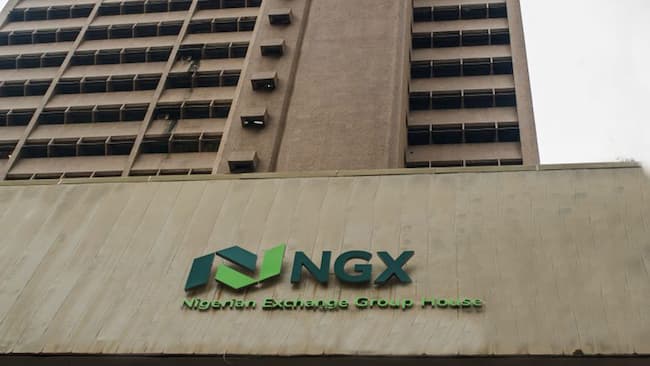
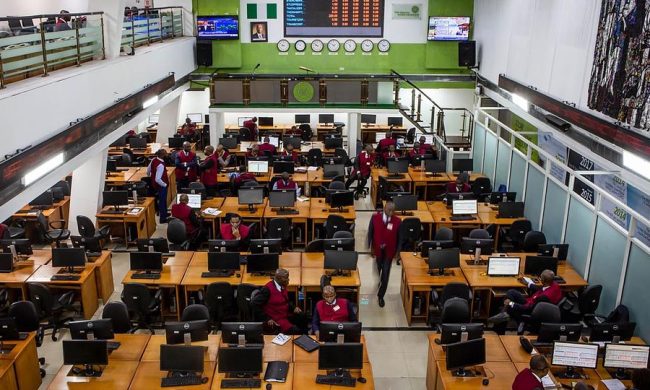
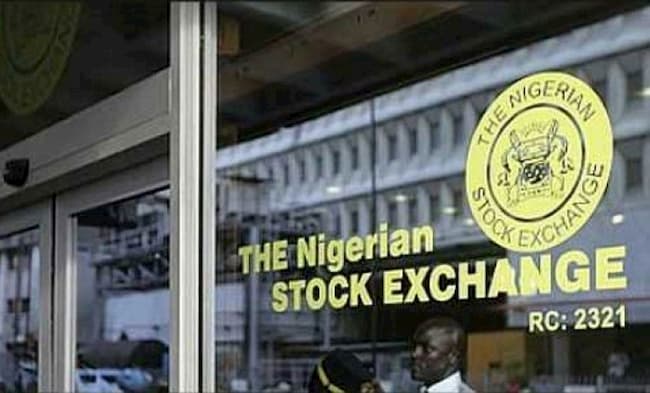
The Nigerian equities market closed Thursday in negative territory, with investors losing an estimated ₦357 billion as widespread sell-offs hit several key stocks listed on the Nigerian Exchange (NGX). The bearish sentiment, driven by heavy sell-side activity, pushed the NGX All-Share Index (ASI) down by 39 basis points, ending the trading session at 145,300.01 points and dragging other performance metrics lower.

Market analysts attributed the downturn to renewed selling pressure on select mid- to large-capitalised stocks, which weighed on overall market performance. Consequently, the year-to-date return eased to 41.17%, though it remains well above Nigeria’s annual inflation rate.

The day’s losers included Wema Bank, AXA Mansard Insurance, AIICO Insurance, NGX Group, Custodian Investment Plc, Dangote Sugar Refinery, Cadbury Nigeria, NEM Insurance, and United Capital Plc. Other notable laggards were Sterling Financial Holdings, Transcorp Plc, FCMB Group, Oando Plc, Zenith Bank, and Guaranty Trust Holding Company (GTCO).

In total, 50 stocks closed in the red, with the insurance sector leading sectoral declines. The market index fell by 498.45 basis points to settle at 145,367.03 points. However, trading activity surged, with total transaction volume and value climbing by 81.71% and 7.69% respectively. According to data from Atlass Portfolio Limited, investors exchanged approximately 1.44 billion shares worth ₦21.77 billion in 43,164 deals.

UNIVINSURE emerged as the most active stock by volume, accounting for 15.91% of total shares traded. It was followed by AIICO Insurance (9.64%), Linkage Assurance (8.73%), Mutual Benefits Assurance (6.42%), and Regal Insurance (4.48%).

In value terms, Nigerian Breweries led with 8.41% of total traded value. On the gainers’ chart, Juli Plc topped with a 10% price increase, followed by Austin Laz (+9.91%), NCR Nigeria (+9.43%), Thomas Wyatt (+8.19%), Chams Plc (+8.06%), and RT Briscoe (+5.88%).

Among the biggest decliners were C&I Leasing, LASACO Assurance, Sovereign Trust Insurance, UPDC, and Wema Bank — each shedding 10% in share value. AXA Mansard followed closely with a -9.96% drop, alongside AIICO (-9.89%), NGX Group (-8.66%), Custodian (-8.54%), Dangote Sugar (-7.89%), and Cadbury Nigeria (-4.70%).

The market breadth closed firmly negative, recording 22 gainers against 50 losers. Sector-wise, the Banking Index dropped by 0.48%, Insurance fell sharply by 8.26%, Consumer Goods slid by 0.20%, and Oil & Gas eased by 0.11%. The Industrial Goods sector inched higher by 0.11%, while the Commodities Index remained flat.

Despite the price downturn, trading momentum improved markedly, with the number of deals rising 41.52% to 43,515, traded volume increasing 83.01% to 2.46 billion units, and turnover value up 9.90% to ₦22.22 billion. The total market capitalisation closed at ₦91.93 trillion, reflecting the day’s ₦357 billion decline in investors’ wealth.
Nigeria Eyes 7% GDP Growth Amid Reform-Driven Economic Expansion — Edun

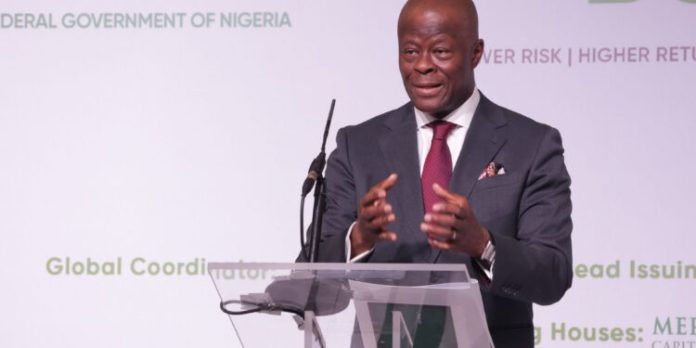
Nigeria’s Minister of Finance and Coordinating Minister of the Economy, Wale Edun, says the country’s economy is on a steady growth trajectory, fuelled by domestic reforms and supported by favourable global conditions.

Speaking at a press briefing in Abuja on Thursday, Edun revealed that Nigeria’s gross revenues surged by 37.4% in the first half of 2025. He outlined the Federal Government’s medium-term target of achieving 7% annual GDP growth, driven by public and private sector investments, job creation, and higher disposable incomes.

The minister stressed the importance of ramping up investment in key sectors — including agriculture, education, healthcare, manufacturing, technology, and infrastructure — while expanding Public-Private Partnership (PPP) frameworks to accelerate development.

According to Edun, fiscal discipline at the state level has improved significantly since mid-2023, with the combined fiscal balance of states rising from 1.8% of GDP (₦2.8 trillion) to 3.1% (₦7.1 trillion). He noted that much of this increased spending has been channelled into capital projects, aligning with the administration’s growth-focused strategy.

On the oil and gas front, Edun disclosed that average daily crude production in the first half of 2025 stood at 1.67 million barrels per day — below the budgeted 2.06 million barrels — while the average oil price fell short of the $75 per barrel benchmark, averaging $67 per barrel. He reaffirmed Nigeria’s compliance with OPEC quotas, adding that spending priorities have been shifted towards sectors with direct socio-economic impact.

Highlighting improvements in the energy sector, Edun stated that there has been no national grid collapse in 2025. He confirmed that all approvals have been secured to clear ₦4 trillion in legacy debts and to implement a sustainable repayment framework under the Electricity Act.

He also referenced the World Bank and African Development Bank-backed “Mission 300” initiative, which aims to provide electricity access to 300 million more Africans — with Nigeria positioned as a major beneficiary. He said this would unlock significant opportunities in manufacturing, agro-processing, and services.

Edun reiterated the Federal Government’s commitment to a coordinated fiscal and monetary policy approach aimed at reducing inflation, lowering borrowing costs for businesses, and improving household purchasing power.

The minister emphasised transparency and open communication, noting that President Bola Tinubu’s administration is fostering competitive exchange rates and creating an enabling environment for export diversification, particularly under the African Continental Free Trade Area (AfCFTA) framework.

“Our focus is to maintain fiscal discipline while investing in education, healthcare, and infrastructure to drive long-term productivity and inclusive growth,” Edun said. “Nigeria is open for business, and we are determined to build an economy that works for everyone, anchored on transparency, resilience, and sustainable development.”

Top 10 NGX Stocks To Buy In 2025 For Massive Returns In 2026 – Nigerian Stock Market Picks

SEC Warns Nigerians Against Investing In FinAfrica, Poyoyo

The Nigerian equities market has been on a tear since mid-2023. The NGX All-Share Index (ASI) has climbed a staggering 136%, fuelled by a cocktail of banking recapitalisation, foreign exchange reforms, and resilient corporate earnings. For investors who timed it right, the past year has been a windfall — just ask early backers of Beta Glass, whose shares are up 670%, or Honeywell Flour Mills, which delivered 645% gains.

But here’s the catch: not all stocks riding this wave are built to last. Some are running purely on hype; others have the fundamentals to keep climbing. If you’re the kind of investor who prefers substance over sizzle, there’s good news — a handful of Nigerian companies still trade at valuations that make sense, with the potential to double before 2026.

1. MTN Nigeria (MTNN)

MTN is, without exaggeration, the heavyweight of Nigeria’s telecom sector. Yes, it’s had its fair share of forex headaches, but the fundamentals remain strong. With 5G roll-out gaining momentum and mobile money services steadily adding users, MTNN is positioning itself for another growth cycle.

  • Current Price: ₦460
  • Where to Buy: Bamboo

2. NASCON Allied Industries (NASCON)

NASCON doesn’t grab headlines like the banks or tech names, but it’s been quietly building a solid case for itself. Earnings per share have shot up 222%, debt levels are almost negligible at 1.2% debt-to-assets, and demand for food essentials keeps rising. Add in a healthy dividend policy and you’ve got a stock that’s built for patient investors.

  • Current Price: ₦90
  • Where to Buy: Bamboo

3. Aradel Holdings (ARADEL)

Once known as Niger Delta Exploration, Aradel is now Nigeria’s largest oil and gas company to list in recent years. The Ogbele oil field is ramping up production at just the right time, with global crude prices ticking higher. Its dividend yield of 5.77% only sweetens the deal.

  • Current Price: ₦519
  • Where to Buy: Meritrade or Bamboo

4. Honeywell Flour Mills (HONYFLOUR)

Honeywell’s turnaround story is one for the textbooks. After years in the red, the company roared back to profitability in 2025. Shares soared 241% in the first half of the year, with a staggering 61.5% rise in May alone. The driver? Strong demand for affordable processed foods — and Honeywell is meeting it head-on.

  • Current Price: ₦24.00
  • Where to Buy: Meristem

5. Transnational Corp (TRANSCORP)

Transcorp is a rare hybrid: a player in both the power sector and hospitality. Its planned hotel IPO and the government’s push for power sector reform are potential catalysts for strong earnings growth. For investors wanting exposure to multiple sectors without juggling multiple stocks, this is worth a look.

  • Current Price: ₦51.25
  • Where to Buy: Bamboo

6. Presco Plc (PRESCO)

Presco isn’t just Nigeria’s top palm oil producer — it’s a serious exporter. Q1 2025 after-tax profit came in at ₦47.57 billion, double the previous year. Global demand for palm oil remains resilient, making this a stock that benefits from both local and international trends.

  • Current Price: ₦1,480
  • Where to Buy: Bamboo

7. Zenith Bank

Zenith is already a Tier-1 bank, but the Central Bank’s recapitalisation drive could push it even higher. With a dividend yield of 6.54% and potential merger opportunities on the horizon, Zenith is in prime position to soak up fresh capital and expand market share.

  • Current Price: ₦72.20
  • Where to Buy: Meristem

8. Beta Glass Plc (BETAGLASS)

Beta Glass has been one of the NGX’s most explosive performers, jumping 133% in May 2025 alone. The catalyst? A 638% surge in profits. As a major supplier to breweries and beverage companies, its growth is tied to Nigeria’s rising consumer demand — a trend showing no signs of slowing.

  • Current Price: ₦408
  • Where to Buy: Bamboo

9. Champion Breweries (CHAMPION)

Nigeria’s beer market is making a slow but steady comeback. Champion Breweries posted a positive pre-tax profit in Q1 2025, a turnaround that suggests better consumer sentiment ahead. This is a small-cap play with room to run — if the trend continues.

  • Current Price: ₦16.80
  • Where to Buy: Meristem

10. Fidson Healthcare (FIDSON)

Nigeria imports roughly 70% of its medicines, but Fidson is changing that. The company’s focus on local drug production paid off with a 213% increase in net income in Q1 2025. Healthcare stocks tend to hold steady even when economies wobble, making Fidson a smart hedge.

  • Current Price: ₦41.80
  • Where to Buy: Meristem

Smart Investor Cheat Sheet – 10 Nigerian Stocks to Watch Before 2026

StockCurrent Price (₦)Dividend YieldSectorMain Growth Driver
MTN Nigeria (MTNN)460N/ATelecoms & Fintech5G expansion and mobile money adoption
NASCON Allied Industries (NASCON)90ModerateConsumer GoodsEPS up 222%, low debt, rising food demand
Aradel Holdings (ARADEL)5195.77%Oil & GasOgbele field expansion, higher oil prices
Honeywell Flour Mills (HONYFLOUR)24.00N/AProcessed FoodsReturn to profitability, strong food demand
Transnational Corp (TRANSCORP)51.25N/APower & HospitalityHotel IPO plans, power sector reforms
Presco Plc (PRESCO)1,480N/AAgriculture (Palm Oil)Strong export demand, 100% profit growth
Zenith Bank72.206.54%Banking & FinanceRecapitalisation drive, merger potential
Beta Glass Plc (BETAGLASS)408N/AManufacturing (Packaging)638% profit surge, consumer sector growth
Champion Breweries (CHAMPION)16.80N/ABeveragesBeer market recovery, improved profits
Fidson Healthcare (FIDSON)41.80N/AHealthcare & Pharma213% income growth, local drug production

Quick Buy Strategy

If you’re building a position in these stocks, don’t go all in at once. Spread your entries over several weeks or months — a tactic traders call scaling in — so you can smooth out price swings. Keep a core allocation for strong dividend payers like Zenith Bank and Aradel Holdings for income stability, then sprinkle in high-growth plays like Beta Glass or Honeywell Flour for potential outsized returns. And remember, always set aside a liquidity buffer; the NGX can move fast, and having cash ready lets you grab bargains when the market hands them out.

The Risks You Can’t Ignore

Yes, the upside potential is real — but so are the risks. Stocks can take sharp dips before resuming an uptrend; Champion Breweries once lost 10% in a single day. And while diversification helps, broader forces like Central Bank policy changes can ripple across sectors unexpectedly.

Liquidity is another consideration. Some of these names don’t trade heavily, which means you could struggle to exit quickly at a fair price. It’s a reminder that on the NGX, patience isn’t just a virtue — it’s a necessity.

Why These Picks Matter Now

The timing isn’t random. Nigeria is in the middle of an economic reshuffle — currency reforms, sector deregulation, and recapitalisation drives are pushing well-run companies to the forefront. For long-term investors, this is a chance to buy into real earnings power, not just hype cycles.

If you’ve been sitting on the sidelines, the market’s recent rally might make you nervous about “buying the top.” But historically, bull markets in Nigeria often run longer than most expect, especially when underpinned by structural reforms.

Thursday Chronicles: Adventures In Nigerian Public Transport

It is another Thursday, and Thursday Chronicles is here again, your weekly reminder that life in Nigeria is not for the faint-hearted. If you’ve survived danfo drivers, keke riders, and okada men, you deserve a medal, a handshake, and maybe free Wi-Fi for life.

If you’ve ever entered public transport in Nigeria, then you know, it is not just movement from point A to B, it is theatre. Forget Nollywood, the real drama is happening inside danfo, keke, and okada.

Let’s start with danfo buses. Lagos danfo drivers have only two moods: Formula 1 driver or suicidal stuntman. The way they squeeze that bus through tiny spaces, you’ll hold your bag, your phone, and your life all at once. Meanwhile, the conductor is hanging halfway outside, shouting destinations as if he’s announcing a WWE fight: “Oshodi! Oshodi! Enter with your change o!”

And ah, the matter of change. Nigerian conductors never have change. Never. Even if you hand them ₦200 for a ₦150 ride, that missing ₦50 can lead to a national argument. You’ll hear:
“Conductor, my change!”
“Madam, no disturb me. I go give you.”
Two hours later: nothing. And if you vex too much, they’ll stylishly insult you with the classic line: “Shey you no dey see say I dey drive?” (Meanwhile, he’s not the one driving).

Now let’s talk about keke (tricycles). Keke drivers believe they are small cars, small bikes, and small airplanes at the same time. The way they swerve in and out of traffic, you’ll start calculating your life choices. Sometimes, three grown adults will be squeezed at the back seat like sardines, and one person will still insist on carrying two bags of onions.

As for okadas, they are not bikes. They are fear distributors. If you’ve ever been on an okada, you’ve already faced death and come back. The way they overtake trailers, you’ll be whispering, “Father Lord, if I survive this, I promise to give testimony on Sunday.” And let’s not forget how they love shortcuts. Before you know it, you’re on a narrow bush path, wondering if the man is taking you to your destination or another realm.

Of course, the best part of public transport is the characters inside. There’s always that one passenger who acts like a co-driver, shouting “Driver, slow down!” Or the motivational speaker who suddenly decides to preach: “Repent now, the kingdom of God is at hand.” Sometimes, you even meet the hustlers who turn the bus into Shoprite, selling handkerchiefs, herbal bitters, and miracle pens that can supposedly make your child pass WAEC.

But let’s be honest: for all the chaos, there’s a strange sense of community in Nigerian transport. You can enter as strangers and come down as temporary friends, united by the shared suffering of traffic, heat, and one conductor who swallowed your change.

And that’s this week’s Thursday Chronicles. Nigerian transport may test our patience, bones, and faith, but it also gives us daily stories we can laugh about forever. Until next Thursday, may your bus be quick, your conductor remember your change, and your okada never enter “one chance.”

New Hampshire Capital Unveils New Prepaid Meter Prices For Ikeja Electric

Mass Metering: Expert Calls On FG To Strengthen Local Manufacturers
Makers Of Prepaid Meters Seek Price Review Over Inflation, Forex

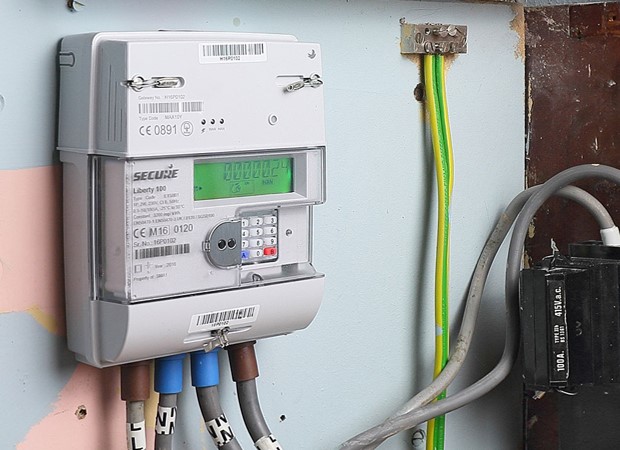
New Hampshire Capital, a leading Meter Asset Provider, has announced revised prepaid meter prices under the Meter Asset Provider (MAP) scheme for Ikeja Electric.

In a statement, the company said the single-phase meter now costs N124,000 while the three-phase meter is priced at N215,000. Both prices include installation, with the new rates valid from August 6 to October 6, 2025.

Chief Operations Officer Oluwakemi Omirin said the initiative aims to empower consumers to manage electricity usage more effectively and bridge Nigeria’s metering gap. She noted that New Hampshire Capital has financed and installed over 190,000 prepaid meters for Ikeja Electric, with products recognised for durability, accuracy, and transparency.

Customers interested in purchasing meters are advised to visit Ikeja Electric’s website and follow MAP scheme guidelines. The company said its commitment to quality extends to professional installation, prompt deployment, and post-installation support, reinforcing its reputation as a reliable and customer-focused service provider.

Nigeria’s CNG Sector Draws $980m In 18 Months, Conversions Hit 100,000

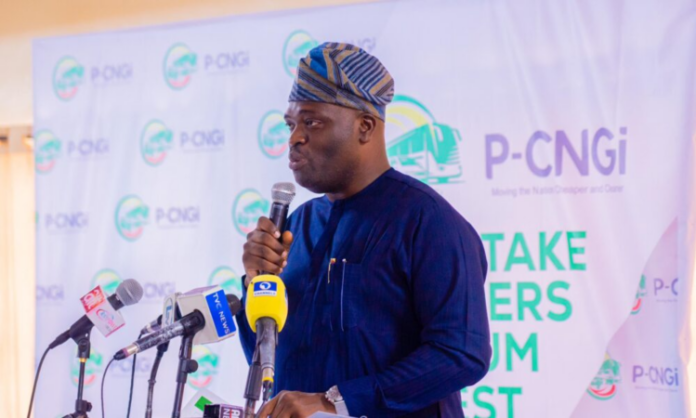
Nigeria’s Compressed Natural Gas sector has drawn over $980 million in private investments in just 18 months, with vehicle conversions soaring from 4,000 to almost 100,000, according to Presidential Compressed Natural Gas Initiative (PCNGI) CEO Michael Oluwagbemi.

Speaking at the launch of the Portland Gas Ltd/NASENI CNG Daughter Station, Auto Conversion, and Training Centre in Abuja, Oluwagbemi described the CNG programme as the nation’s fastest-growing energy sector, driven by government incentives and private sector partnerships. From only five states with CNG infrastructure last year, coverage has expanded to 20 states with 315 conversion centres, projected to reach at least 30 states and the FCT by end-2025.

He cited major investments, including BUA Group and Nigerian Bottling Company’s N720bn commitment to CNG trucks and 100 fuelling stations, and urged that CNG allocated for vehicles be protected from diversion to power plants.

Portland Gas CEO Folajimi Mohammed described the newly launched facility as a gas hub with an auto-conversion centre, training school, and refill station, as well as LPG sales approval. He noted that PCNGI subsidies make conversions free for members of NARTO, NURTW, and Bolt drivers.

NASENI DG Khalil Halilu said the Kubwa Expressway location is strategic for connecting northern and southern Nigeria, while the House of Representatives pledged to introduce legislation safeguarding auto CNG supply.

Thursday Chronicles: The National Sport Of Unsolicited Advice

Welcome to another Thursday Chronicles, where we take Nigeria’s everyday situations, add a sprinkle of humour, a dash of truth, and serve it with the sweet pepper sauce of relatability. Here, we believe life is best enjoyed when you can laugh at the madness, preferably with a chilled bottle of malt in hand.

Today, let’s talk about one of Nigeria’s most underrated exports — no, not oil, not jollof, not Afrobeats, I mean unsolicited life advice. Yes, that magical thing where total strangers tell you what to do with your life… whether you asked or not.

You’re minding your business at the bus stop, scrolling on your phone, when one aunty looks at you and says,
“My dear, you should stop bending your neck like that, it will spoil your posture. And by the way, when are you getting married?”

Excuse me, ma? I came here to board a bus, not attend a life planning seminar.

In Nigeria, it doesn’t matter if you’re 18 or 48, strangers will evaluate your life faster than a JAMB result checker. They will scan your outfit, your hairstyle, your weight, your facial expression, and deliver a TED Talk on how to fix it all before you even say hello.

Walk into a Nigerian market, and you’ll meet the unofficial life coaches of the nation.
Buy tomatoes? The seller will tell you to marry a man who loves you more than you love him. Buy plantain? She’ll advise you to avoid your current hairstyle because it makes you look too serious.

And if you dare tell her you’re single, prepare for the ultimate prophecy:
“If you keep cooking like this, your husband will find you before December.”

Madam, I came here for foodstuffs, not matchmaking.

Church aunties have two superpowers: praying for you and advising you into mild frustration. They’ll tell you to join the choir, start wearing Ankara, learn to make meat pie and pray more.

Office uncles? Different breed entirely. They’ll pull you aside for “career advice” that turns into life restructuring.
“You should buy land now, not iPhone. Marry early. Don’t be too friendly with that colleague, she’s too sharp-eyed.”

You just wanted to submit a report, now you’re holding a 10-year financial plan and feeling guilty about the shawarma you bought last night.

Let’s be fair — not all unsolicited advice is bad. Sometimes, that stranger is actually right.
Like when a fellow bus passenger tells you not to cross a certain street because it’s unsafe, or when someone reminds you to check your bag in a crowded market.

But in typical Nigerian fashion, even good advice comes wrapped in extra commentary:
“My dear, zip your bag before these boys help you carry your phone… and by the way, you look like someone who doesn’t eat enough vegetables.”

If Nigeria had a second motto, it would be:
“We will advise you whether you like it or not.”

From the mall to weddings, from queues to waiting rooms, this culture of “free consultancy” is part of our national charm, and sometimes, national wahala. It’s love mixed with small wahala, sprinkled with “I know what’s best for you.”

And the funny part? After all our eye-rolling and polite smiles, deep down, many of us still pass it on. We advise our friends, our siblings, even strangers, because in Nigeria, advice is like groundnut at a party… it must be shared.

And that’s the magic of living here, we may be navigating traffic, NEPA, and fuel queues, but we’ll still find the time to tell someone how to live better, dress better, eat better… even if they didn’t ask.

This has been your Thursday Chronicles, where we laugh, reflect, and realize that sometimes, the unsolicited advice is just a reminder that people still notice, still care… and still think they’re your life manager.

See you next Thursday, and remember, if anyone gives you unsolicited advice today, smile and say, “Thank you, I’ll think about it”. It’s cheaper than starting an argument.

Veritas Kapital Records N13.6bn Premium, Exceeds 2024 Profit

Veritas Kapital Assurance Plc has recorded an eight per cent increase in Gross Written Premium, rising to N13.6 billion in the first half of 2025. Managing Director Dr Adaobi Nwakuche disclosed this in a statement on Wednesday in Lagos, noting that the performance reflected strong market presence and effective distribution channels. She said Net Insurance and Investment Income surged by 244 per cent to N5.2 billion, up from N1.52 billion recorded in full year 2024.

Profit After Tax hit N3.2 billion, surpassing the company’s total earnings for the entire 2024 financial year. “These results affirm the strength of our values-driven model, built on our people’s dedication, a clear strategy, and unwavering focus on customer value,” Nwakuche stated.

Total Assets rose by 11 per cent to N37 billion from N33.1 billion in 2024, reflecting improved financial health and operational efficiency. Shareholders’ funds climbed to N15.1 billion from N11.92 billion, underscoring investor confidence and sound governance.

Nwakuche attributed the growth to disciplined underwriting, investment optimisation, expanded digital capabilities, and strong customer-focused service delivery. She emphasised that the H1 2025 performance was not just about growth, but about “protection delivered, promises honoured, and futures secured.”

“As Nigeria adapts to new economic realities, Veritas Kapital is charting a course defined by agility, innovation, and intentionality,” she said, adding that the company is investing in digital access, claims responsiveness, and talent development, while reinforcing its core values of integrity, transparency, and service.

Ajaokuta Steel Owes ₦2bn Power Bills — Senate Chair

Senate Committee Chairman on Steel Development, Patrick Ndubueze, has revealed that the non-operational Ajaokuta Steel Company has at times accumulated over ₦2 billion in electricity debts despite producing nothing.

Speaking at the maiden National Steel Summit in Abuja themed “Rebuilding and Consolidating Nigeria’s Steel Industry: Collaborative Action for Sustainable Growth and Global Competitiveness,” Ndubueze recalled a visit to the facility, lamenting its wasted potential to manufacture items such as brake parts, ball bearings, seals, and engine blocks. He described its current power capacity of ₦500,000 as unacceptable for a plant built with trillions of naira, calling for corporate governance reforms and an operational review.

He urged industry stakeholders to make the summit a turning point in Nigeria’s steel development, pledging Senate support to work with the executive and private sector to create a vibrant and competitive industry.

Minister of Steel Development Shuaibu Audu noted that while Nigeria has abundant raw materials like iron ore, limestone, and coal, it lacks functioning integrated steel plants. He traced the sector’s history from the 1958 push for rolling mills to later emphasis on integrated plants, and lamented that privatised facilities in Oshogbo, Katsina, Jos, Delta, and the Aluminum Smelter Company remain idle.

Despite decades of setbacks, Audu said the Tinubu administration is ready to confront the industry’s challenges. He emphasised steel’s central role in industrialisation, powering sectors from construction to defence, and highlighted its potential to create jobs, spur growth, and diversify the economy.

The summit aims to assess the sector’s current state, explore investments, close policy and infrastructure gaps, and strengthen collaboration between policymakers and industry players toward a sustainable and globally competitive steel sector.

Tinubu Orders Review Of Revenue Deductions By Key Agencies To Boost Public Savings

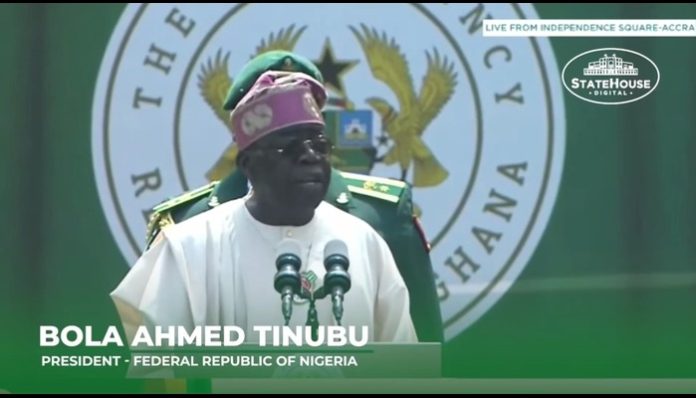
President Bola Tinubu has directed a comprehensive review of deductions and revenue retention practices by Nigeria’s major revenue-generating agencies, in a bid to improve public savings, enhance spending efficiency, and unlock resources for economic growth.

The directive, issued at Wednesday’s Federal Executive Council (FEC) meeting in Abuja, targets agencies including the Federal Inland Revenue Service (FIRS), Nigeria Customs Service (NCS), Nigerian Upstream Petroleum Regulatory Commission (NUPRC), Nigerian Maritime Administration and Safety Agency (NIMASA), and the Nigerian National Petroleum Company Limited (NNPC Ltd).

Minister of Finance and Coordinating Minister of the Economy, Wale Edun, told journalists after the meeting that the President specifically ordered a reassessment of NNPC’s 30 per cent management fee and 30 per cent frontier exploration deduction under the Petroleum Industry Act. The Economic Management Team, chaired by Edun, is to present actionable recommendations to FEC on the optimal path forward.

Tinubu said the move aligns with ongoing reforms aimed at dismantling economic distortions, restoring policy credibility, and bolstering investor confidence. He reaffirmed his administration’s commitment to achieving a $1 trillion economy by 2030, with a minimum annual growth rate of 7 per cent from 2027, describing the target as “not just economic, but a moral imperative” for lifting millions out of poverty.

Citing the July 2025 International Monetary Fund Article IV report, which endorsed Nigeria’s reform trajectory, the President stressed the importance of investment-led growth in critical sectors including infrastructure, oil and gas, health, and manufacturing.

He highlighted the Renewed Hope Ward Development Programme, a grassroots initiative covering all 8,809 wards nationwide, designed to empower economically active citizens through micro-level poverty reduction strategies in partnership with states, local governments, and the private sector.

On the fiscal outlook, Tinubu noted that public investment accounts for just five per cent of Gross Domestic Product due to low savings. He stressed the need to “optimise every available naira” amid global liquidity constraints. Edun added that macroeconomic indicators are improving, with a more stable exchange rate, moderating inflation, rising revenues, and debt-to-GDP ratios now within manageable levels.

The finance minister also disclosed that the Council approved two of his memoranda — a $125 million Islamic Development Bank loan for infrastructure projects in Abia State, covering 35 kilometres of roads in Umuahia and 126 kilometres in Aba, and a plan to refinance N4 trillion in outstanding electricity sector obligations. The electricity debt resolution will be implemented in phases, with the first phase expected within three to four weeks, coordinated by the Debt Management Office.

Tinubu urged governors to accelerate growth by prioritising productivity-enhancing investments, strengthening food security, and deepening collaboration with local governments to tackle poverty, ensuring no Nigerian is left behind.

Russia Imposes Restrictions On WhatsApp And Telegram Calls

Russia has announced partial restrictions on calls made through the WhatsApp and Telegram messaging platforms, saying the move is aimed at tackling criminal activity, state media reported on Wednesday.

“In order to combat criminals, measures are being taken to partially restrict calls on these foreign messaging apps (WhatsApp and Telegram),” the communications watchdog Roskomnadzor said, according to RIA and TASS news agencies.

The regulator described the apps as “the main voice services used for fraud, extortion, and for involving Russian citizens in subversive and terrorist activities.” Russian security services have repeatedly alleged that Ukraine uses Telegram to recruit individuals and carry out acts of sabotage inside Russia.

Authorities have demanded that the platforms provide law enforcement with access to user data, not only for fraud investigations but also for activities Moscow classifies as terrorism. Russia’s digital ministry stated that call services would be restored once the companies comply with national legislation.

In response, Telegram told AFP it “actively combats misuse of its platform, including calls for sabotage or violence, as well as fraud,” adding that it removes “millions of pieces of harmful content every day.”

Meta-owned WhatsApp emphasised its commitment to privacy, saying the platform is “private, end-to-end encrypted, and defies government attempts to violate people’s right to secure communication,” which it believes is why Russia seeks to block it from over 100 million users in the country.

Since the start of its invasion of Ukraine, Russia has intensified restrictions on press freedom and online speech, prompting concerns that the new measures could push users toward platforms more susceptible to government surveillance.

FG Opens 2,000-Litre Milk Centre In Bauchi To Boost Dairy Production

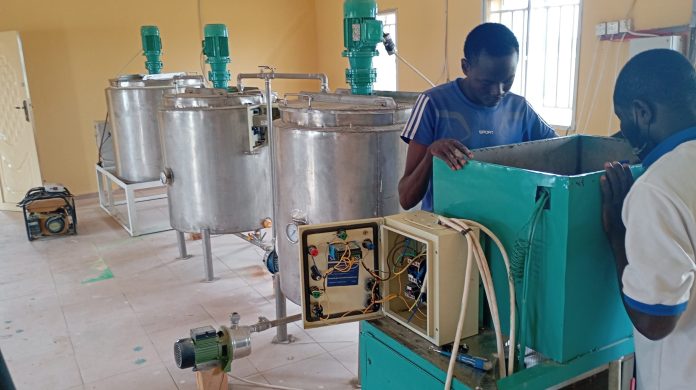
The Federal Government, through the Ministry of Livestock Development, has commissioned a Milk Collection Centre with a daily capacity of 2,000 litres at the Sawi Grazing Reserve in Adamami community, Shira Local Government Area of Bauchi State.

The facility, initially rehabilitated and equipped by the Federal Ministry of Agriculture and Rural Development under its Livestock Directorate, will now be managed by L&Z Integrated Farms, a private investor.

Speaking during the inauguration, Director of Livestock Development, Tagwi James, said the site was chosen due to its significant daily milk deposits and its potential to boost local production. He noted that the initiative is part of the government’s renewed efforts to reduce milk imports and strengthen the domestic dairy sector.

James called on state governments to back the initiative by implementing livestock-related policies and programmes.

Managing Director of L&Z Integrated Farms, Muhammad Damakka Abubakar, said Nigeria spends about $1.5 billion annually on milk imports, a figure the government aims to reduce through improved milk aggregation and collection infrastructure. “Improving milk aggregation and collection infrastructure is essential to achieving self-sufficiency in dairy production,” Abubakar said.

Chairman of Shira Local Government Council, Alhaji Babangida Maliya, pledged to ensure the facility’s success through enhanced security and community engagement, urging pastoralists to supply milk and calling for educational opportunities for rural women and girls.

District Head of Disina, Abdullahi Mustapha, commended the Federal Government for the project, saying it would encourage pastoralist settlement and improve access to education for their children. He also lauded L&Z Integrated Farms for its role in the initiative.

Chairman of Miyetti Allah in Shira Local Government Area, Umar Muhammad Hassan, welcomed the project as a boost for the Fulani community’s economy and livelihoods. He pledged their commitment to supplying quality milk and appealed for the establishment of a nomadic school in the community.

Rivers Administrator Ibas Appoints Wali, Parker To Lead Key Boards

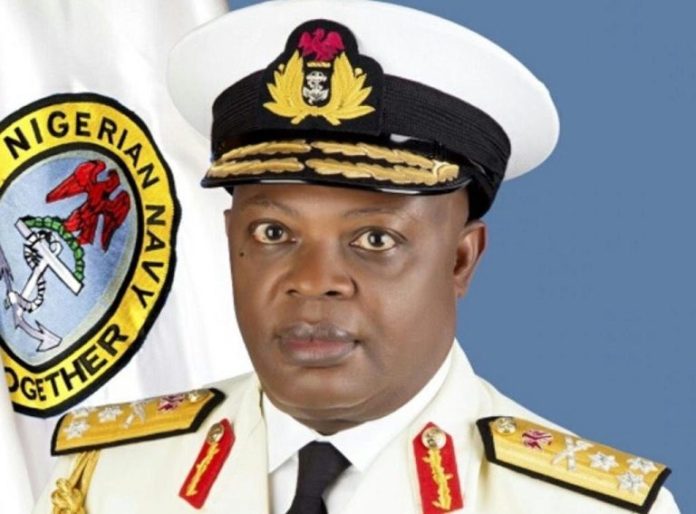
The Administrator of Rivers State, Vice Admiral Ibok-Ete Ibas (retd.), has approved the appointment of chairmen and members for eight state boards, including the Rivers State University Governing Council and the Rivers State University Teaching Hospital.

In a statement issued on Wednesday by the Secretary to the State Government, Prof. Ibibia Worika, former Nigerian Bar Association President, Okey Wali, SAN, was named Chairman of the Rivers State University Governing Council.

Former Commissioner for Health, Dr Sampson Parker, will chair the board of the Rivers State University Teaching Hospital, while Prof. Chizindu Alikor retains his position as Chief Medical Director.

Also appointed was former Ikwerre Local Government Chairman, Dr Samuel Nwanosike, an ally of the Minister of the Federal Capital Territory, Nyesom Wike, who will now head the Rivers State Waste Management Agency. Wokoma Amakiri was appointed as its Managing Director.

Other appointees include: Samuel Ogeh as Chairman of the Rivers State Universal Basic Education Commission; Tony Egwurugwu as Chairman of the Rivers State Senior Secondary Education Board; and Israel Egbunefu as Chairman of the Rivers State Internal Revenue Service.

Former Health Commissioner, Prof. Princewill Chike, will chair the Rivers State Contributory Health Protection Programme, with Dr Vetty Agala retaining the role of Executive Secretary. Prof. Adolphus Toby was named Chairman of the Rivers State Microfinance Agency, with five others appointed as members.

The statement added that all newly appointed board members will be sworn in by Vice Admiral Ibas.

Phyna Accuses Dangote Group Over Sister’s Truck Accident

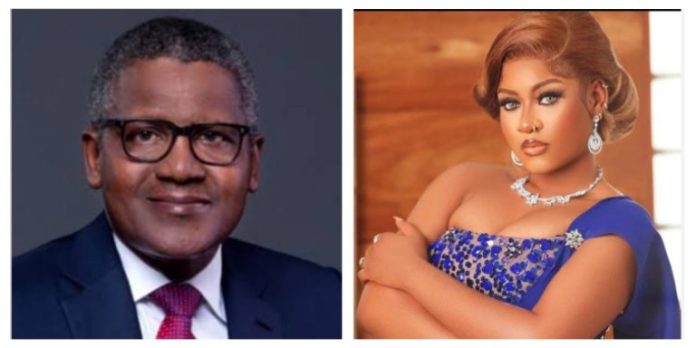
Big Brother Naija ‘Level Up’ edition winner, Ijeoma Otabor, popularly known as Phyna, has accused Nigerian billionaire businessman, Aliko Dangote, and the Dangote Group of interfering in a case involving a company truck that allegedly ran over her sister.

Phyna made the allegations in a post on her Instagram page on Wednesday night, August 13, 2025, claiming that the company instructed the police to remove the truck’s plate number after the incident.

She also alleged that instead of visiting her injured sister in the hospital, one of Dangote’s managers planned to go to the police station.

“Dear @aliko_dangotegcon @dangotegroup, from all that has happened, you decided to rather tell the Nigerian police to remove the plate number on the truck that crushed my sister, and also, one of your managers is going to the station tomorrow. What happened to seeing my sister first? If that truck and your driver should leave that station?” she wrote.

Phyna vowed to prioritise her sister’s care while warning that wealth could not shield anyone from accountability.

The Dangote Group has yet to publicly respond to the allegations as of the time of filing this report.

PDP Clarifies Stance On Possible Return Of Jonathan And Obi

PDP Reverses Fayose, Other Members Suspension

The Peoples Democratic Party (PDP) has addressed speculations about the possible return of former President Goodluck Jonathan and Labour Party presidential candidate Peter Obi ahead of the 2027 elections.

Party sources say no formal discussions have been held with either politician, but stakeholders have expressed mixed reactions over the idea. While some see their return as a boost to PDP’s chances, others question rewarding those who left the party in the past.

Jonathan, who served as Nigeria’s president from 2010 to 2015, could only serve one more term under the constitution if he rejoined the party. Some members also recall that he appeared distant from PDP during its challenging years.

Obi, who was PDP’s vice presidential candidate in 2019, left for the Labour Party in 2022, a move many believe weakened PDP’s performance in the 2023 elections. His potential return has sparked debates over loyalty and the party’s internal unity.

Meanwhile, the ruling All Progressives Congress (APC) has dismissed the idea, claiming the PDP remains weak regardless of its candidate.

Party insiders say PDP governors and loyal members are also eyeing the 2027 ticket, warning against sidelining those who have remained committed.

FIRS Meets 2025 Oil Revenue Target Ahead Of Schedule, Credits Niger Delta Stability

The Federal Inland Revenue Service (FIRS) has achieved its 2025 oil and gas tax revenue target months ahead of schedule, a milestone the agency attributes to improved security in the Niger Delta and increased production volumes.

FIRS Chairman, Zacch Adedeji, announced the feat on Wednesday in Abuja, noting that the peace in oil-producing areas had boosted industry profits and, by extension, government revenues.

“For the first time in a long while, we met our oil and gas target, which is actually as a result of the peace that has been maintained where oil and gas facilities are located,” Adedeji said.

The development aligns with President Bola Tinubu’s fiscal agenda to strengthen non-debt revenue and stabilise the economy through subsidy reforms, broader tax collection, and enhanced security for critical infrastructure.

Nigeria’s oil and gas sector remains the country’s largest source of foreign exchange, despite years of output disruptions, theft, and fluctuating global prices. Adedeji stressed that security is central to sustaining this progress.

“Production is happening and companies are making more profit from it,” he said, linking economic growth directly to regional stability.

The announcement came during a courtesy visit by General Christopher Musa, Chief of Defence Staff (CDS), to the FIRS headquarters. The visit underscored growing coordination between fiscal authorities and the Armed Forces in safeguarding national assets and driving development.

Adedeji commended the military’s role in securing oil installations and pledged continued collaboration. He also highlighted President Tinubu’s recent approval for the construction of 1,550 housing units for security personnel as part of efforts to improve military welfare and operational capacity.

“You are also critical to our success,” he told the CDS, acknowledging the Armed Forces’ contribution to revenue generation.

General Musa, in his remarks, credited FIRS’s performance under Adedeji’s leadership, describing it as transformative and claiming revenue generation had increased nearly tenfold since the current administration took office — a figure yet to be independently verified.

“For us in the Armed Forces, we are nothing without funds. To even buy the big guns we are carrying will be difficult without the funding,” he said.

Musa also used the occasion to promote the upcoming African Chiefs of Defence Staff Conference, scheduled for August 25–27 in Abuja — the first time Nigeria will host the event. The conference aims to deepen continental security cooperation and push for African-led solutions to regional conflicts.

“If you don’t sit down and handle your own situation yourself, nobody will,” Musa said, warning against overreliance on external actors in addressing Africa’s security challenges.

FIRS’s early attainment of its oil and gas revenue target is expected to reassure investors and development partners monitoring Nigeria’s fiscal performance. However, analysts note that non-oil revenues remain weak, leaving the government reliant on the petroleum sector to fund infrastructure, defence, and other critical expenditure without resorting to further borrowing.

PTDF, NNPCL Forge Strategic Alliance To Advance Energy Innovation And Transition

The Petroleum Technology Development Fund (PTDF) and the Nigerian National Petroleum Company Limited (NNPCL) have signed a landmark Memorandum of Understanding (MoU) to strengthen research, innovation, and human capital development in Nigeria’s petroleum and renewable energy sectors.

The agreement, sealed on Wednesday at the PTDF Tower in Abuja, formalises a partnership between the Fund and NNPCL’s Research, Technology and Innovation (RTI) subsidiary. It will focus on joint initiatives in emerging technologies, sustainable energy solutions, and energy security.

Speaking at the ceremony, PTDF Executive Secretary, Galadima Aminu, described the pact as a “bold step towards national progress,” saying it would bridge the gap between academia, industry, and government to deliver practical, homegrown solutions for the sector.

“This MoU is not just a document; it is a commitment to national progress,” Aminu said. “We are setting the stage for collaborative research on sustainable oil and gas operations, renewable energy, and energy efficiency. It is a timely and necessary step as we navigate the evolving global energy landscape.”

Aminu emphasised that the partnership would prioritise human capital development through targeted training programmes, innovation skills enhancement, and knowledge-sharing platforms to produce highly skilled professionals capable of driving excellence across the energy value chain.

He highlighted the commitment to local content, noting that Nigerian talents, materials, and technologies would “take centre stage” in driving value creation and economic diversification.

Under the MoU, both institutions will pool resources — from PTDF’s research facilities to NNPCL-RTI’s laboratories — to accelerate the testing and deployment of breakthrough technologies, including refinery catalyst production, biofuel development, advanced drilling operations, and geological mapping. The agreement also builds on earlier collaborations such as the NNPCL Learning Academy at the College of Petroleum and Energy Studies in Kaduna.

On the financial side, Aminu disclosed that sustainable funding models would be developed to ensure that research and innovation projects remain impactful and aligned with national policy and global sustainability targets.

NNPCL’s Executive Vice President, Business Services, Sophia Mbakwe, hailed the partnership as “strategic and timely,” adding that it would enhance Nigeria’s competitiveness in the global energy market.

“In today’s evolving global energy landscape, innovation, research, and human capacity development are essential to sustaining competitiveness, driving resilience, and maintaining Nigeria’s leadership in the energy sector,” she said.

Mbakwe added that the collaboration would advance local content, accelerate technology adoption, and equip the next generation of energy professionals to meet real-world challenges.

Both parties reaffirmed their commitment to supporting Nigeria’s energy transition agenda, aligning the partnership with the country’s climate change commitments and long-term sustainability goals.

“Together, we are building not just systems, but a legacy of resilience, excellence, and innovation,” Aminu concluded.

NPCC Launches Maiden Onshore, Offshore Port Operations Training In Lagos

The Nigerian Ports Consultative Council (NPCC) has commenced its maiden training programme on onshore and offshore port operations and management at the Federal Palace Hotel, Victoria Island, Lagos.

The three-day intensive course has drawn senior industry leaders together to enhance efficiency, compliance, and safety across Nigeria’s maritime sector.

In his welcome address, NPCC Chairman, Mr. Bolaji Sunmola, described the event as “a landmark in the Council’s history” since its establishment in 1953, recalling its role as a unifying platform for government agencies, private operators, and industry experts.

He underscored the urgent need for structured, targeted training to equip port professionals with up-to-date knowledge, technical skills, and global best practices.

NPCC Vice Chairman, Mrs. Jean Chiazor Anishere (SAN), emphasised that shipping is inherently international, and Nigerian ports must align with global standards, outlining the expected outcomes as; improved operational efficiency, stronger compliance with international benchmarks, enhanced safety protocols, and better stakeholder collaboration.

She also revealed plans to make the programme a biannual event and assured participants of a worthwhile experience.

The first technical session, presented by Prof. Bamidele Badejo, explored “Overview of Global vs Local Port Operations” and examined the distinctions between onshore and offshore activities.

He discussed global competition, historical shipbuilding partnerships, and the potential for Nigerian shipyards to achieve certification within five years, stressing the importance of vocational training in building capacity.

This was followed by Capt. Ihenancho Ebebeogu’s paper on “Introduction to Smart Ports and Their Economic Importance”, which detailed how smart ports use artificial intelligence, the Internet of Things, and blockchain to optimise operations, cut costs, and promote sustainable growth. He also introduced the concept of green ports that prioritise environmental responsibility.

The day’s final presentation, examined “Overview of Offshore Facilities”, highlighting the integration between onshore terminals and offshore platforms and stressing the need for seamless coordination to enhance efficiency and safety.

As the first day of the inaugural programme ended, it paved the way for more intensive training, peer-to-peer exchanges, and strategic dialogue aimed at shaping the future of Nigerian port operations.

Inspire Academy Stun Defending Champions In 1XBET Community Cup

Inspire Sports Academy began their campaign at the Lagos State 1XBET Community Cup 2025 on a high note yesterday, securing a 2–1 victory over defending champions FC Bethel Sporting in a thrilling Group D encounter.

Goals from Owoade Emmanuel and James Falana sealed the win for Inspire, whose disciplined performance frustrated the champions and set the tone for what could be a memorable tournament for the academy side.

The match, played before an energetic crowd, saw Inspire take the lead through Owoade’s composed finish after pouncing on a loose ball in the first half. Bethel Sporting, buoyed by their title-winning pedigree, equalised soon after, but Falana restored Inspire’s advantage in the second half with a decisive strike inside the box.

The closing stages were tense, as Bethel pushed forward in search of an equaliser. However, Inspire’s backline held firm, repelling several dangerous attacks to preserve their lead until the final whistle.

Speaking after the match, Head of Academy, Francis Ogette, hailed the result as a statement of intent.

“This victory reflects our preparation and belief,” he said. “We are not here merely to participate; we are here to win. Beating the defending champions in our opening game is a huge step towards our target of lifting the trophy.”

The result puts Inspire Academy at the top of the group standings, with their next fixture set to determine whether they can maintain their winning momentum.

BizWatchNigeria.Ng
Privacy Overview

This website uses cookies so that we can provide you with the best user experience possible. Cookie information is stored in your browser and performs functions such as recognising you when you return to our website and helping our team to understand which sections of the website you find most interesting and useful.