








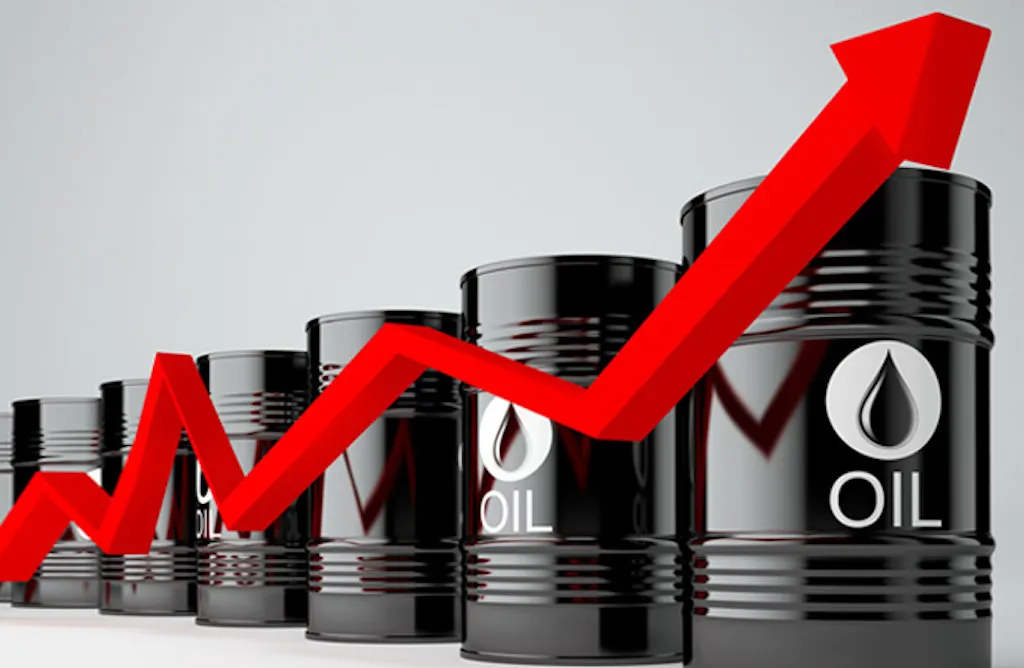
Oil prices rose on renewed investor optimism following a U.S. court ruling that blocked former President Donald Trump from imposing sweeping global tariffs on imports, a decision that sparked increased risk appetite across global markets.
International benchmark Brent crude climbed by 1.62% to trade at $65.36 per barrel. Similarly, U.S. benchmark West Texas Intermediate (WTI) advanced 1.69%, settling at $62.69 per barrel—up from $61.65 in the previous session.
The U.S. Court of International Trade ruled Wednesday that Trump exceeded his executive authority by invoking the International Emergency Economic Powers Act (IEEPA) to implement the so-called “Liberation Day” tariffs on April 2, without Congressional approval. The three-judge panel issued a permanent injunction, effectively halting the enforcement of the tariffs.
The court’s decision added uncertainty to the future of Trump’s trade policies, especially as a July deadline for potential enforcement approaches. However, for now, the ruling has buoyed market sentiment, with traders interpreting the decision as a positive development for global trade stability.
On the geopolitical front, oil markets are also tracking the possibility of fresh U.S. sanctions on Russian oil exports. Former President Trump issued a stark warning on Tuesday, saying Russian President Vladimir Putin was “playing with fire” amid continued military strikes on Ukraine.
Reports earlier in the week indicated that Trump is weighing new sanctions against Moscow, following heightened tensions and stalled peace negotiations. In response, Russian Foreign Minister Sergey Lavrov stated on Wednesday that a new round of talks with Ukraine would be announced “in the very near future.” The last direct negotiations were held in Istanbul on May 16, mediated by Türkiye.
Meanwhile, attention is turning to the upcoming OPEC+ meeting scheduled for Saturday. Eight key member nations—including Saudi Arabia, Russia, Iraq, the UAE, Kuwait, Kazakhstan, Algeria, and Oman—may agree to further ease their voluntary production cuts.
These eight countries, which had pledged to cut a combined 2.2 million barrels per day (bpd), began gradually increasing output in April. In May, they raised production by 411,000 bpd and have signaled a similar increase for June.
The prospect of increased supply, combined with persistent demand weakness, has fueled concerns about a potential market surplus, even as geopolitical tensions continue to add volatility to oil prices.