









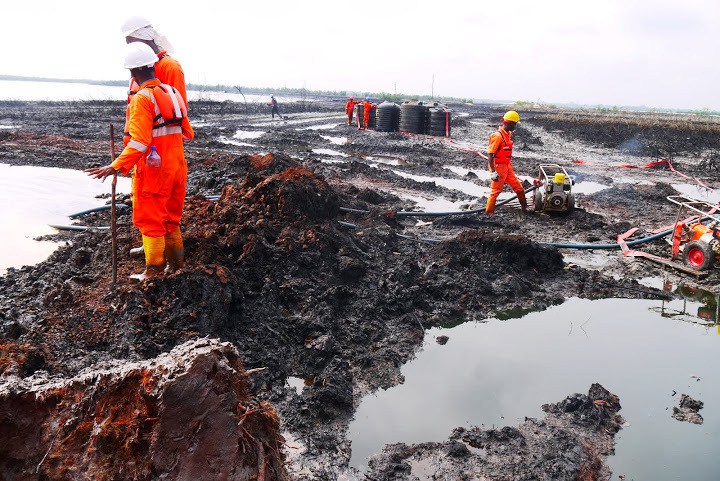
The United Nations Environment Programme (UNEP) revealed yesterday that it could still take between 25 to 30 years for the realization of full environmental restoration of Ogoniland.
The UNEP similarly declared that due to the wide extent of contamination in Ogoniland and nearby areas, coupled with the varying degrees of degradation, there would not be one single clean-up technique appropriate for the entire area.
The report further pointed out that a combination of approaches will be considered, ranging from active intervention for cleaning the top soil and replanting mangrove to passive monitoring of natural regeneration for the clean-up.
These revelations were contained in a recent comprehensive report carried out by UNEP on Ogoniland.
The UNEP expressed the optimism that if the recommendations contained in its report could be implemented, they would have an immediate and positive impact on Ogoniland.
According to the report; “The hydraulic connection between contaminated land and creeks has important implications for the sequence of remediation to be carried out. Until the land-based contamination has been dealt with, it will be futile to begin a clean-up of the creeks.”
It further read: “Due to the wide extent of contamination in Ogoniland and nearby areas, and the varying degrees of degradation, there will not be one single clean-up technique appropriate for the entire area.”
“A combination of approaches will therefore need to be considered, ranging from active intervention for cleaning the top soil and replanting mangrove to passive monitoring of natural regeneration,” the report stated.





RT @BizWatchNigeria: Ogoniland’s Environmental Restoration May Take 30 Years – UNEP Report – https://t.co/KhntobcORx https://t.co/dTvFhOvegx