






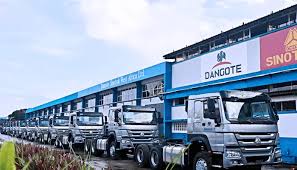
Public opinion has increasingly shifted in favour of the Dangote Petroleum Refinery as it faces resistance from the Nigeria Union of Petroleum and Natural Gas Workers (NUPENG) over its plan to introduce 4,000 Compressed Natural Gas (CNG)-powered trucks into the fuel distribution network.
The refinery’s move, which aligns with Nigeria’s push towards cleaner energy alternatives, has become the subject of heated debate after NUPENG declared its intention to embark on a nationwide strike in protest. Social media platforms including X, Instagram, Facebook, and LinkedIn have since been dominated by discussions, with many Nigerians voicing support for the refinery and its push for efficiency-driven fuel logistics.
For several citizens, this confrontation is not merely a clash between a labour union and a private business. Instead, it symbolizes a broader struggle for the future of Nigeria’s energy distribution, economic growth, and the balance of power within the fuel industry.
Public Sentiment Tilts Towards Dangote
On X, a number of users expressed their disapproval of what they described as NUPENG’s disruptive tendencies. One user, @olat187, posted: “Nigerians stand with @DangoteGroup. @officialNUPENG9 has been making the lives of Nigerians unbearable for years.”
Another commentator, James O., emphasized the reliance of ordinary Nigerians on the refinery, saying: “The only business leader and saviour we have is @DangoteGroup. Nigerians are fully behind you. If they like, they should go on strike; gone are those days. Nigerians are growing beyond all this.”
Analysts and Experts Criticize Union’s Stance
Energy professionals have also joined the conversation, many of them faulting the union’s opposition to the refinery’s innovation. Prof. Olushola Bamidele illustrated the issue with a vivid analogy:
“If I decide to bypass middlemen and sell my goods directly to customers, does that give them the right to force me to stop innovating? Shouldn’t they find a way to adapt instead of blocking progress?”
Similarly, Dr. Tosan Harriman argued that the union’s resistance reflects self-interest rather than concern for Nigerians, stating: “It is clear that NUPENG is resisting change due to its restricted role in today’s evolving energy dynamics. The focus has never been about the people.”
Accusations of Manipulation and Sabotage
Other citizens accused the union of attempting to hold the country hostage. X user @Joguns remarked: “Dangote Refinery is a private business. Just as private universities aren’t bound by ASUU strikes, Dangote should have the freedom to run his business for the benefit of Nigerians.”
Suspicion of foul play also surfaced. Some online commentators speculated that alleged truck accidents linked to the refinery could have been orchestrated as acts of sabotage.
On Facebook, Gbenga Emmanuel suggested a long-term solution: “This is the time for Dangote to encourage private investors to establish filling stations nationwide that will remain loyal to the refinery’s operations.”
Fears of Foreign Influence
The conversation also took a geopolitical dimension, with some Nigerians suggesting that foreign interests may be influencing union actions.
Ebere Anosike argued: “It looks like NLC and NUPENG are being used to undermine Dangote Refinery and weaken Nigeria’s economy in order to protect foreign refineries. If true, this borders on economic sabotage, and it must be investigated.”
Growing Momentum for Change
Social media users across platforms stressed that unions should not block progress at the expense of the people. On Instagram, Adesuyi noted: “For years, NUPENG has frustrated Nigerians. Now that competition has arrived, they can’t handle it. But Nigerians will support Dangote.”
Logistics analysts also highlighted the importance of technological advancement. “Unions should not hold the country hostage. Dangote’s move represents innovation, and the nation should embrace progress instead of protest,” said @NaijaLogistics on X.
A LinkedIn contributor summed up the debate by noting: “Yes, Dangote’s approach is disruptive. But history shows that every revolution faces resistance. What Dangote is doing will one day be studied in global business schools.”