








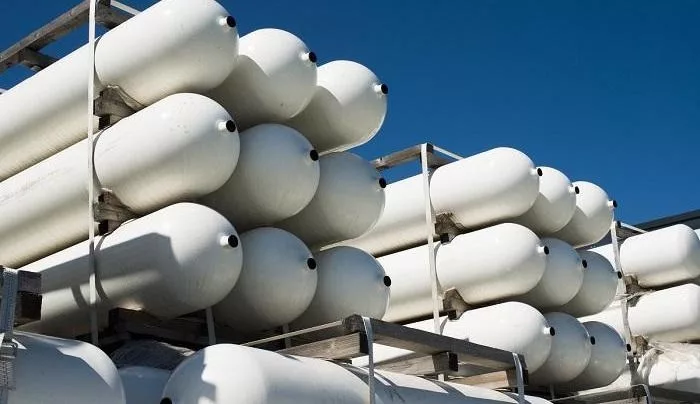
Nigeria’s natural gas market remained heavily export-oriented throughout 2025, with international sales significantly outstripping domestic consumption. According to a comprehensive full-year report released by the Nigerian Upstream Petroleum Regulatory Commission (NUPRC) on February 17, 2026, the country produced a total of 2.71 trillion standard cubic feet (scf) of gas.
Of this volume, 942.7 billion scf was channeled into the export market, accounting for approximately 34.8% of total production and nearly 38% of all successfully utilized gas. This export volume exceeded domestic sales, which stood at 780.6 billion scf, by more than 162 billion scf.
The 2025 production figures mark a notable 8% increase from the 2.5 trillion scf recorded in 2024, reflecting growing momentum in the “Decade of Gas” initiative. A breakdown of the output shows a shift in the production mix; while associated gas (produced alongside crude oil) reached 1.456 trillion scf, non-associated gas output expanded more aggressively to 1.25 trillion scf.
Despite an overall utilization rate of 92.4%, the report noted that gas flaring remains a persistent challenge, with 204 billion scf wasted during the year—representing 7.54% of total production and hundreds of millions of dollars in lost revenue.
While exports currently dominate the commercial landscape, the Federal Government is implementing strategic shifts to balance the scales. The report highlights that recent policy interventions under the 2024 Electricity Act and the Nigerian Gas Flare Commercialisation Programme (NGFCP) are designed to redirect more “molecules” toward domestic industries and power plants.
As of early 2026, 28 firms have been issued permits to capture flared gas for productive use, aiming to attract $2 billion in investment and bridge the gap between export prominence and local energy security.







 on February 17, 2026, the country produced a total of 2.71 trillion standard cubic feet (scf) of gas.)