





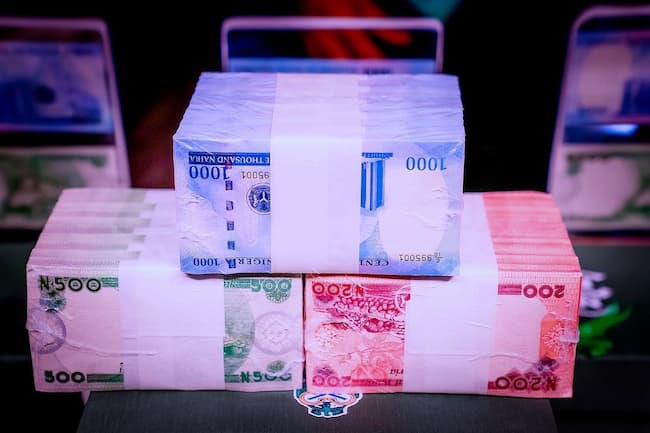
The Nigerian naira weakened significantly against the U.S. dollar on Thursday, causing the spread between the official and black-market exchange rates to shrink to less than ₦2—a rare convergence that’s drawn market attention
Data released by the Central Bank of Nigeria (CBN) indicated that the official exchange rate depreciated to ₦1,533.11 per dollar, with intraday fluctuations ranging from a low of ₦1,520 to a high of ₦1,538. The official rate has now declined for two consecutive trading sessions.
Despite this depreciation, Nigeria’s foreign reserves saw an uptick, rising to $37.78 billion midweek. Market watchers noted that the increase occurred without direct intervention through open market operations, pointing to alternative sources of foreign inflow likely responsible for the reserve accretion.
Simultaneously, the parallel market rate appreciated slightly to ₦1,535 per dollar, tightening the gap between the two markets to just about ₦2. Analysts suggest this narrowing could signal short-term stability in Nigeria’s currency outlook.
On the global front, geopolitical instability sent oil prices higher. Brent crude gained $1 to trade at $69.52 per barrel, while U.S. West Texas Intermediate rose by $1.16 to close at $67.54, following four straight days of drone attacks on oil infrastructure in Iraqi Kurdistan.
Gold prices, on the other hand, retreated due to a strengthening U.S. dollar and positive American economic data. Spot gold slipped 0.3% to $3,337.43 per ounce after dipping to an intraday low of $3,309.59. Investors remain cautious as tariff uncertainties loom over global markets, keeping volatility elevated.
The near convergence of Nigeria’s dual exchange rates, coupled with foreign reserve growth and positive oil pricing, could have implications for fiscal planning and investor confidence in the short term.