



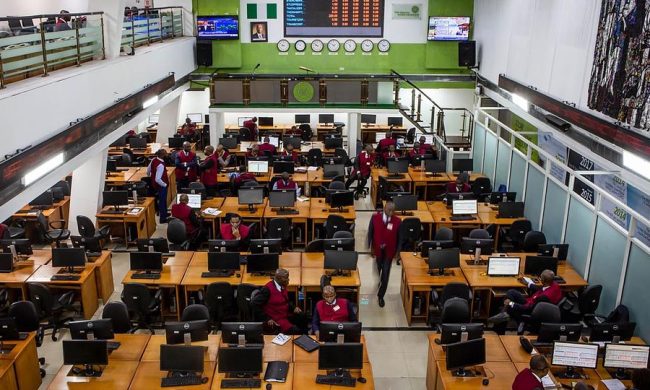







Nigeria’s money market rates held largely stable on Thursday, as the financial system’s liquidity was tempered by significant outflows linked to Treasury bills and Open Market Operations (OMO) auctions conducted by the Central Bank of Nigeria (CBN).
Since initiating a major liquidity mop-up last week, the CBN has successfully reduced excess cash holdings in the banking sector by over half. The apex bank has conducted three OMO auctions and launched its Q4 Treasury bills issuance, curbing the liquidity glut across the financial system.
Despite these measures, market liquidity remained robust at ₦3.47 trillion, according to a market update from AIICO Capital Limited. The firm reported that Deposit Money Banks (DMBs) placed roughly ₦3.50 trillion in the CBN’s Standing Deposit Facility (SDF) window, while borrowings from the Standing Lending Facility (SLF) were minimal at ₦1.90 billion.
Liquidity injections from maturing money market instruments, including ₦250 billion in OMO maturities, helped ease overnight rates by 3 basis points to 24.86%, according to Cowry Asset Management Limited. The Open Buy Back (OBB) rate also held steady at 24.50%, reflecting relative funding stability.
Market analysts forecast that funding rates will remain moderate barring any large liquidity withdrawals before week’s end. Meanwhile, the Treasury Bills secondary market witnessed yield declines across all tenors following ₦230.66 billion in maturities.
Specifically, the Nigerian Interbank Treasury Bills True Yields (NITTY) for the 1-month, 3-month, 6-month, and 12-month maturities dropped by 14 bps, 60 bps, 26 bps, and 10 bps, respectively. Consequently, the average Treasury Bill yield fell by 32 bps to 17.37%, reflecting a strong investor appetite and bullish sentiment in the secondary market.
Financial analysts suggest that the CBN’s continued liquidity management is helping to maintain stability in Nigeria’s short-term funding market while attracting renewed investor interest in fixed-income instruments.











 auctions conducted by the Central Bank of Nigeria (CBN).)